Gifts for Amateur Perfumers & Fragrance Blenders
Amateur perfumers work in milliliters and think in accords — citrus top, floral heart, woody base. They're building a vocabulary as much as a formula, and the best gifts support both: quality materials to work with and the tools to measure, test, and document with real precision. A set of vague 'essential oils' from a generic brand won't cut it here.
Edens Garden Top 6 Essential Oil Sampler Set
Edens Garden is serious-grade for home perfumers — GC/MS tested, consistent batch-to-batch, and their top 6 sampler covers the key citrus and fresh accords that most beginner formulas start from.
“The one reliable rule of gift-giving: anything that makes them look more serious at what they love will be received with disproportionate gratitude.”
Perfumer's Apprentice - Fragrance Blending Kit Starter Set
A curated set of accords, aromachemicals, and a dilution guide from one of the most respected home-perfumery suppliers. Starting points, not just raw ingredients.
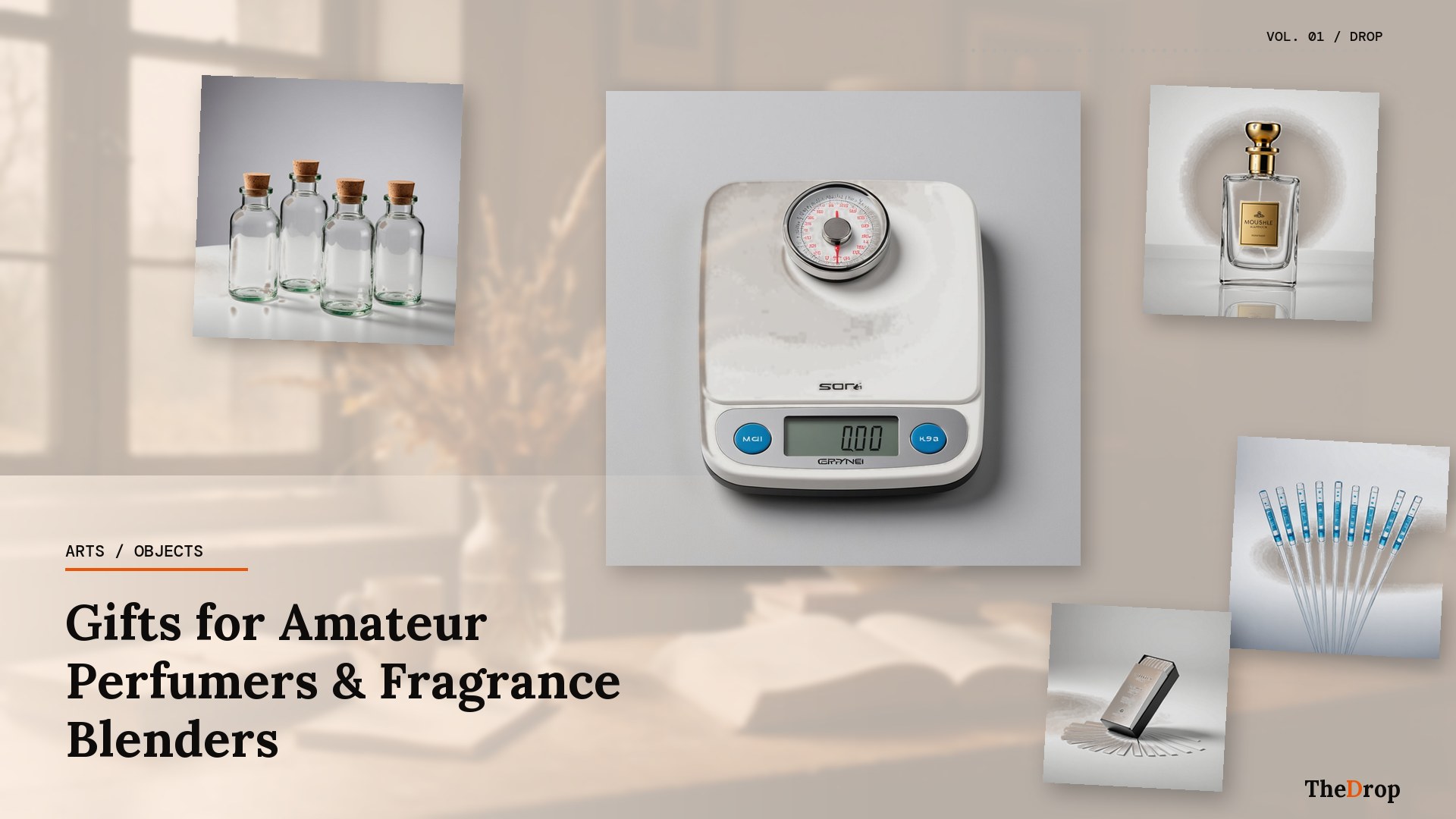
Mocuishle Perfume Alcohol - Perfumer's Ethanol 190 Proof
Carrier alcohol is the one ingredient you can't skip or substitute. This is 190-proof perfumer's ethanol — neutral, odorless, and the correct base for any EdP or EdT formula.
1ml Graduated Glass Pipettes - 100 Pack
Precision measurement at this scale lives and dies by your pipette quality. Graduated glass over plastic dropper tops — you're working in fractions of a milliliter.
Perfumer's Smelling Strips - 1000 Count
Blotters are the unsung consumable in any perfumery workflow. Test each accord modification, track drydown over time, label with a pencil. A thousand is not excessive.
Mini Electronic Scale - 0.001g Precision
Working by weight instead of volume is how professional perfumers formulate — this scale reads to 0.001g and turns kitchen-table blending into repeatable science.
SKS Bottle 15ml Clear Boston Round Glass Bottles - 12 Pack
Glass Boston rounds for storing finished blends and macerating ingredients. Light-protective amber is ideal, but clear works fine for short-term working samples.
Perfume Journal - Formulation Notebook for Fragrance Blending
A proper formulation notebook with pre-printed ratio grids and drydown timelines. The difference between a happy accident and a reproducible formula is whether you wrote it down.
Fork it. Make it yours. Share before their birthday.
Friends claim items. No duplicates. No awkward conversations.