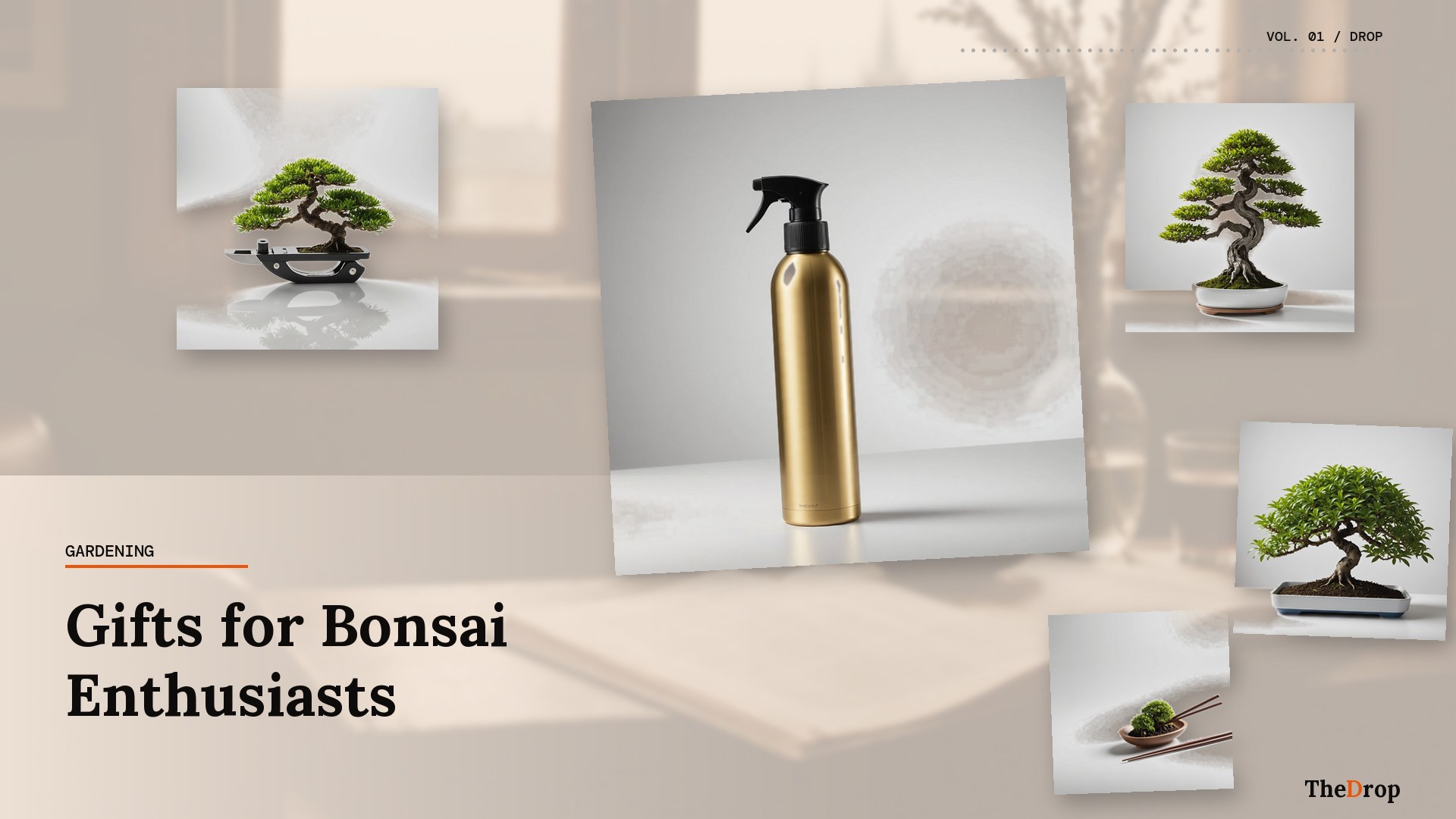
Gifts for Bonsai Enthusiasts
Bonsai gifts go wrong in a very specific way: someone buys a small tree, and the enthusiast has to smile and then spend three months nursing it back from the wrong soil, the wrong pot, the wrong species for their climate. Buy the practitioner tools instead — the ones they use every styling session and keep in rotation for decades.

Tinyroots Japanese Bonsai Concave Branch Cutter
The concave cutter is the tool that separates bonsai practitioners from bonsai owners. Its curved blade removes branches in a way that leaves a hollow scar — one that heals flush rather than as a raised knob. Bonsai Nut forum members name the concave cutter as the first serious tool purchase. Japanese steel holds an edge through hundreds of styling sessions.
“The one reliable rule of gift-giving: anything that makes them look more serious at what they love will be received with disproportionate gratitude.”
Bonsai Training Wire Aluminum Set (1mm / 1.5mm / 2mm / 2.5mm)
Bonsai wiring is how the practitioner sets branch direction and movement — and wire is a consumable. Aluminum wire in four gauges covers the full range from fine secondary branches to primary scaffold limbs. Softer than copper, easier for beginners and intermediates to apply without marking bark. A set that spans gauges is more useful than one roll of a single size.
Bonsai Heresy by Jonas Dupuich
Jonas Dupuich runs the most-read English-language bonsai blog and teaches at the California Academy of Sciences. This book challenges the rigid rule-following that stifles most Western bonsai practitioners, replacing it with principles that serve the tree's actual design. A modern, approachable reference for anyone who has grown past beginner videos.
Houseables Brass Misting Bottle (1 Liter)
A brass misting bottle in the Japanese garden-tool tradition — heavy, well-balanced, adjustable from fine mist to focused stream, and built to last longer than any plastic alternative. Bonsai trees are misted for foliage health, and the misting bottle is used every day during the growing season. The kind of tool that improves a routine task imperceptibly but genuinely.
Bonsai Boy Pre-Bonsai Grow Tray with Humidity Screen
A humidity tray filled with gravel sits under the pot and holds a shallow water layer — as it evaporates, it creates a microclimate around the foliage that indoor bonsai genuinely benefit from, especially in heated or air-conditioned spaces. An often-overlooked part of the indoor bonsai setup that practitioners learn about by hard experience.
Shinkansen Bonsai Styling Chopsticks (Bamboo, Pack of 10)
Long bamboo chopsticks are the repotting tool bonsai practitioners reach for most — working soil around roots without damaging them, teasing out compacted root balls, checking drainage. They're essential for repotting season and the first thing an experienced practitioner would tell a beginner to buy. The kind of stocking-stuffer that immediately earns its place in the tool roll.
Fork it. Make it yours. Share before their birthday.
Friends claim items. No duplicates. No awkward conversations.