Gifts for college students studying abroad in Europe under $50
Somewhere between the third hostel and the overnight train to Prague, a dead phone battery stops being an inconvenience and becomes a genuine problem. These are the things that make six months abroad feel less like a logistical obstacle course — practical enough to actually use, specific enough to show you thought about where they're going.
Item 1
Slim enough to slip into a jacket pocket, substantial enough to charge a phone twice over. On a ten-hour day wandering a city without a plan, the difference between a dead phone and a working one is the difference between finding the hostel and not. This one earns its space in the bag every single day.
“The one reliable rule of gift-giving: anything that makes them look more serious at what they love will be received with disproportionate gratitude.”
Item 2
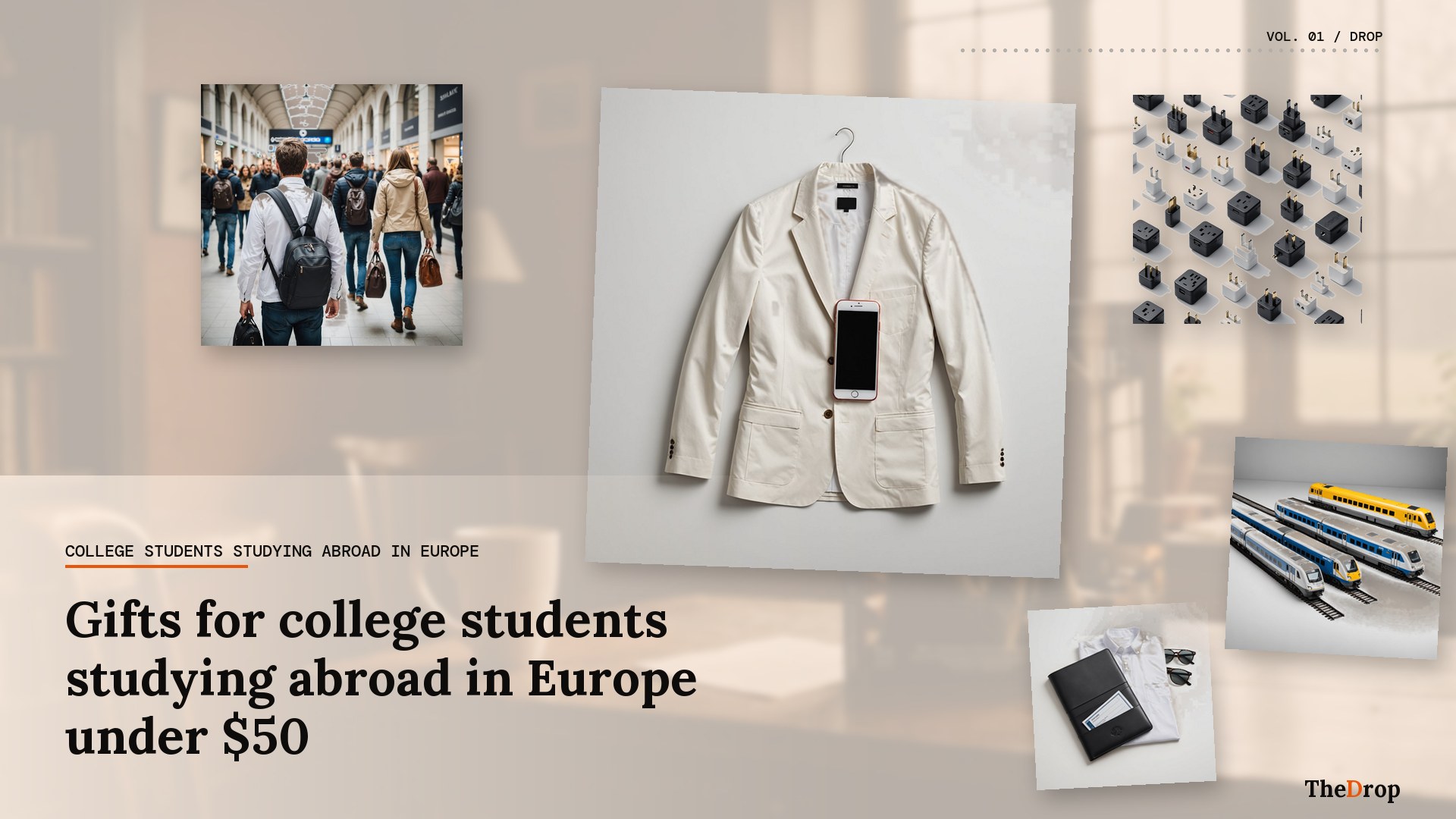
Europe's outlet situation is genuinely chaotic — France and Germany use different plugs than the UK, which uses a different one than Italy. This adapter handles all of them and charges three things at once. Buy it before they leave, not after they've already blown a fuse in a Lisbon guesthouse.
Item 3
Overnight trains and budget flights are the study-abroad commute. The noise-cancelling on these is the real thing — not the kind that softens the edges but the kind that removes the crying infant entirely. Certified refurbished with a full warranty means the price reflects the condition, not a compromise.
Item 4
Pickpockets in busy European tourist corridors are skilled and patient, and a standard bag is not a deterrent. This one has slash-resistant straps, locking zippers, and RFID-blocking pockets. It holds a passport, cards, and a water bottle without looking like a security apparatus. A reasonable trade for six months of not thinking about it.
Item 5
A slim passport holder that sits under a shirt, against the chest, holding the documents that cannot be replaced quickly or cheaply abroad. The RFID blocking is a secondary benefit; the primary one is that a pickpocket cannot reach it without the student noticing. Fourteen dollars for that peace of mind is a reasonable price.
Item 6
Rome has public drinking fountains on most street corners. Paris has them. Vienna has them. Filling this bottle costs nothing, and bottled water in tourist areas costs more than it should. The 21oz size fits a backpack side pocket and stays cold through an afternoon. One of the gifts that pays for itself in a week.
Item 7
Rick Steves is not cool, and he does not care. His Europe book has the cheap-lunch spots, the hostel logistics, the free museum days, and the train pass math laid out plainly for someone doing this on a student budget. Updated annually. The student who actually reads it will eat better and spend less than the one who doesn't.
Item 8
A hardcover journal with an elastic closure and a back pocket for boarding passes and metro tickets. Some students keep a travel diary; more start one and mean to continue. Either way, the physical record of a semester abroad — train times, addresses, a sketch of a square in Ghent — holds up better than a camera roll.
Item 9
Most hostels either provide towels for a fee or don't provide them at all. A microfiber travel towel that dries in an hour and compresses to the size of a water bottle removes that daily calculation entirely. Not a glamorous gift, but the student who has been paying two euros per towel rental will understand immediately.
Item 10
Three months of Duolingo Plus, with offline lessons for the commute and no ads interrupting the streak. Not a substitute for immersion, but a useful supplement for someone sitting in lectures delivered partly in German or navigating a French bureaucracy. Works on the train, in the hostel, in the gap between classes.
Fork it. Make it yours. Share before their birthday.
Friends claim items. No duplicates. No awkward conversations.