Gifts for Escape Room Enthusiasts
The escape room person wants the puzzle to continue at home. They track their completion times, they review venues on forums, and when they are not in a room, they are playing the tabletop games that replicate the pressure. This drop skips the novelty padlock keychain and goes for the real thing: subscription mystery boxes with production value, tabletop formats that hold up to multiple plays, and the tools for building their own room for a dinner party.

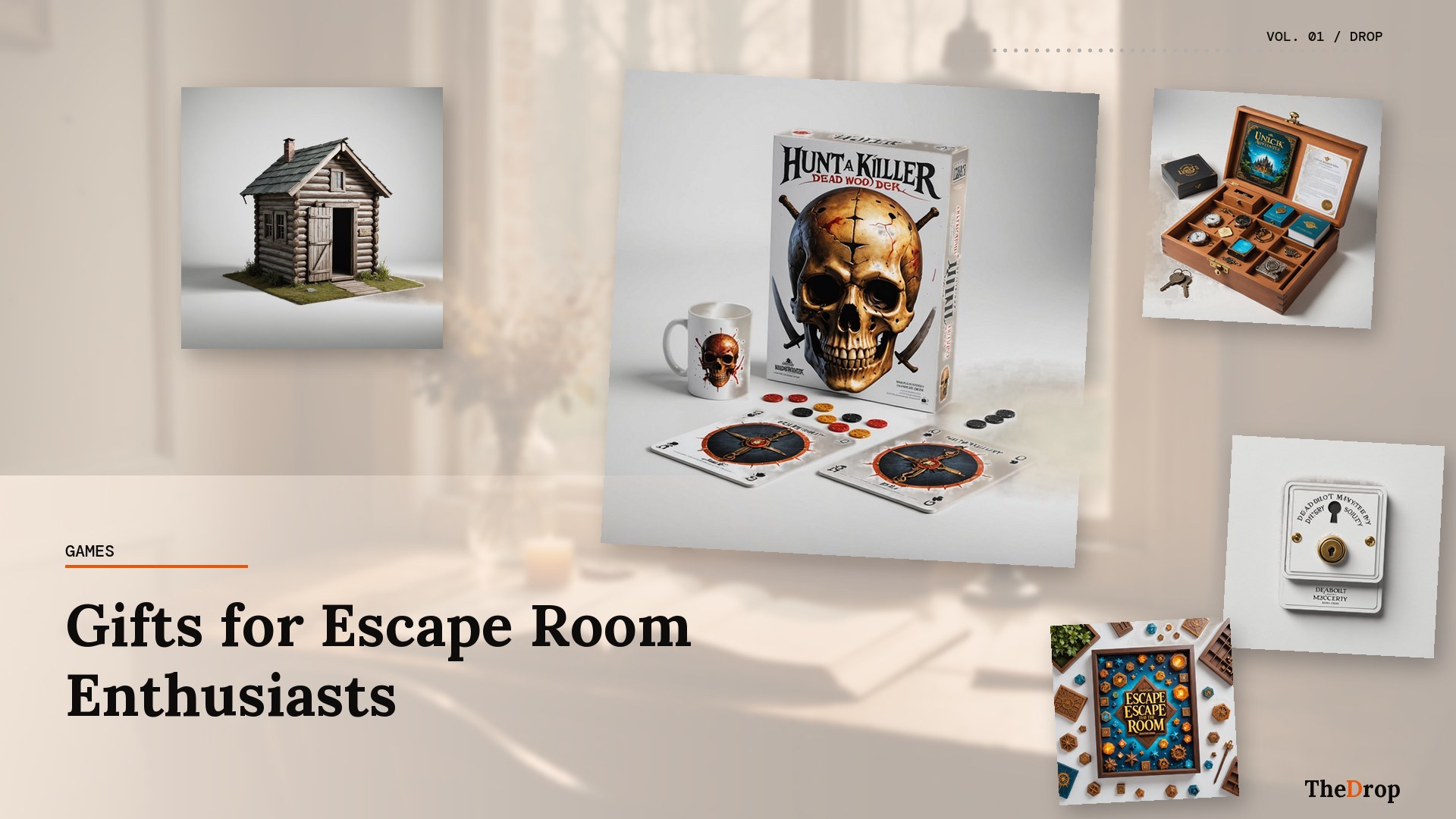
Hunt A Killer — Dead Below Deck Standalone Game
Hunt A Killer's standalone game format has the production depth of their subscription series without the ongoing commitment — physical evidence folders, coded documents, and a mystery that takes 2-4 hours to solve cooperatively. The highest-production mystery experience available in this format, and the one that escape room communities recommend when someone asks about home play.
“The one reliable rule of gift-giving: anything that makes them look more serious at what they love will be received with disproportionate gratitude.”
Exit: The Game — The Abandoned Cabin (Difficulty 3/5)
The Exit series is a single-use tabletop escape room where the puzzle mechanics require physically altering the components — folding, cutting, writing — which creates genuine escape room desperation without a physical room. The Abandoned Cabin was the first Exit title and remains the one the boardgame community cites as proof the format works. Buy a pair: the second game waits for the night after.
Unlock! Exotic Adventures — 3 Escape Room Games in One Box
The Unlock! format uses a free app paired with physical cards to create a replayable escape room experience — unlike Exit, the components survive the play session intact, so the box can be passed on or shelved as a reference. Three adventure scenarios at varying difficulty give a gift with replay value across multiple game nights.
Deadbolt Mystery Society — 3-Month Subscription Gift Card
A monthly mystery box that ships immersive narrative puzzle packages — each with dossiers, coded documents, and physical props that build a multi-month story arc. The gift that turns every month into an escape room event night at home, and the format that enthusiast communities rate alongside Hunt A Killer as best-in-class for production and puzzle quality.
ThinkFun Escape the Room — Mystery at the Stargazer's Manor
ThinkFun's mid-complexity escape room format is recommended for groups that include mixed escape room experience — approachable enough that a first-timer does not slow the table, challenging enough that an experienced player is genuinely engaged. The Stargazer's Manor storyline has the best puzzle cohesion in the series.
Sherlocked Puzzle Box — Intermediate Difficulty
A physical puzzle box where the challenge is mechanical — hidden compartments, sequential unlocking mechanisms, and physical manipulation rather than reading and decoding. The format that escape room enthusiasts return to when they want a purely spatial, hands-on challenge with no narrative overhead.
"The Ultimate Puzzle Book" by Joshua Shifrin
500 puzzles across logic, cipher, maze, and lateral thinking formats — a physical book that fills the gap between monthly subscription deliveries and structured puzzle nights. Escape room enthusiasts use puzzle books as training material, specifically the lateral thinking and cipher sections that appear most frequently in room designs.
Combination Padlock Training Set (5 Locks, Different Mechanisms)
For the escape room enthusiast who has started designing their own rooms — a set of different lock mechanisms (combination, directional, word, key) provides the infrastructure for a DIY escape room built around their living room. The gift that turns a hobby into a host activity.
Fork it. Make it yours. Share before their birthday.
Friends claim items. No duplicates. No awkward conversations.