Gifts for first-year kindergarten teachers setting up their classroom under $50
The first classroom is a blank room with a budget problem: everything feels essential and nothing is cheap. These are the supplies a new kindergarten teacher will actually use on day one — not the decorative stuff that looks good in the haul video, but the materials that hold a room together when twenty-two five-year-olds are learning what scissors are for.
Item 1
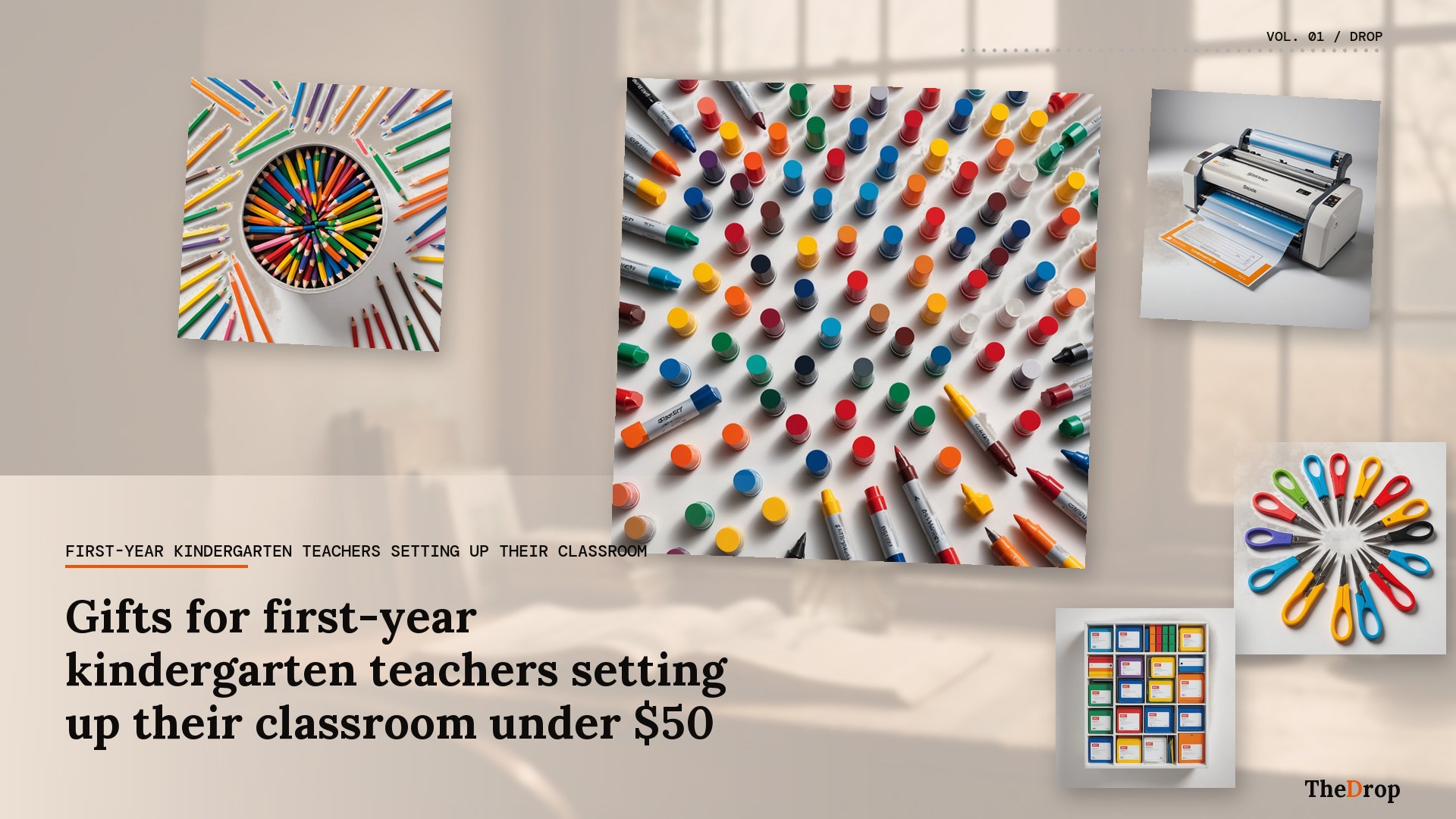
Pencils, crayons, and glue sticks in one bin — the three things kindergarteners destroy fastest. Yoobi donates a matched set to an underfunded classroom for every purchase, which is a useful thing to mention on a gift tag. Starts a room from zero without three separate Amazon orders.
“The one reliable rule of gift-giving: anything that makes them look more serious at what they love will be received with disproportionate gratitude.”
Item 2
Jumbo magnetic letters that five-year-old fingers can actually grip. They stick to the whiteboard, hold up to being dropped approximately nine hundred times, and work for both phonics drills and early number sense. The size matters — small letters disappear at circle time; these don't.
Item 3
A laminator sounds like a luxury until the third week, when every name tag, visual schedule card, and center activity sheet has been handled by thirty small hands. This one warms up in four minutes and fits on a corner desk. The 20 included pouches last about a day, but the machine lasts years.
Item 4
Thirty-six markers in both chisel and fine tip, low-odor enough to use in a room full of small noses. The color range matters for sorting activities and calendar work. A 36-pack sounds like overkill until November, when half the set is dry from being left uncapped.
Item 5
A magnetic job chart that turns line leader and paper passer into official positions with real stakes. Kindergarteners take classroom jobs with complete seriousness, and having a visual chart means the teacher doesn't arbitrate who fed the fish last Tuesday. Sets up in ten minutes, runs itself after that.
Item 6
Twelve blunt-tip scissors sized for small hands, color-coded so the inevitable sorting argument has a referee. Fiskars makes the ones that actually cut construction paper without shredding it, which is the whole job. Buying a 12-pack means there's a spare when one disappears into a backpack.
Item 7
450 color-coded labels that stick to bins, cubbies, supply drawers, and the inevitable mystery shelf in the back corner. The color system lets non-readers find their own supplies by bin color before they can read the word 'crayons.' One of those gifts that looks boring and saves two hours of setup.
Item 8
Ten rolls of tape sounds excessive until bulletin board season, student work displays, and the week someone asks for tape every four minutes. Scotch Magic is the one that doesn't leave residue on painted cinder block walls, which matters when the classroom isn't yours to damage. A genuinely useful bulk buy.
Item 9
A clip chart is an older behavior system, and some schools have moved away from public displays of conduct — worth checking before gifting. For teachers who use it, it gives kindergarteners a concrete visual for where they stand, which five-year-olds find genuinely clarifying. Ready to hang, no assembly required.
Item 10
Ninety task and reward magnets on a sturdy board — a more flexible system than a clip chart, since magnets move without a public ranking. The Melissa & Doug build quality means it survives being bumped off a shelf. Better suited to teachers who want to track responsibilities without the color-level hierarchy.
Fork it. Make it yours. Share before their birthday.
Friends claim items. No duplicates. No awkward conversations.