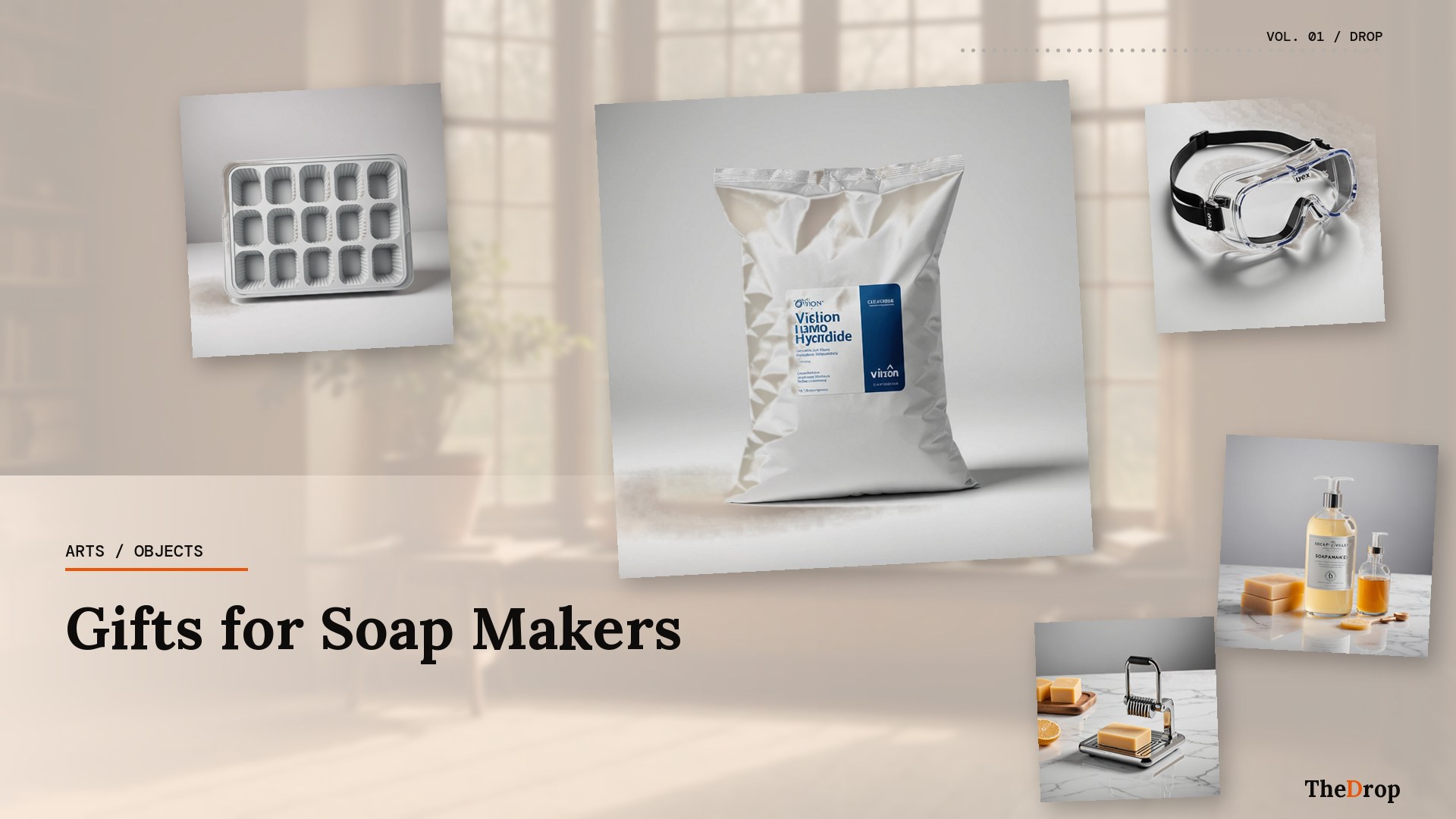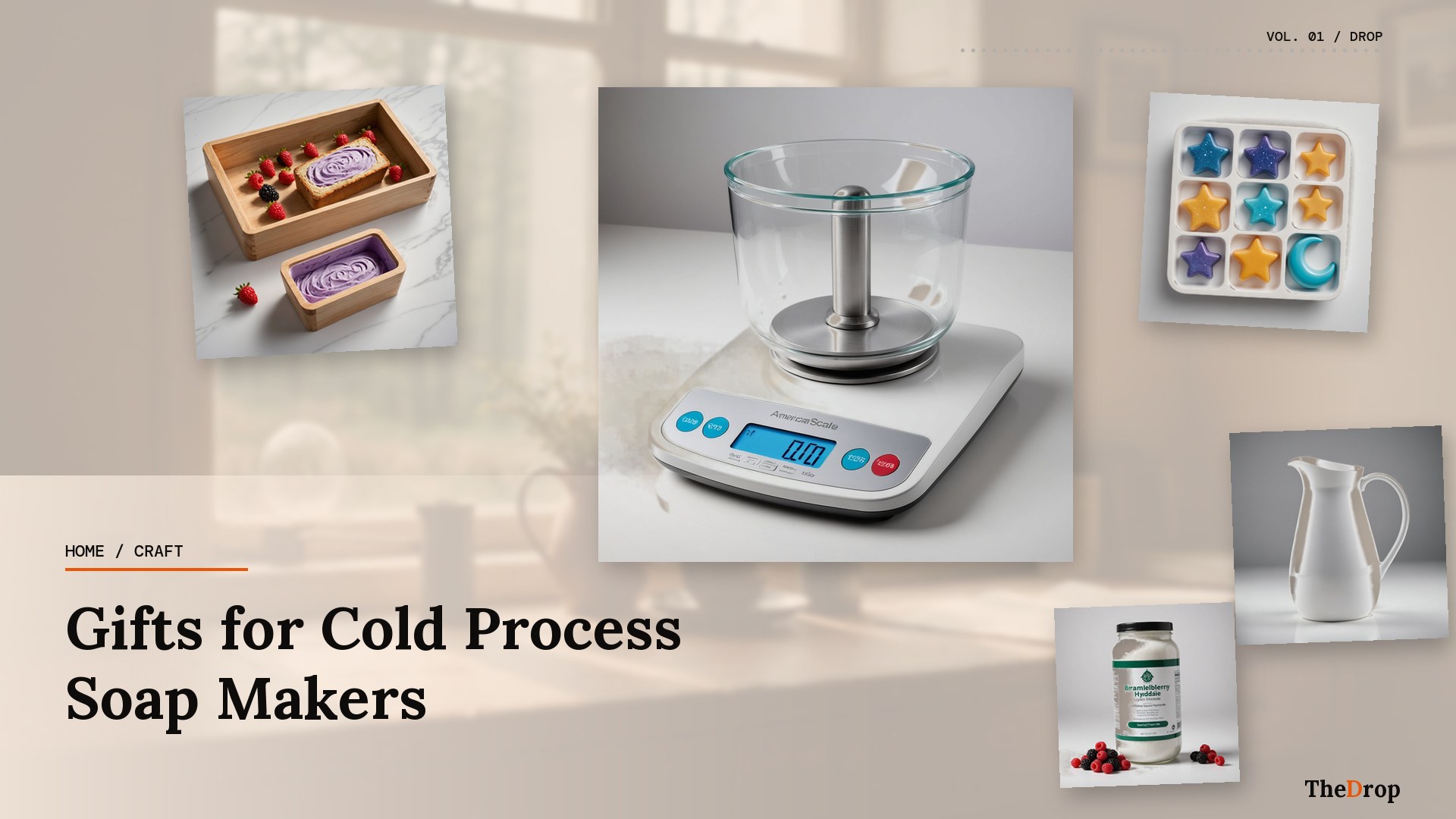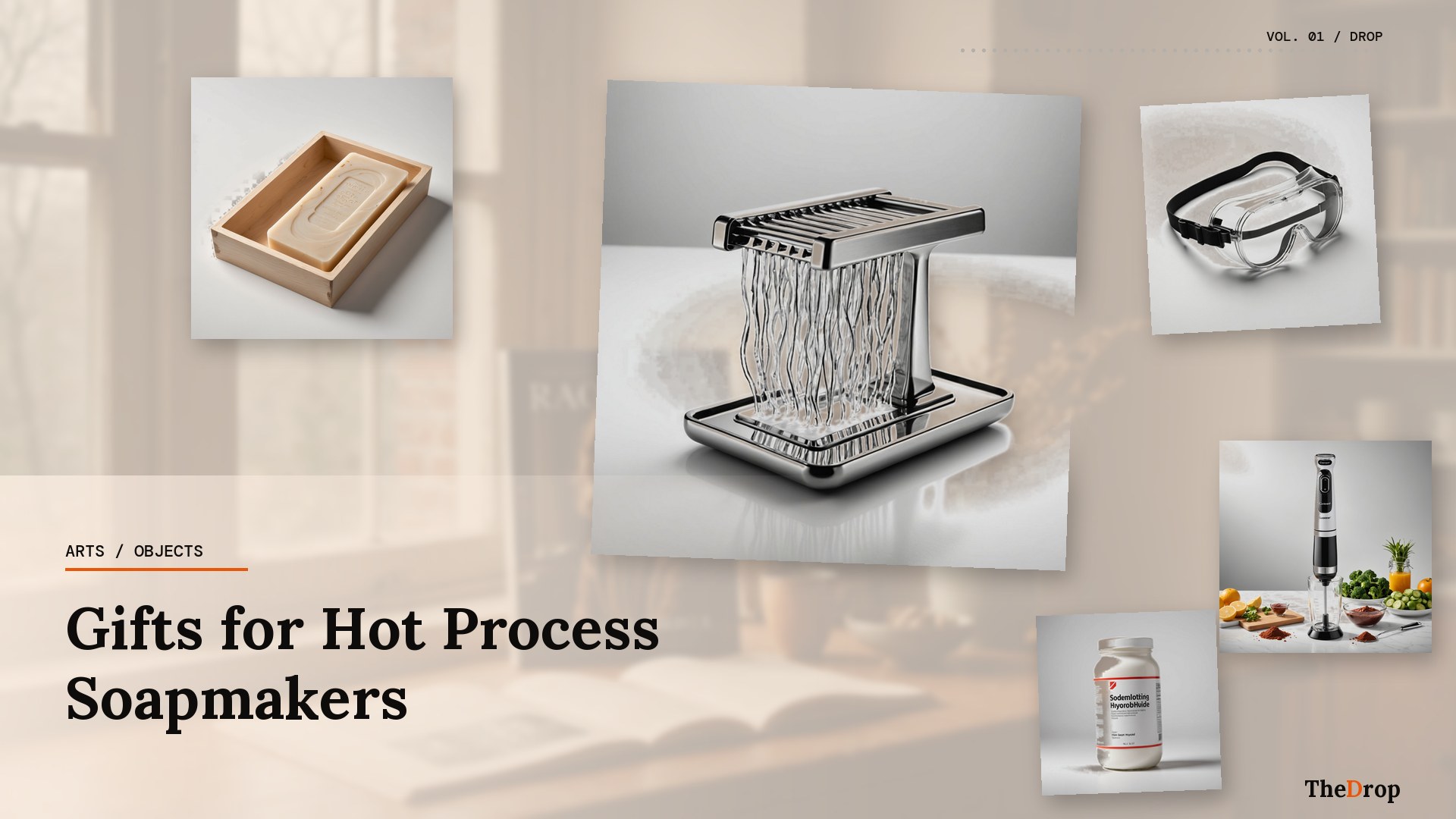
Gifts for Hot Process Soapmakers
Someone who makes soap from scratch — actual lye, actual oils, actual chemistry — is doing something completely different from a melt-and-pour hobbyist. They are calculating superfat percentages, sourcing coconut and castor oil by the gallon, and comparing trace behavior across recipes. The gift space for this person is blank — editorial lumps them with craft-store soap kits when what they need is a quality mold, a curated fragrance oil sampler, and safety gear that works.
Brambleberry Fragrance Oil Sampler — 10 x 1 oz Assorted
Ten fragrance oils at soap-craft concentration, curated by Brambleberry — the supplier the serious soapmaking community defaults to. A sampler set lets a soapmaker try new scent directions without committing to a full 4 oz.
“The one reliable rule of gift-giving: anything that makes them look more serious at what they love will be received with disproportionate gratitude.”
Birch Wood Soap Mold — 10 lb Slab Mold with Lid
A 10-lb wooden slab mold with a proper insulating lid holds heat for gel phase and gives clean bars when cut — the upgrade from a cardboard shoe box that a soapmaker who is making consistent batches will actually use.
Safety Goggles — Chemical Splash Resistant ANSI Z87.1
Lye dissolves corneal tissue. ANSI Z87.1 chemical splash goggles are the non-negotiable safety gear for anyone working with sodium hydroxide — a practical gift that is not optional.
Cuisinart CSB-75BC Compact Immersion Blender — 200 Watt
A dedicated stick blender brings soap batter to trace in minutes instead of 20 minutes of hand-stirring — the tool that makes a cold-process batch practical on a weeknight and reduces the risk of a false-trace mistake.
pH Paper Strips — Wide Range 1–14, 100 Count
Testing zap or pH strips on a cured bar confirms full saponification before a batch is gifted or sold — the cheap safety check that every serious soapmaker runs before the first use.
The Art of Soapmaking — Book by Merilyn Mohr
The foundational reference for cold and hot process soapmaking — saponification values, oil properties, superfat calculation, and recipe design. The book a soapmaker returns to when a batch fails.
Sodium Hydroxide — Food Grade Lye, 2 lb
Food-grade NaOH is the lye that cold and hot process soapmakers need — and it goes through faster than expected when running weekly batches. A 2 lb restocking bag is a practical consumable gift that lands without question.
Crinkle Soap Cutter — Wavy Blade Stainless Steel Multi-Bar
A crinkle cutter gives bars the artisan wave edge that distinguishes handmade from sliced — the presentation upgrade for a soapmaker who sells at markets or gives batches as gifts.
Fork it. Make it yours. Share before their birthday.
Friends claim items. No duplicates. No awkward conversations.