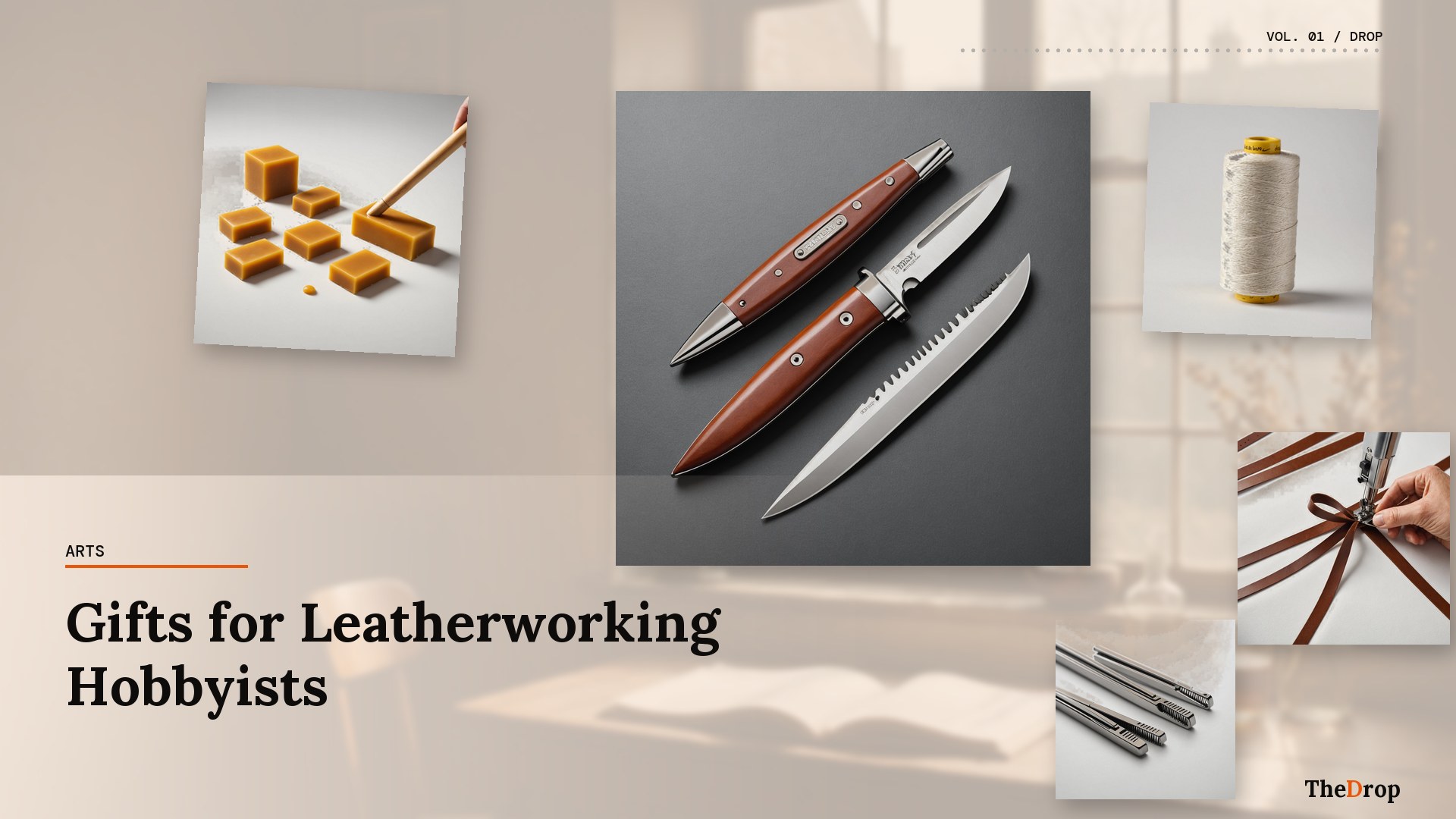
Gifts for Leatherworking Hobbyists
Leather workers are tool snobs who have decided quality matters — the gifts that land are the ones that prove you actually asked the r/leathercraft community what they want.

Tandy Leather Craftool Swivel Knife (Economy)
The Tandy swivel knife is the entry point that leatherworking communities universally recommend for carving — the yoke-style handle rotates independently of the blade, allowing fluid curved cuts in dampened veg-tan leather. At $25, it's the tool that separates beginner tooling attempts from something that looks intentional.
“The one reliable rule of gift-giving: anything that makes them look more serious at what they love will be received with disproportionate gratitude.”
Sinabroks 4mm Spacing Stitching Pricking Irons (1+4+6 Prong Set)
Japanese-style stitching chisels with 4mm spacing that create the even, slanted holes that give leather stitching its hand-finished quality — the set that experienced leatherworkers use to mark stitching lines rather than using an awl one hole at a time. The 1, 4, and 6-prong combination handles straight runs, corners, and tight curves.
Fil Au Chinois Waxed Linen Thread 532 (18/3, 100m, Natural)
French waxed linen thread with the weight and wax coating that leatherworking communities single out by name — natural-colored 18/3 weight for wallets and bags, with a waxy hand that doesn't fray when saddle-stitching. The thread most production leather workers use because it handles better than polyester at fine gauges.
C.S. Osborne Beveler Set #1 and #2 (Edge Beveler, Hardened Steel)
C.S. Osborne has been making edge bevelers in Newark since 1826. The #1 and #2 sizes together cover every standard leather thickness from cardholder to belt — the hardened steel holds an edge far longer than imported alternatives. The beveler is the tool that makes finished edges look considered rather than cut.
Kyoshin Elle Japanese Leather Hole Punches (Oval Set, 8-Piece)
Japanese oval drive punches from Kyoshin Elle — the brand that leatherworking communities on Reddit consistently recommend for clean-cut holes without the ragged edges that cheap punches leave. Oval punches specifically are the correct tool for bag handles and key fob hardware rather than the round punches that most starter kits include.
The Art of Hand Sewing Leather by Al Stohlman
Al Stohlman's 1977 guide to saddle stitching — still the reference text that leatherworkers recommend to beginners and experienced makers alike. The technique described in this book produces stitching that locks if one thread breaks rather than unraveling. No video tutorial has made it obsolete.
Beeswax Block + Burnishing Stick Combo (Edge Slicking Set)
Beeswax for running along stitch lines before saddle stitching, and a wood slicker for burnishing leather edges to a glassy finish using friction — the two finishing steps that separate handmade leather goods from handmade-looking ones. The wax is also used by the thread so it runs through holes cleanly.
Fork it. Make it yours. Share before their birthday.
Friends claim items. No duplicates. No awkward conversations.