Gifts for new rescue dog owners setting up their first home under $75
The first two weeks with a rescue dog are less about joy and more about negotiation — who sleeps where, what counts as furniture, why the kitchen trash is now a problem. The gifts that actually help are the ones that make the dog feel like the house is already home.
Item 1
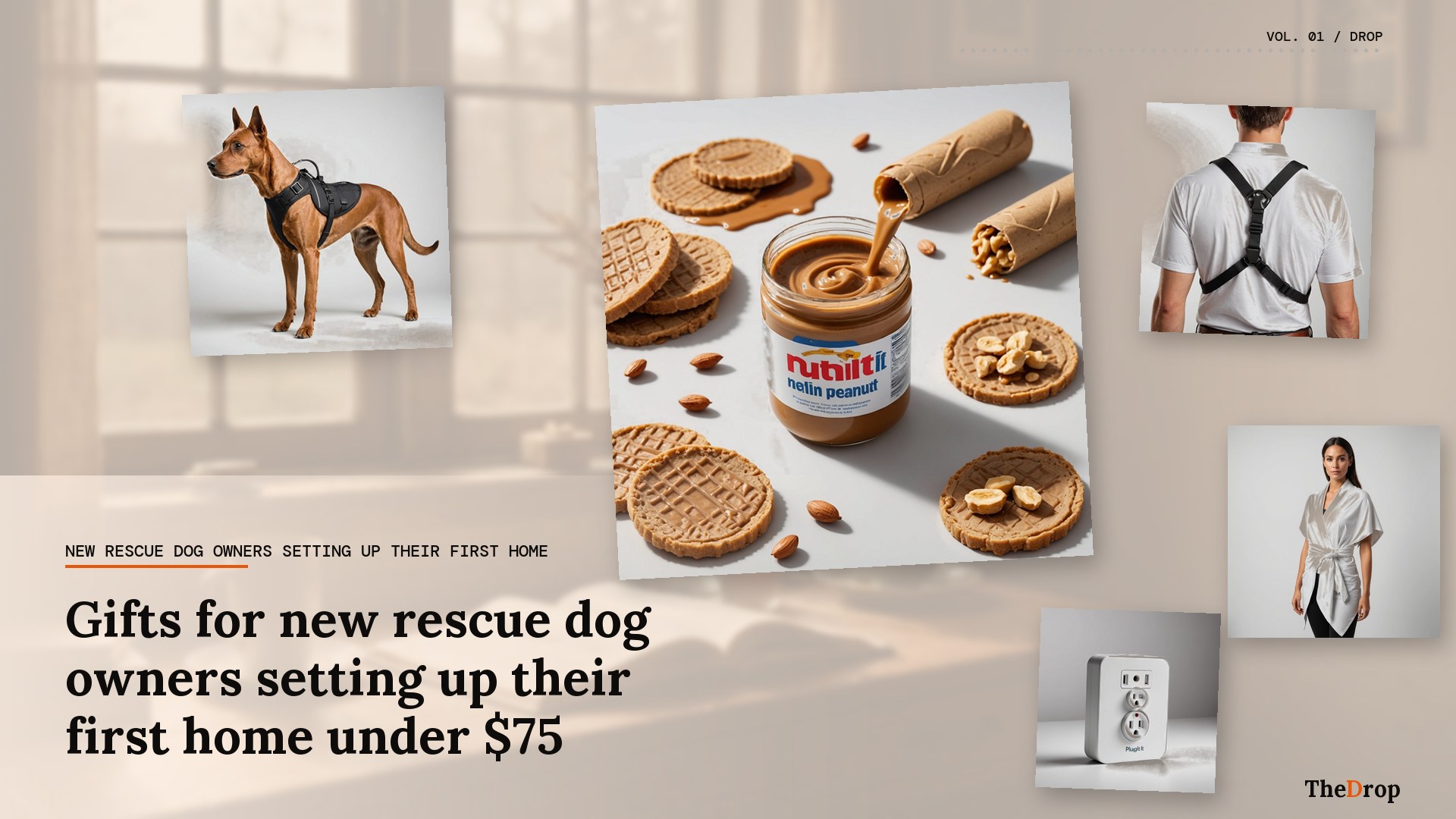
Stuff it with peanut butter, freeze it overnight, hand it over when you leave for work. The Kong is the closest thing to a reliable first-week protocol — it buys the dog twenty minutes of focused chewing and the owner twenty minutes of not worrying. Natural rubber that survives a determined chewer.
“The one reliable rule of gift-giving: anything that makes them look more serious at what they love will be received with disproportionate gratitude.”
Item 2
A plush toy with a battery-powered heartbeat and a removable heat pack. Sounds gimmicky until the dog stops whining at 2am. Shelters recommend it for the transition period when a dog has just lost the only warmth it knew — another body nearby. Worth the $40 for one unbroken night of sleep.
Item 3
A martingale tightens just enough when a dog backs out of a panic — then releases. Standard buckle collars don't do this, which is why rescue dogs end up loose on the street. Lupine backs it with a lifetime guarantee, which says something about how long it's supposed to last.
Item 4
Two leash attachment points — one at the chest, one at the back — mean you can dial in control without yanking on a neck that's already tense. The padded straps don't dig in after an hour. At $50 it's the most expensive thing on this list, and also the one most likely to make the first month of walks survivable.
Item 5
A snug wrap that applies light, even pressure across the torso — similar to swaddling, for whatever that's worth. No drugs, no side effects, and it works fast enough that you'll know within an hour whether this particular dog responds to it. A significant portion of them do. Vet-recommended and worth trying before anything else.
Item 6
Plug it in 24 hours before the dog comes home. The synthetic pheromones mimic a nursing mother's calming signals — not a metaphor, an actual biochemical mechanism — and cover a meaningful square footage for about a month. Invisible, odorless to humans, and one of the few first-week interventions with peer-reviewed backing.
Item 7
A wire crate that folds flat, ships in one box, and comes with a divider so you're not buying a second one when the dog fills out. Rescue dogs decompress faster when they have a den-sized space that's clearly theirs. This is the practical version of that instinct — no frills, does the job.
Item 8
A washable fleece mat that fits standard wire crates and has a non-slip backing for the dog that circles forty times before lying down. $20, machine-washable, and the first thing the dog will develop a smell-memory around. That scent association matters more than it sounds in the early weeks.
Item 9
The front clip redirects a pulling dog back toward you rather than letting the momentum build. Easier to fit than the Ruffwear and $25 cheaper — the right call if the dog is still small or the owner isn't sure yet what size they're working with. Quick-snap buckles mean you're not wrestling with it at the door.
Item 10
Two stainless steel bowls with rubber bases that don't skid across a hardwood floor at 6am. Rust-proof, dishwasher-safe, sized for medium to large dogs. Not interesting, not aesthetic, completely necessary — and the kind of thing a new rescue owner genuinely forgets to buy until the dog is already home.
Fork it. Make it yours. Share before their birthday.
Friends claim items. No duplicates. No awkward conversations.