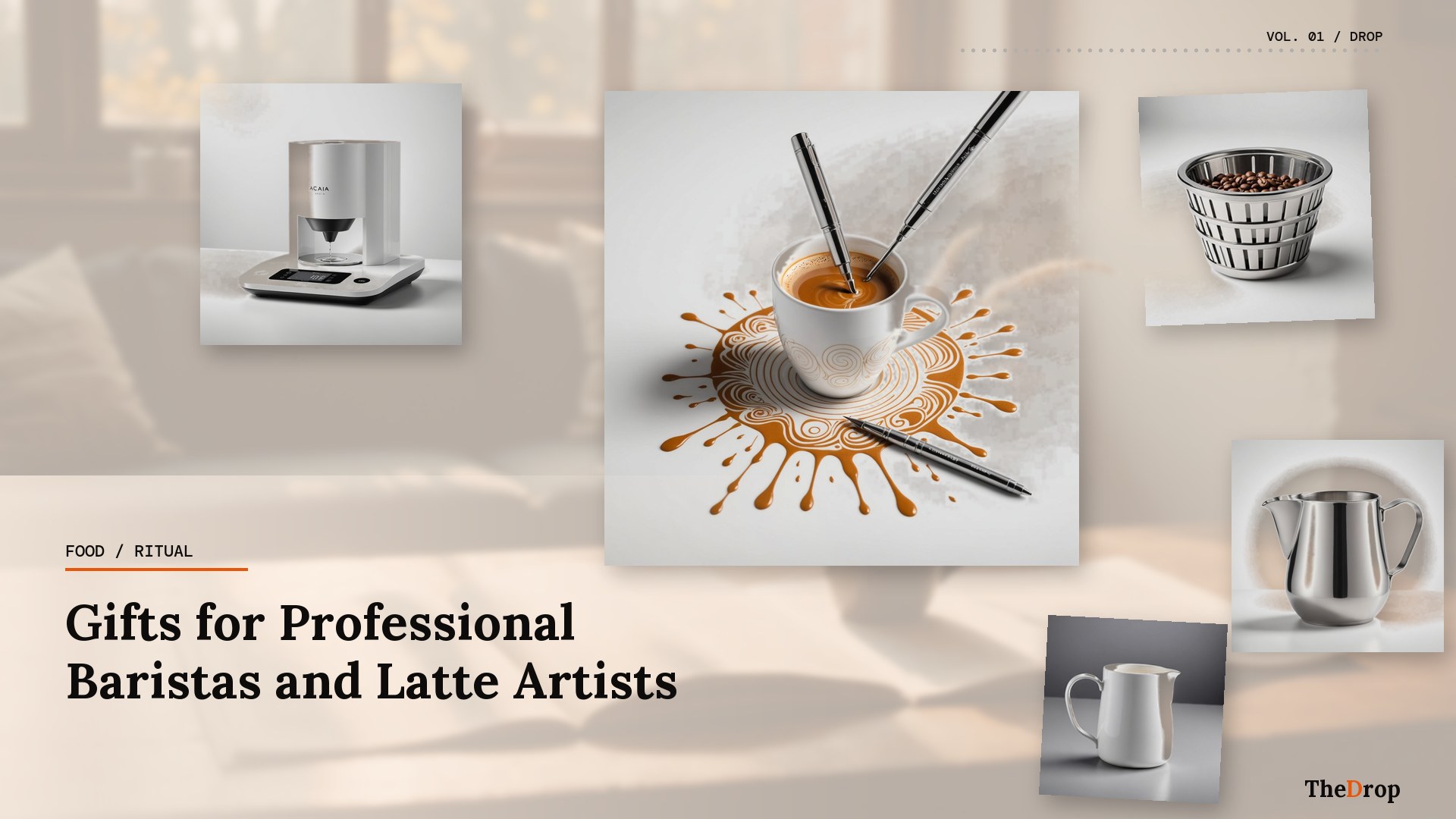
Gifts for Professional Baristas and Latte Artists
Professional baristas inhabit a precision craft where milk temperature, stretch time, and pitcher angle all contribute to the rosette or tulip in the cup. Latte art is the visible tip of a discipline that includes extraction science, sensory training, and a practiced physicality — these gifts understand that, and don't confuse professional tools with home-hobbyist equivalents.
Motta Europa Milk Frothing Pitcher, 12 oz, Stainless Steel
The pitcher shape baristas actually prefer — Motta's tapered spout allows precision pouring through tight tulip and rosette patterns that wider-spouted pitchers smear. The 12 oz size suits single and double shot drinks without oversteaming for smaller cups.
“The one reliable rule of gift-giving: anything that makes them look more serious at what they love will be received with disproportionate gratitude.”
Rattleware Round Handle Milk Frothing Pitcher, 20 oz
When larger format drinks — flat whites for two, big cappuccinos — are on the pass, a 20 oz pitcher with a classic round handle gives more steam wand maneuverability. Rattleware's stainless is thick enough to convey milk temperature accurately through the palm.
Latte Art Etching Pen Set, Stainless Steel Needle Tips
Free-pour latte art is one discipline; etching is another. A fine needle pen draws detail into poured foam that free-pour can't achieve — precise eyes on swans, stem detail on leaves — and is the tool used for competition-standard presentation work.
Acaia Pearl Scale with Flow Rate Sensor, 2000g x 0.1g
Extraction ratio discipline — the foundation of consistent espresso for latte work — starts with a precise scale. The Pearl's response speed and flow rate display gives the barista feedback on pour rate during extraction, not just before and after.
VST Precision Espresso Basket, 18g Ridgeless
A precision-machined portafilter basket with tighter hole tolerances than the OEM basket in most commercial machines. Baristas who upgrade to a VST basket consistently report more even extractions and reduced channeling — visible improvement that doesn't require a machine upgrade.
Barista Hustle The Coffee Cupper's Reference Journal
Sensory training is as important as technical skill for a professional barista. This structured cupping journal records flavor observations, comparative notes, and scoring across coffees — building the vocabulary and palate recall that advances a career past the bar.
Caffè Culture Barista Apron, Canvas with Leather Straps
A well-made apron worn on shift is part of a professional's kit identity. Canvas construction resists coffee stains and steam splatter; leather adjustable straps hold position during a busy service without loosening — this is not a prop, it's workwear.
Mahlkonig EK43 Calibration Wrench and Burr Cleaning Kit
Commercial grinder maintenance is part of a professional barista's responsibility. A calibration wrench kit for the EK43 — the most common café grinder — lets a skilled barista handle routine burr alignment and cleaning without waiting for a service call.
Fork it. Make it yours. Share before their birthday.
Friends claim items. No duplicates. No awkward conversations.