Gifts for Radio Scanner Hobbyists
Software-defined radio turned a specialist hobby into something any curious person with a $30 USB dongle and a laptop can access — and the Radioreference community has built the resources to go with it. The gifts that work in this space are hardware that performs better than the baseline, software tools that unlock more of the spectrum, and reference material that explains what's being heard. These eight picks are the upgrade path from first dongle to serious setup.
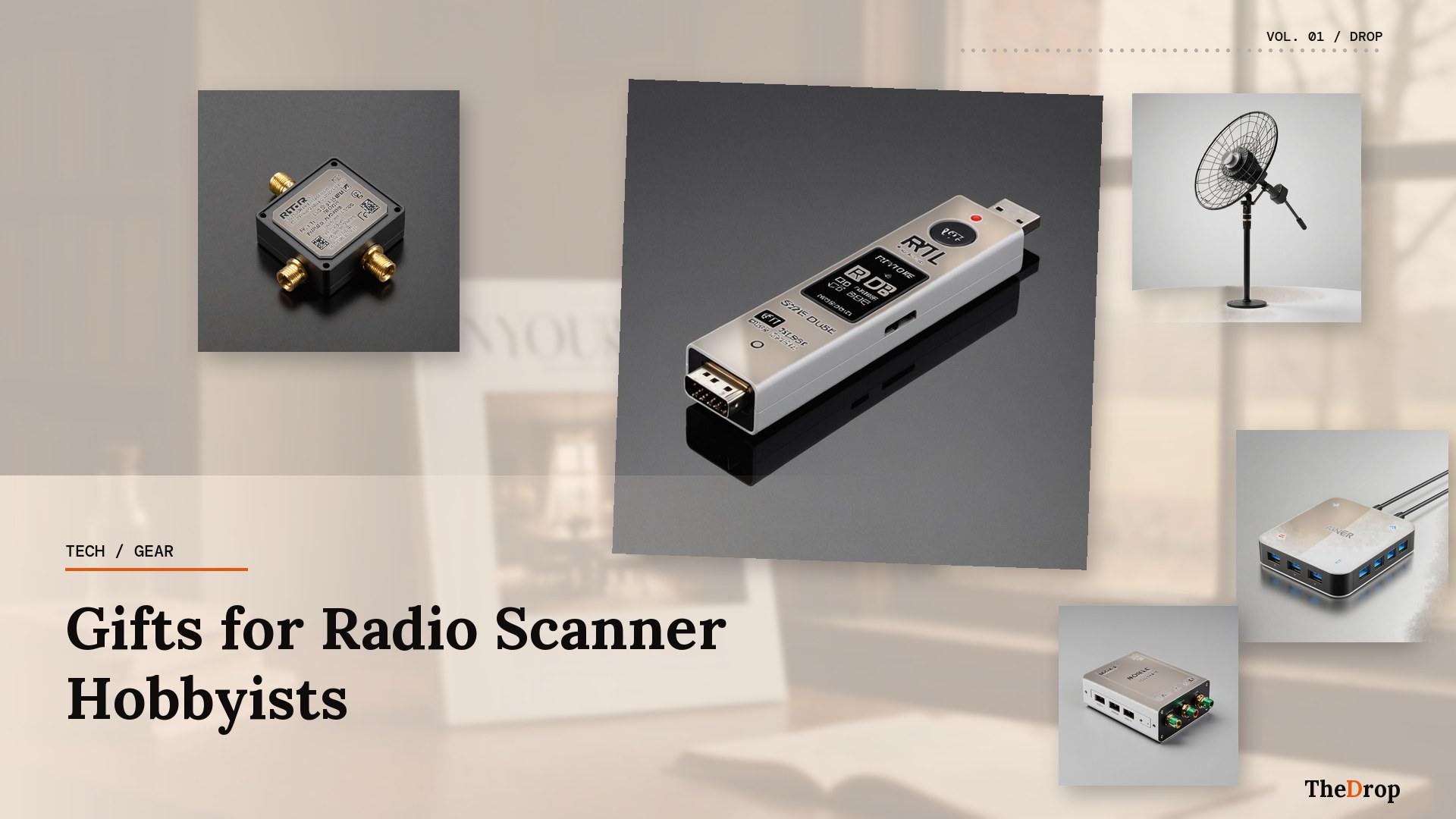
RTL-SDR Blog V4 USB SDR Dongle — R828D Tuner, 0.5PPM TCXO
The RTL-SDR V4 is the current community-preferred entry SDR — a significant upgrade from the V3 with a new R828D tuner that covers HF direct sampling without an upconverter, a 0.5PPM temperature-compensated oscillator for stable frequency accuracy, and a bias-T for powering active antennas. The dongle that the SDR community has converged on as the correct starting point.
“The one reliable rule of gift-giving: anything that makes them look more serious at what they love will be received with disproportionate gratitude.”
RTL-SDR Blog Wideband LNA — Low Noise Amplifier, SMA Female, 0.1–4GHz
A low-noise amplifier placed at the antenna improves signal sensitivity more than any other single upgrade — particularly for weak signals on aircraft, satellite, and weak station reception. The RTL-SDR Blog LNA is the community's reference implementation: low noise figure, powered via the dongle's bias-T, and covers the full SDR frequency range.
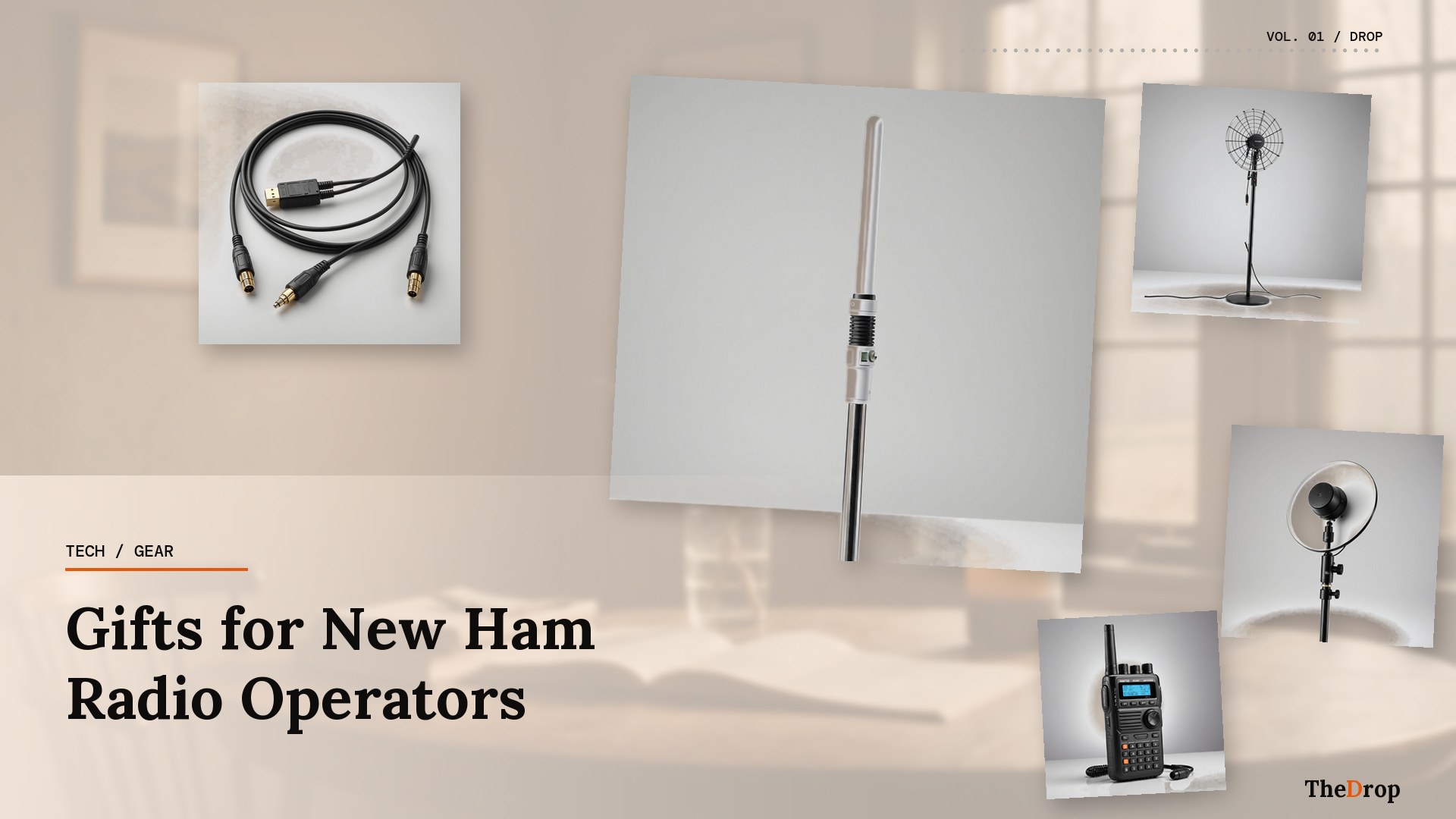
Telescoping SMA Antenna — Wideband, 25MHz–1.75GHz, Flexible
A telescoping SMA antenna upgrades the stub antenna included with most SDR dongles — physically adjustable to optimize for different frequency bands, and the direct SMA connection avoids the coax losses from the standard MCX adapter. The first hardware upgrade the SDR community recommends after initial setup.
"Software Defined Radio with HackRF" by Michael Ossmann — SDR Tutorial Book
The most practical technical SDR reference in print — covering the theory and application of software-defined radio from signal processing fundamentals to practical implementation. Written by the founder of HackRF, it applies equally to RTL-SDR users learning how the technology works at a deeper level than YouTube tutorials provide.
Anker 4-Port USB 3.0 Hub — Low-Noise Power, Shielded Cable
USB bus noise is a real SDR problem — cheap hubs inject interference that appears as birdies across the spectrum. Anker's shielded hubs are the community's workaround for running an SDR dongle off the same USB bus as other devices: proper shielding reduces interference that cheaper hubs allow into the signal chain.
RadioReference Annual Premium Subscription — Nationwide Frequency Database
RadioReference's frequency database is the authoritative source for public safety, aviation, marine, and local scanner frequencies — the subscription that turns a scanner session from random noise searching into purposeful listening. The premium tier adds live audio feeds, trunking system data, and the local county-by-county frequency exports that make programming a scanner manageable.
Nooelec SMArt v5 SDR — Enhanced RTL-SDR with Aluminum Housing and 0.5PPM TCXO
The Nooelec SMArt is the alternative community recommendation to the RTL-SDR V4 — aluminum housing for better thermal performance and RF shielding, the same 0.5PPM TCXO for frequency stability, and a more durable form factor for desktop use. For a gift where the recipient already has a basic dongle, this is the meaningful upgrade.
SMA Female to BNC Male Adapter — Gold-Plated, 50 Ohm
BNC-to-SMA adapters are the connectivity consumable that every scanner hobbyist eventually needs — connecting existing BNC-terminated scanner antennas to SDR dongles with SMA inputs, or vice versa. A gold-plated 50-ohm version maintains signal integrity at the impedance-matched connection point that cheap adapters compromise.
Fork it. Make it yours. Share before their birthday.
Friends claim items. No duplicates. No awkward conversations.