Gifts for Retro PC Builders
Retrocomputing is a patient hobby — the opposite of chasing specs. The person restoring a Socket 7 machine or hunting for an original Sound Blaster card is after something specific: the experience of a computing era that ended, reproduced correctly. The gifts that land are the ones that show understanding of which era, which platform, and which problems the hobby actually involves.
Screen Mom Screen Cleaning Kit — LCD/CRT Safe, 16oz Spray + Cloth
CRT monitor restoration is a real practice in the retrocomputing community — decades of tobacco residue, dust, and outgassing require a cleaning solution safe for phosphor coatings. Screen Mom's ammonia-free formula is the choice that won't damage the coating on a surviving CRT, and the microfiber cloth won't scratch the glass.
“The one reliable rule of gift-giving: anything that makes them look more serious at what they love will be received with disproportionate gratitude.”
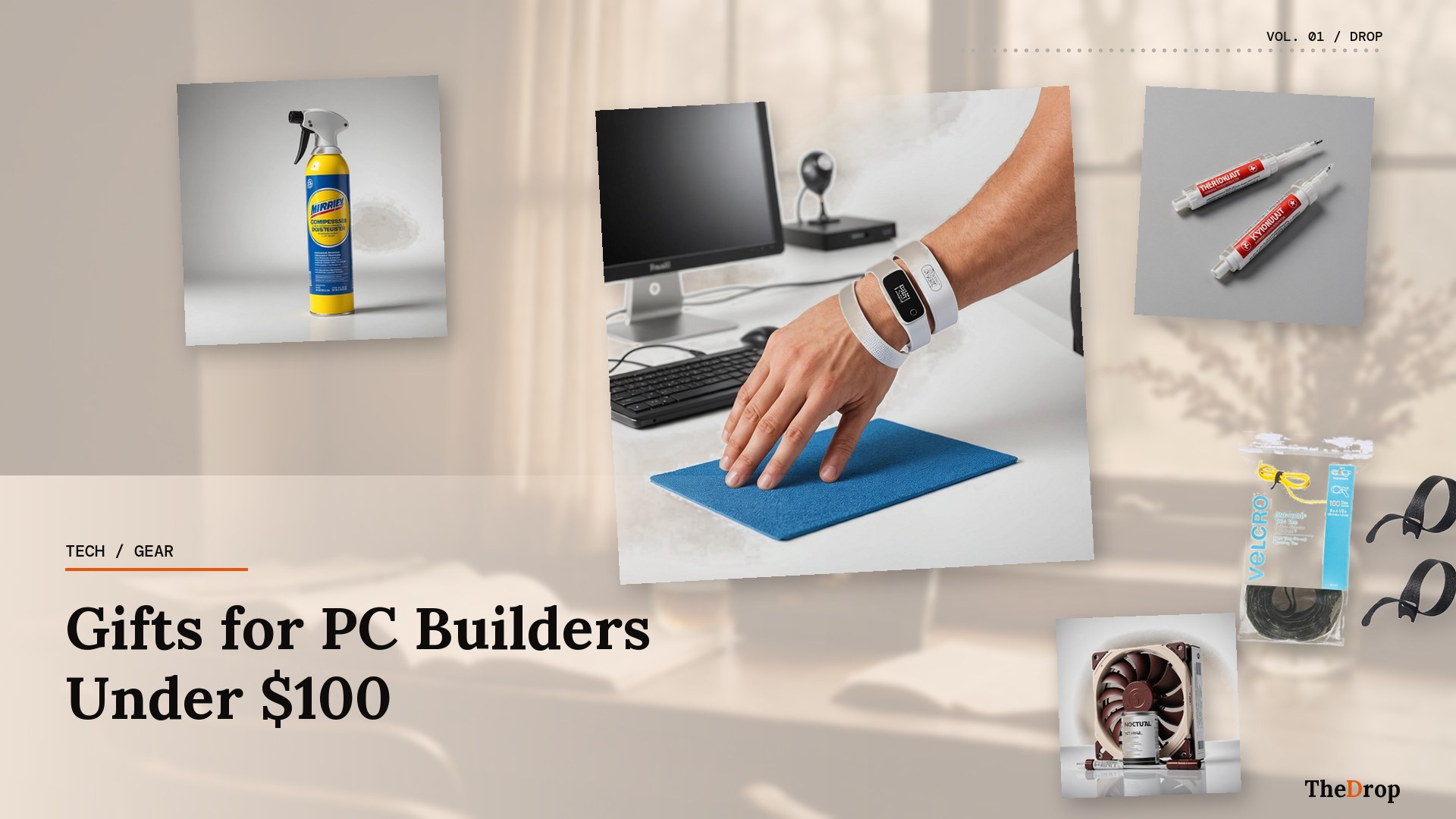
Slot Bracket Blanks — PCI/ISA Vented, 10-Pack
Every retro build eventually needs replacement slot covers — the metal brackets that close unused ISA, PCI, and AGP slots. Missing ones are both an eyesore and an airflow problem. A 10-pack covers a full AT or ATX case, and finding them in a gift context communicates exactly the right level of specificity about what the hobby actually involves.
Thermal Grizzly Kryonaut Thermal Paste — 1g Syringe
Vintage CPUs from the Socket 5, Socket 7, and Slot 1 era dried out their original thermal compound decades ago — replacing it with a modern compound before a restoration is a genuine performance improvement and a necessary step. Kryonaut is overkill for a Pentium MMX, which is exactly the kind of anachronistic gift that retrocomputing people appreciate.
"The Digital Antiquarian" by Jimmy Maher — Hardcover Collection, Vol. 1
Jimmy Maher's Digital Antiquarian is the canonical long-form history of the personal computer and its games — covering the Apple II through the 286 era in precise, affectionate, well-researched depth. For someone who restores these machines, having the cultural history of the software that ran on them is the companion piece that makes the hardware meaningful.
Boxy Pixel CNC Aluminum Replacement Shell — Game Boy DMG/Color
For the retro builder who works on portable hardware: Boxy Pixel's CNC machined aluminum Game Boy shell is a premium restoration part that replaces the degraded original plastic with machined metal. The kind of upgrade that distinguishes someone who collects from someone who restores.
Deoxit D5 Contact Cleaner Spray — 5oz, Professional Grade
Deoxit D5 is the de facto standard contact cleaner for retrocomputing restoration — the product that cleans oxidized edge connectors on ISA cards, cartridge contacts, and expansion slot pins without leaving residue. Anyone doing serious retro hardware work goes through it regularly and is always glad to have more.
Perixx PERIBOARD-409 Mini USB Keyboard — Retro Layout, 75%
A period-adjacent keyboard that works via USB and fits the aesthetic of a restored system without requiring PS/2 adapter hunting. Not a reproduction, but appropriate in spirit — compact, reliable, and cheap enough that it becomes the daily driver for the retro rig rather than something to protect.
9-to-25 Pin Serial Adapter and Null Modem Cable Set
Serial connectivity is the practical side of retrocomputing that never gets easier — getting files onto a DOS machine often requires null modem cables, DB-9/DB-25 adapters, and patience. A complete adapter set that covers both connector sizes is the gift that unblocks an afternoon of file transfer frustration.
Fork it. Make it yours. Share before their birthday.
Friends claim items. No duplicates. No awkward conversations.