Lap Times Are Real When You Make Them Real
Someone with a Logitech G29 or Thrustmaster wheel is already past the beginner phase — what they need is not more hardware but the peripherals that make the existing setup work properly. A stable wheel stand, a button box for mid-race adjustments, and gloves that cut long-stint fatigue are the upgrades this community talks about.
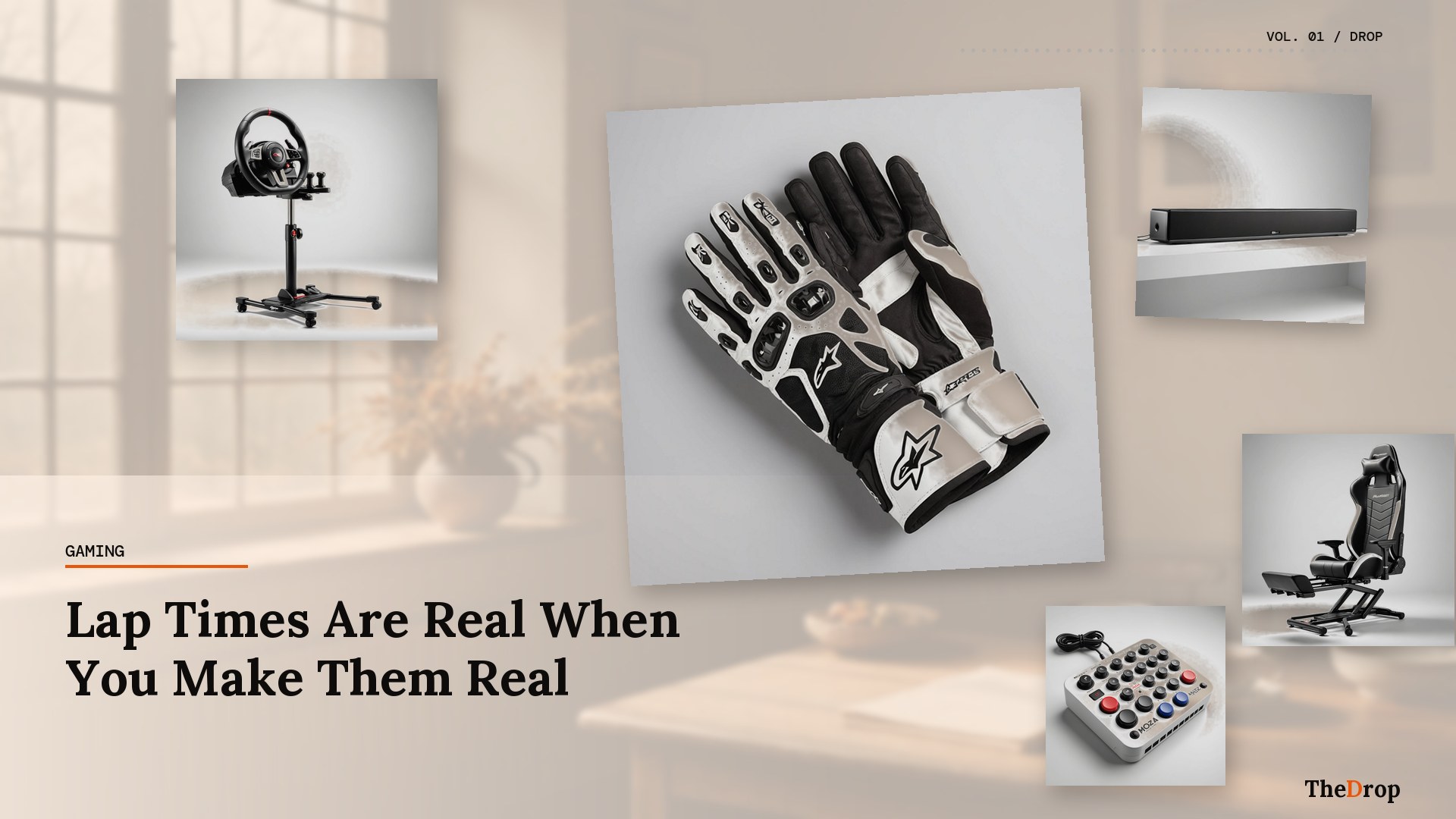
Playseat Challenge ActiFit Foldable Racing Chair
Puts the driver in the correct seating angle for brake and throttle feel — the upgrade that removes the couch compromise once and for all.
“The one reliable rule of gift-giving: anything that makes them look more serious at what they love will be received with disproportionate gratitude.”
MOZA Racing Button Box — 14-Button USB Controller
Brake bias, TC adjustment, pit limiter — handled without hunting for keyboard shortcuts mid-corner at race speed.
Alpinestars Tech-1 K Race Gloves
Thin leather reduces long-stint fatigue on a force-feedback wheel — the detail that separates someone running full race distances from a casual driver.
Thrustmaster T-LCM Pedals — Load Cell Brake
A load-cell brake requires real foot pressure rather than travel distance — the single hardware upgrade that most dramatically teaches trail braking through physical feedback.
GT Omega Wheel Stand PRO — Adjustable Universal Mount
Correct wheel and pedal height and angle — the upgrade from a desk clamp that finally lets a driver use full leg extension on the brake.
Speed Secrets: Professional Race Driving Techniques — Book by Ross Bentley
The reference serious sim racers use to understand what they are trying to replicate — trail braking, entry speed, and vision technique that apply equally in a simulator.
Valve Index Controller Strap — Universal Wrist Mount for Sim Racing
Prevents the involuntary release during gear changes that costs time on sequential gearbox simulations — a small fix for a repeatable problem.
Creative Stage SE 2.1 Under-Monitor Soundbar
Hearing the engine hit redline rather than just watching the rev counter is how fast drivers hit shift points — audio is a feedback tool, not atmosphere.
Fork it. Make it yours. Share before their birthday.
Friends claim items. No duplicates. No awkward conversations.