Gifts for obsessive sourdough bakers who track hydration ratios under $75
The sourdough nerd in your life already has a starter named something embarrassing — what they need is better data. These are tools and books for the baker who treats a 74% hydration loaf as a hypothesis, not a recipe.
Item 1
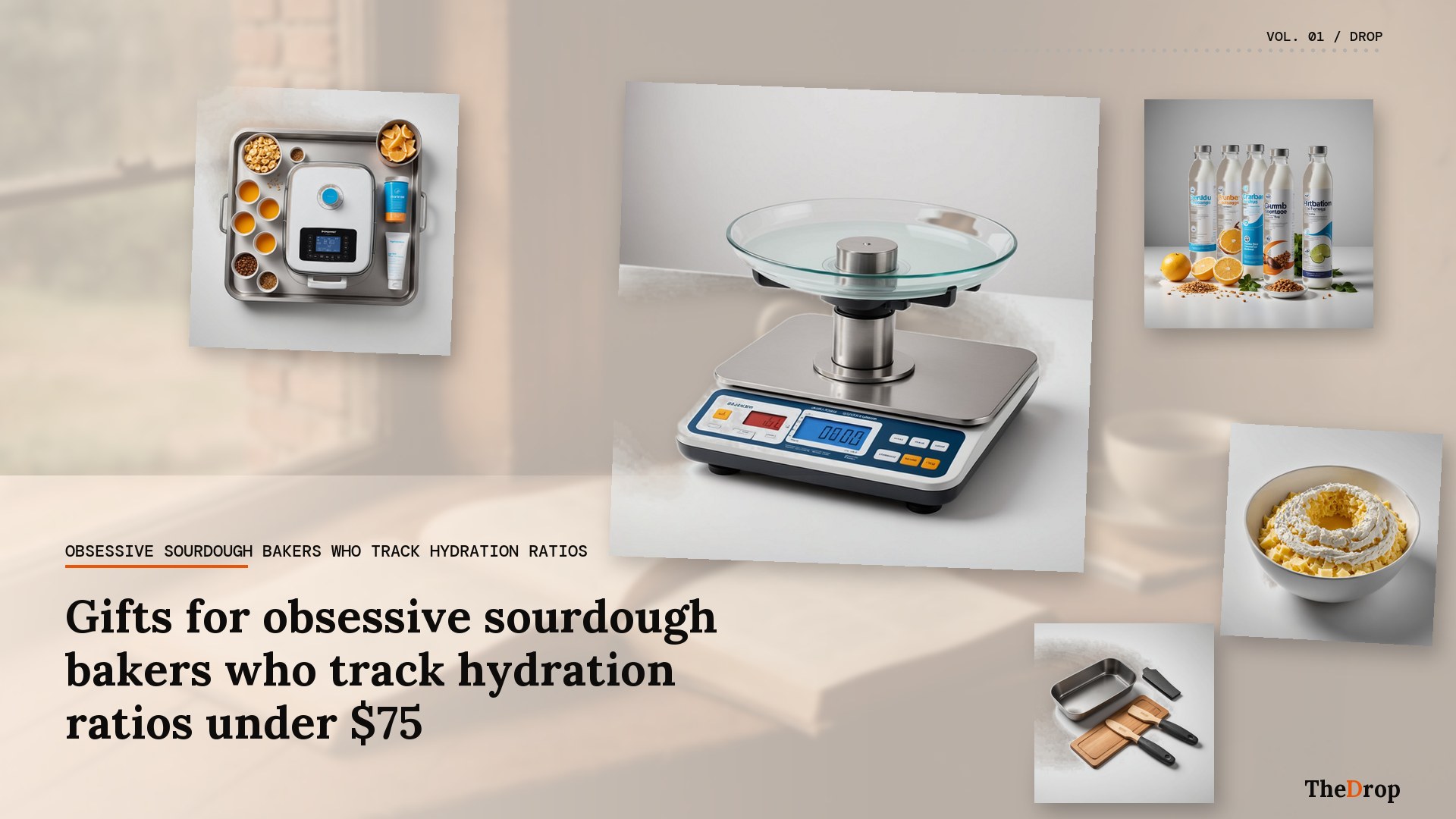
A scale accurate to 0.1g is not overkill when you're chasing a 73.5% hydration target — it's the whole point. The tare resets instantly, the display is big enough to read across a floury counter, and at $25 it's the single most useful thing in a sourdough kitchen.
“The one reliable rule of gift-giving: anything that makes them look more serious at what they love will be received with disproportionate gratitude.”
Item 2
Fermentation timing is mostly a temperature problem, and this solves it in one second flat. A reading accurate to ±0.7°F means the difference between a bulk ferment that's on schedule and one that quietly overproofs while you're answering email. The tool professional bakers use because nothing else is close.
Item 3
All that hydration tracking earns its payoff in the oven, and the payoff requires steam. The shallow skillet lid is the real selling point here — loading a 78% hydration dough into a deep Dutch oven without deflating it is a particular kind of stress this design removes. Cast iron, pre-seasoned, built to outlast the obsession.
Item 4
Chad Robertson wrote the book that convinced a generation of home bakers that 75% hydration was achievable — and worth the mess. Less a recipe collection than a methodology: how fermentation actually works, why scoring matters, what the crumb is telling you. The copy on their shelf is probably already flour-stained. Give them a clean one.
Item 5
Where Tartine gives you the method, this gives you the mechanism — gluten network formation, the chemistry of fermentation gases, why hydration changes crumb structure at the molecular level. A home-baker distillation of the most scientifically rigorous bread project ever published. For the person whose baking notes already look like lab reports.
Item 6
Ambient humidity and temperature are the two inputs most bakers ignore and then blame the starter for. This Bluetooth sensor logs both continuously to a phone app, which means you can finally correlate that underproofed Tuesday loaf with the 62°F kitchen you forgot about. Twenty dollars for a second data stream is a reasonable trade.
Item 7
Pre-formatted pages for hydration percentages, starter activity, bulk ferment timing, and crumb results — structured so you don't have to design your own logging system at 6am. The obsessive baker who currently tracks bakes in a notes app will recognize this immediately as better. Honest gift for someone who iterates seriously.
Item 8
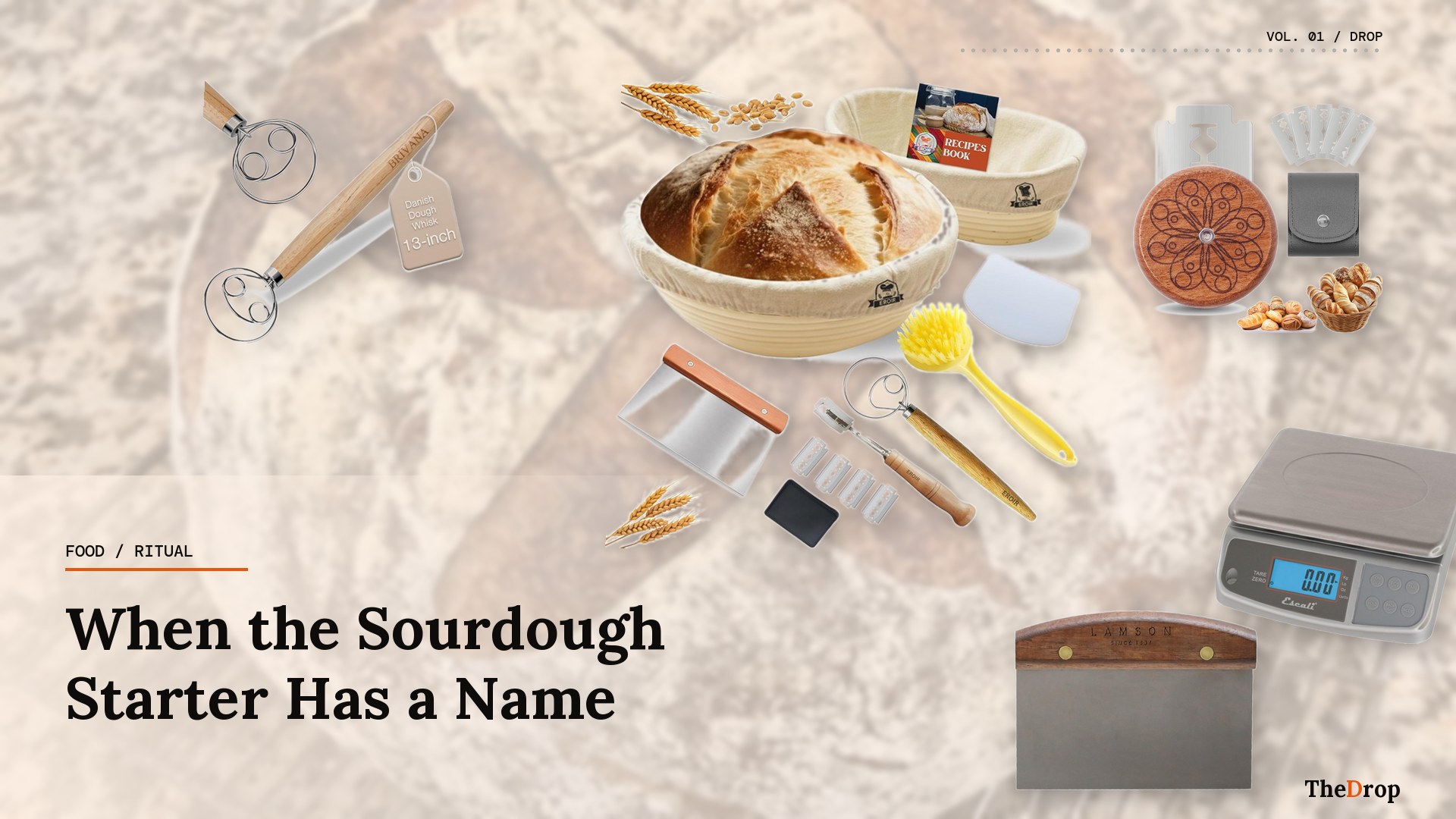
High-hydration doughs collapse in a bowl overnight. A rattan banneton holds the shape through the cold retard, the linen liner prevents sticking without over-drying the crust, and the spiral leaves a ring that signals to everyone at the table that this loaf was not an accident. Round and oval both included.
Item 9
A rigid bench scraper and a flexible bowl scraper, which are two different tools that do two different jobs — something a lot of starter kits get wrong. The bench scraper doubles as a ruler for consistent pre-shape sizing, which matters when you're trying to control oven spring across a two-loaf batch. Fifteen dollars, stainless steel, no nonsense.
Item 10
A wet, cold dough drags against a dull blade and the ear never forms. A curved lame with a sharp razor solves this: the arc lets you score at the right angle in one confident pass. Five replacement blades included, because the right move is to change blades more often than feels necessary.
Fork it. Make it yours. Share before their birthday.
Friends claim items. No duplicates. No awkward conversations.