Forty-Five Minutes from the City Lights
The amateur astronomer already has a telescope. What they are missing is the dark-adaptation-preserving flashlight, the collimation tool, and the book that makes everything in the eyepiece finally make sense. These are the things the community recommends to each other on every forum thread.
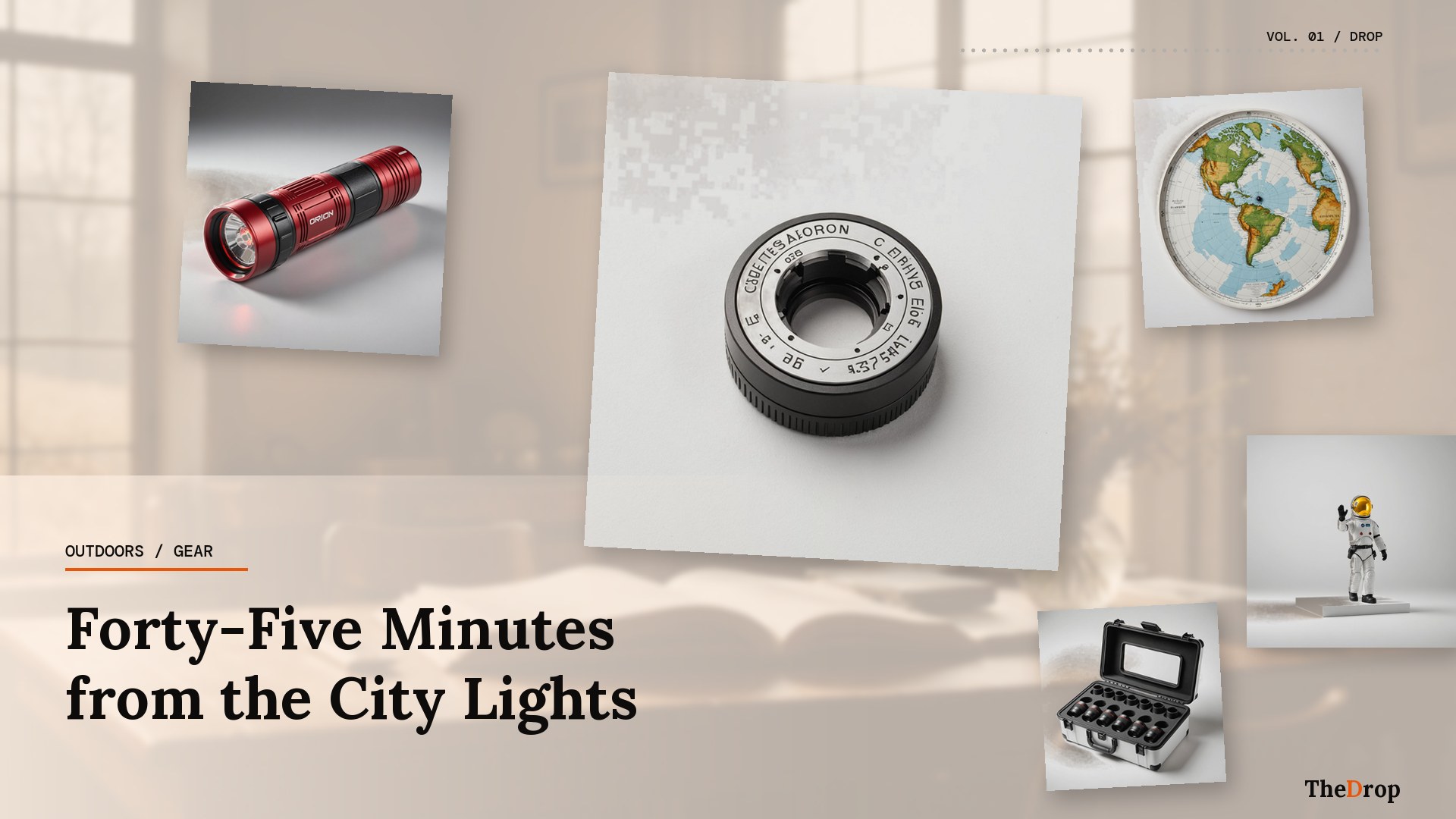
Orion 4-Inch Red LED Flashlight — Variable Brightness, Astronomy-Grade
White light destroys 20 minutes of dark adaptation in an instant — the variable dimmer on this one means they can actually use it at the eyepiece.
“The one reliable rule of gift-giving: anything that makes them look more serious at what they love will be received with disproportionate gratitude.”
David Chandler Planisphere — 40° North Latitude, 11.25-Inch
The community's preferred star wheel — the typeface is legible under red light and it's calibrated to latitude rather than guessed at.
"Turn Left at Orion" by Guy Consolmagno and Dan Davis — 5th Edition
The canonical visual observer's guide — every object is charted for what it actually looks like in an amateur telescope, not what Hubble sees.
Orion Padded Eyepiece Case — Holds 6 Eyepieces, Foam Interior
Once someone has more than two eyepieces, they need this — without it the collection lives in a drawer getting scratched.
Cheshire Collimation Eyepiece — 1.25-Inch, Newtonian Reflectors
The $25 tool that makes a $300 Newtonian perform like something significantly more expensive — most beginners skip it until star images stop looking sharp.
Celestron Collimation Cap — 1.25-Inch, Basic Alignment Tool
A quick-check field tool — good enough to confirm alignment before a session without pulling out the Cheshire.
Carson MicroBrite Plus LED Pocket Microscope — 60-120x, Red-Compatible
The observer who pays attention to scale at the eyepiece will also find 120x useful on the minerals and insects that show up at a dark-sky site.
Night Sky Planisphere — Southern Hemisphere, 35° South, Laminated
For the observer below the equator — the Southern Cross and Magellanic Clouds properly oriented rather than upside-down on a northern chart.
Fork it. Make it yours. Share before their birthday.
Friends claim items. No duplicates. No awkward conversations.