The Messier Checklist on the Clipboard
Deep sky observing is the most patient form of astronomy — it requires dark skies, dark-adapted eyes, and enough planning to know where to point the telescope in a two-hour window. These observers keep detailed logs and return to objects across multiple sessions to pull out more detail. The gifts that serve them improve contrast, extend sessions, and make the data layer richer.
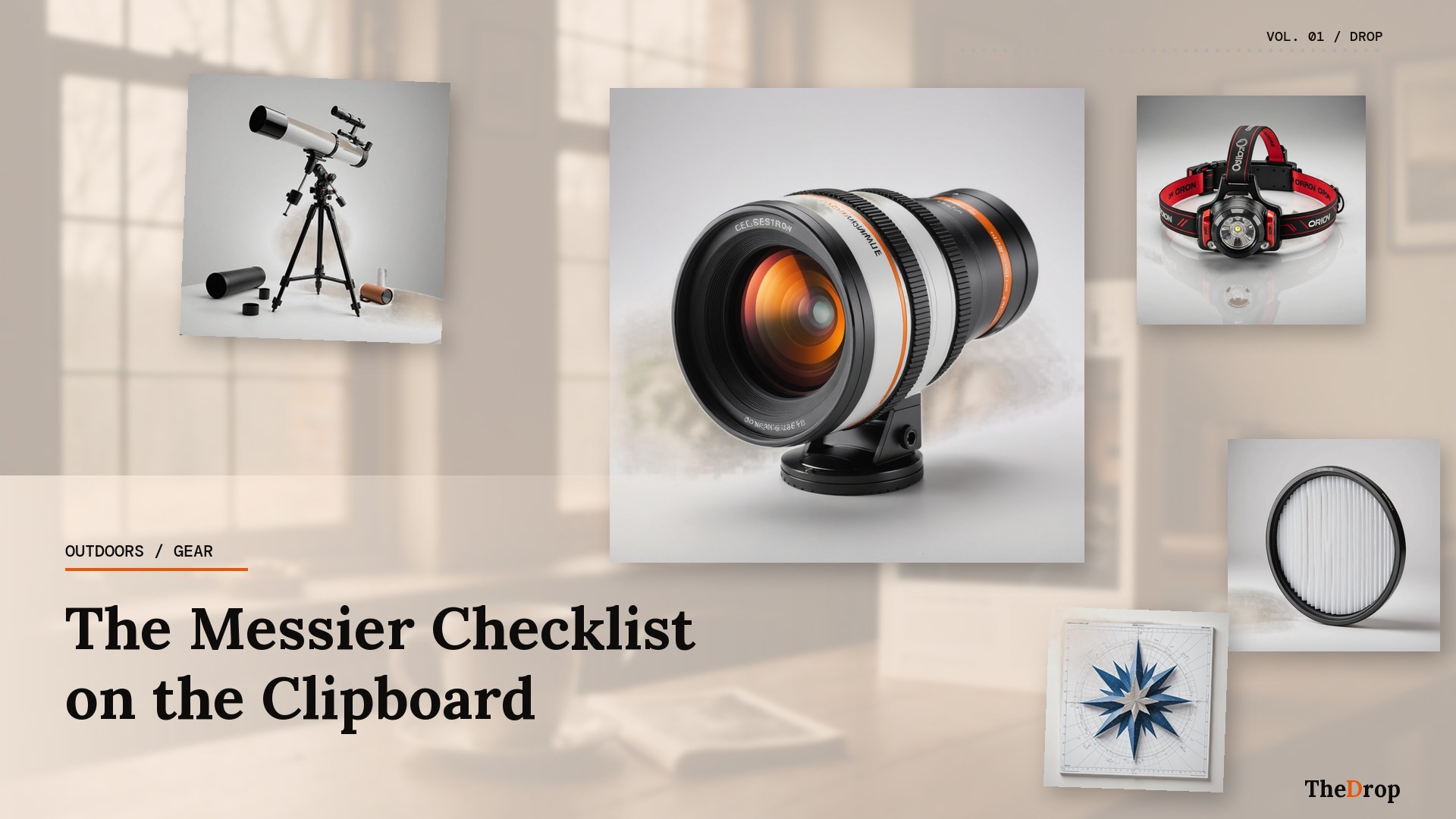
Celestron Omni 2x Barlow Lens (1.25-inch, Multi-Coated)
Doubles the magnification of any 1.25-inch eyepiece in the kit — the most efficient single accessory for expanding an existing collection.
“The one reliable rule of gift-giving: anything that makes them look more serious at what they love will be received with disproportionate gratitude.”
Orion 5592 UltraBlock UHC Narrowband Filter (1.25-inch)
Passes emission nebula wavelengths while blocking light pollution — the contrast improvement on the Orion Nebula is immediately visible from suburban skies.
Orion DeepMap 600 Folded Star Chart
Laminated, fold-flat, red-light readable, weatherproof — the field chart that stays in the accessory case permanently.
Explore Scientific Observation Log Notebook (Pre-Formatted DSO Fields)
Pre-printed pages with fields for object ID, conditions, magnification, and sketch space — systematic logging is how observers improve at pulling detail from difficult targets.
Observing the Messier Objects with a Small Telescope by Philip Pugh
Object by object, with what to expect at different magnifications and sky conditions — not what Hubble sees but what a small-aperture visual observer actually sees.
Celestron 93436 X-Cel LX 9mm Eyepiece (1.25-inch)
The X-Cel LX offers genuine optical quality at mid-range prices — the 9mm focal length hits the planetary and high-power DSO sweet spot that most starter kits miss.
Orion 07854 Red LED Headlamp (Astronomy Grade, Dimmable)
Red at the correct wavelength, properly dimmable — the two features cheap red lights consistently get wrong.
Clear Outside App Gift Card / Subscription (1 Year)
Hyperlocal transparency and Bortle scale forecasts for an observer's exact location — planning around genuine dark windows is how serious observers maximize their nights.
Fork it. Make it yours. Share before their birthday.
Friends claim items. No duplicates. No awkward conversations.