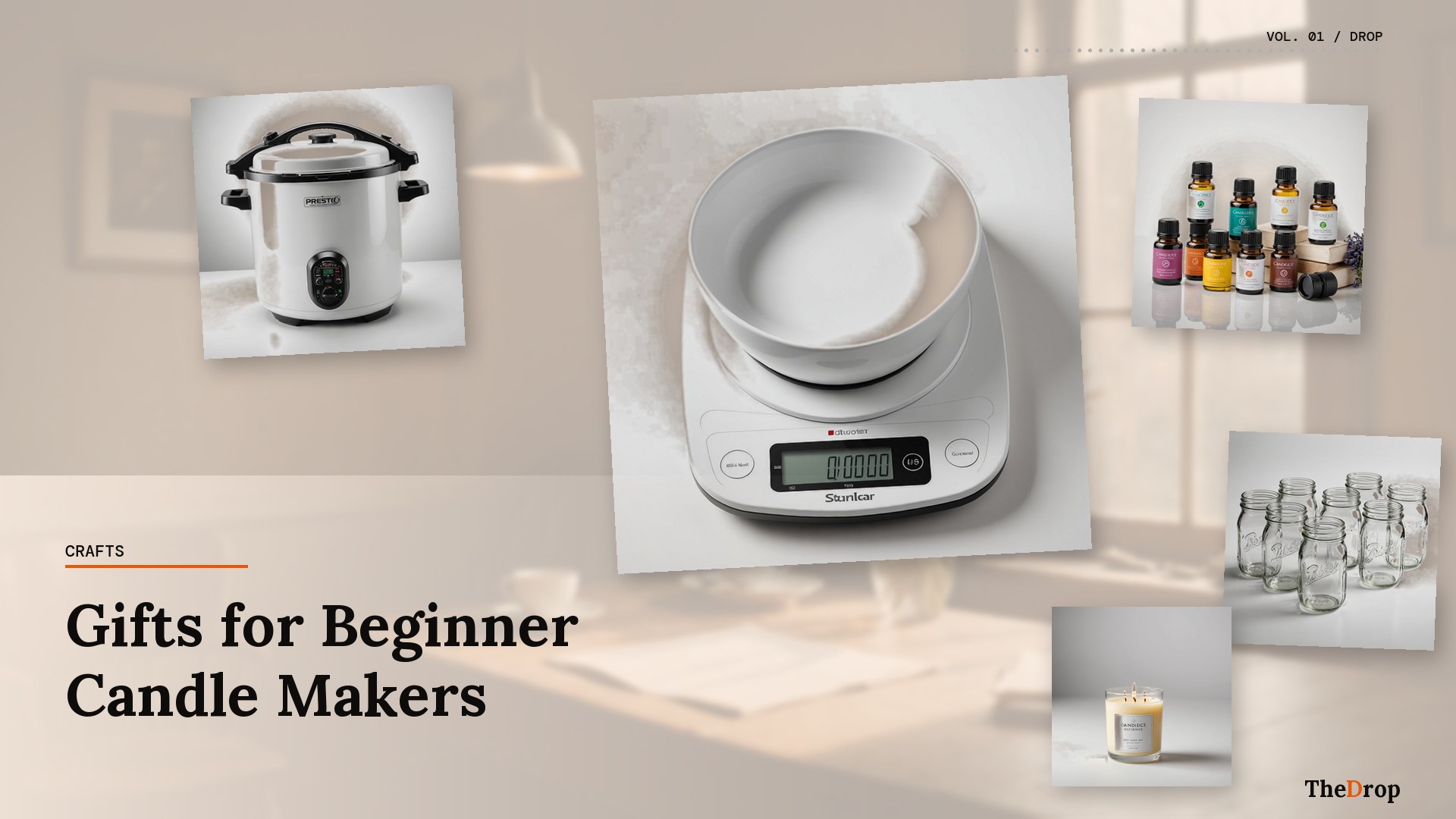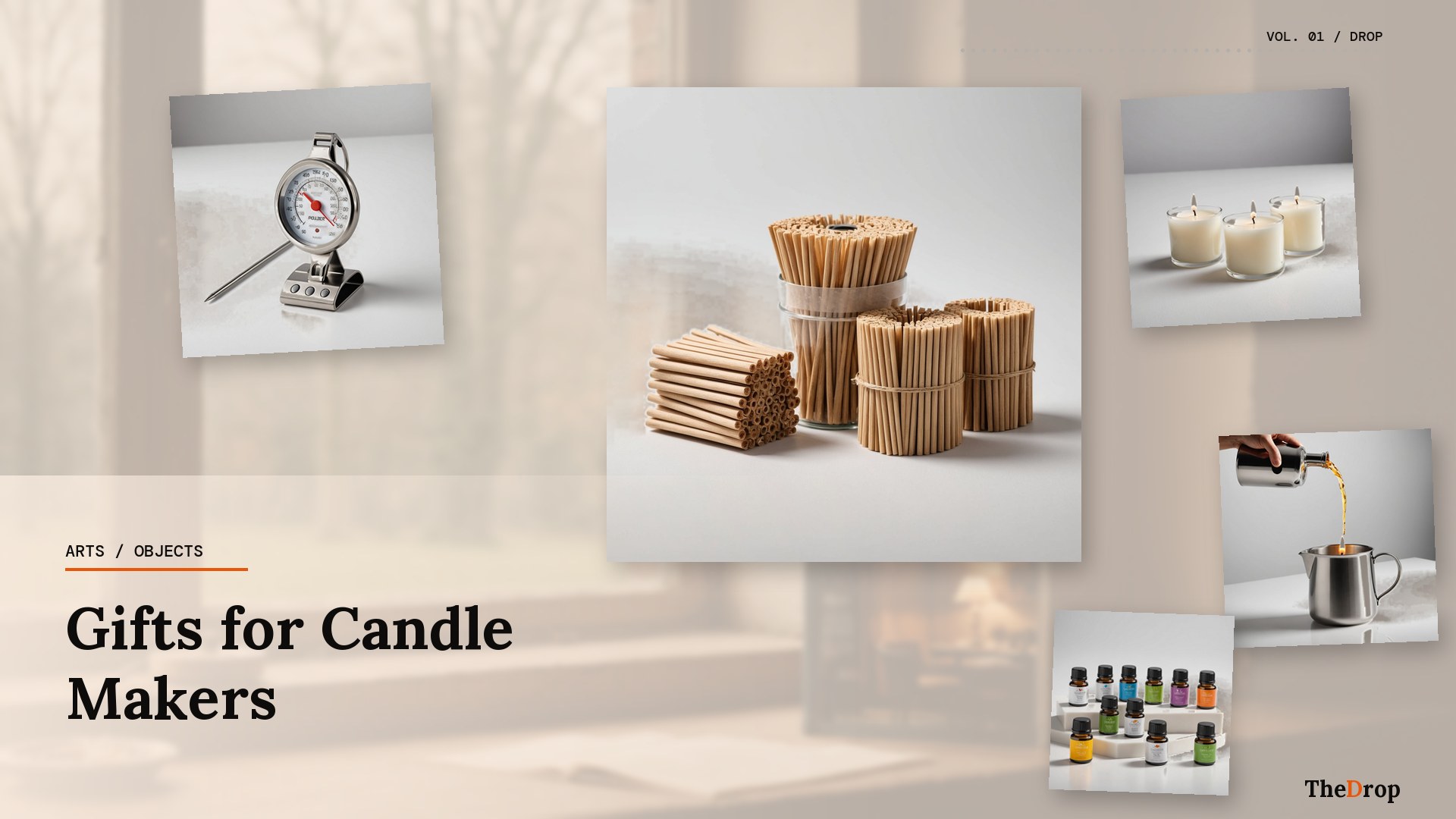
Gifts for Candle Makers
The candle making community splits neatly into kit buyers and serious hobbyists — and they shop completely differently. The hobbyist already has containers and equipment; what they want is better materials, more precise tools, and a way to track what works. These eight picks are the sourcing and precision upgrades that turn a batch of candles from inconsistent to repeatable.
Candlescience Fragrance Oil Sampler Set — 10 x 1oz Bottles
Candlescience is the candle-making community's most trusted fragrance supplier for a reason — their oils are formulated specifically for candle use, with documented flash points and recommended usage rates. A 10-bottle sampler is the gift that gives a maker a new palette to test without committing to a full 4oz bottle of anything.
“The one reliable rule of gift-giving: anything that makes them look more serious at what they love will be received with disproportionate gratitude.”
American Soy Organics Coconut Soy Wax Blend — 2 lbs
Coconut-soy blends have better fragrance throw than straight paraffin and a smoother top than straight soy — the upgrade wax that more experienced candle makers switch to after outgrowing beginner kits. The 2-lb format is the right size for testing a new fragrance without pouring a full production batch.
Wooden Wick Co. Sample Pack — 20 Wicks, Mixed Widths
Wood wicks produce a crackling, fireplace-adjacent burn that cotton wicks can't replicate — the sensory upgrade that many candle buyers specifically seek out. A mixed-width sample pack gives a maker the material to test across multiple vessel diameters and find the optimal wick sizing without the cost of buying full quantities of each width.
Polder Digital Cooking Thermometer — Stainless Probe, Clip-On
Accurate pour temperature is one of the two most important variables in candle making — pour too hot and the fragrance flashes off; too cool and the wax doesn't adhere to the container. A reliable clip-on thermometer that stays in the pour pot is the precision tool that makes every batch more consistent than the last.
Fragrance Testing and Blending Notebook — A5, Lay-Flat, 120 Pages
A dedicated candle testing log with fields for wax type, fragrance load percentage, pour temp, cure time, and burn observations — the record-keeping tool that turns successful batches from happy accidents into repeatable formulas. For anyone who has remade a candle they loved but couldn't quite recreate.
AAA Candle Wicks — Pre-Tabbed Cotton, 100-Pack, 6-Inch
Pre-tabbed cotton wicks with metal sustainer tabs are the production consumable that candle makers go through fastest — a 100-pack covers enough batches to test multiple fragrance combinations across different vessel sizes. Cotton-core wicks from a reliable supplier eliminate the variable of wick inconsistency from a cheaper source.
Brambleberry Fragrance Blending Kit — 5 Complementary Scents
Brambleberry's blending kits pair five fragrance oils chosen to work together — a base, two mid notes, and two top notes from the same scent family. For a maker who has been working with single-note fragrances and wants to move into blended signatures, this is the shortcut that teaches blending intuition through successful examples.
Candle Making Pouring Pot — Stainless Steel, 2-Liter with Handle
A dedicated stainless pour pot with a spout and handle is the equipment upgrade that makes wax handling safer and cleaner than improvising with a regular pot. The angled spout pours cleanly into narrow-necked vessels without dripping. Once a maker has one, using anything else feels like going backward.
Fork it. Make it yours. Share before their birthday.
Friends claim items. No duplicates. No awkward conversations.