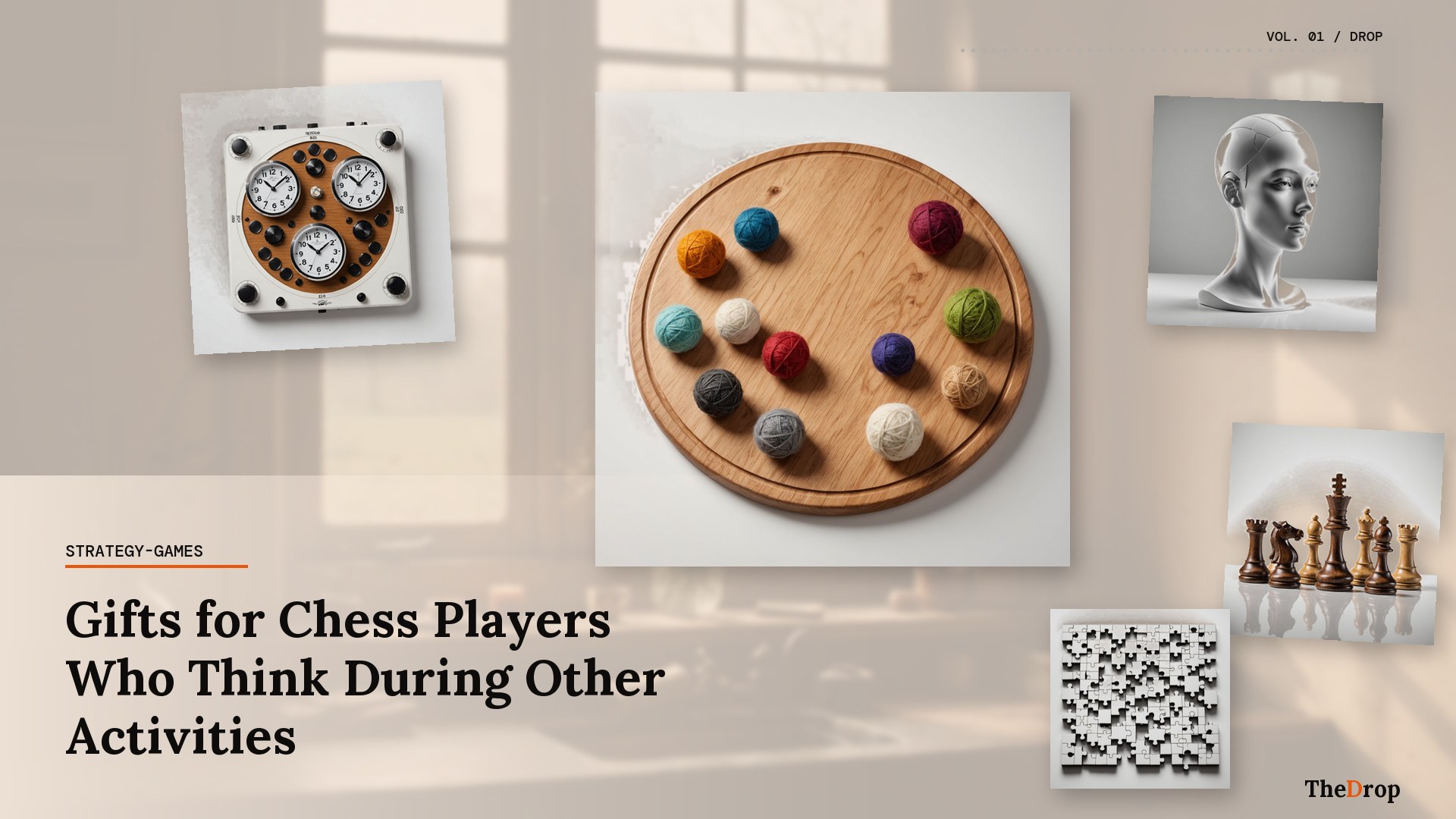
Gifts for Chess Players Who Think During Other Activities
Chess people are always analyzing something. At dinner. During commutes. In the shower. The gifts that resonate are the ones that feed that habit — a notebook for game analysis, a clock that runs their blitz practice properly, a book that makes them rethink an opening they've played for years. Under $60, nothing decorative.
Yellow Mountain Imports Wooden Chess Set (15-Inch Walnut/Maple Board)
A proper wooden board with weighted, felted pieces. The pieces are Staunton pattern — the tournament standard — which matters if they play OTB or want to study positions from books. The walnut/maple contrast is correct visually. A chess player who owns a plastic travel set will play on this instead.
“The one reliable rule of gift-giving: anything that makes them look more serious at what they love will be received with disproportionate gratitude.”
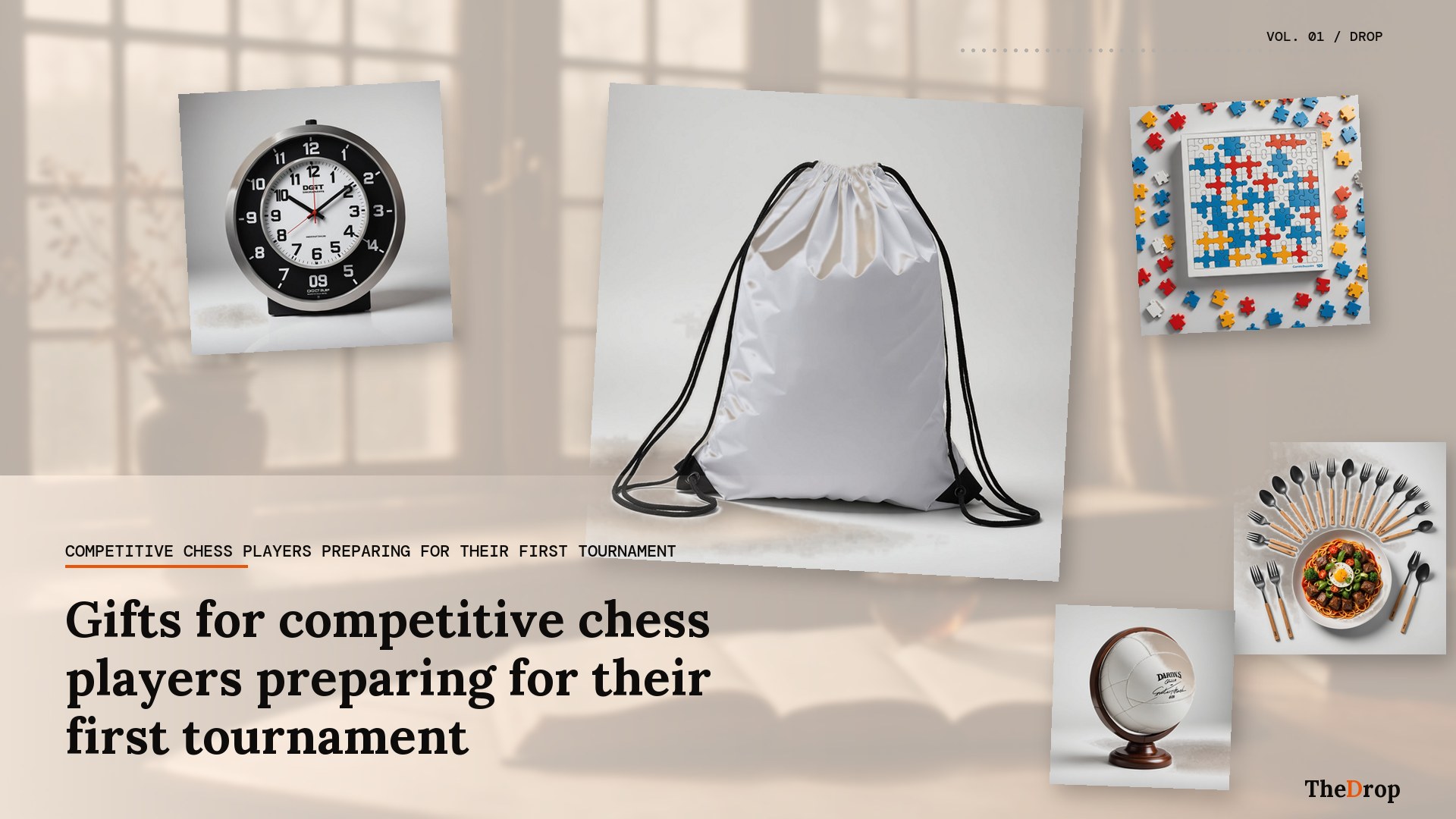
ZMF Chess Timer — Dual Button Analog Clock
An analog chess clock with two independent dials, reset buttons, and a flat bottom that stays on the board. For blitz and rapid practice, having a real clock changes the game — you can't develop time sense by playing untimed online. Simple, reliable, no app required, won't die mid-game.
My System by Nimzovich (Dover Edition)
Published in 1925. Still one of the five most important chess books written. Nimzovich's concepts — blockade, prophylaxis, the passed pawn — are the theoretical foundation for positional play at every level above beginner. Dense and occasionally eccentric in tone. Exactly the kind of book where a player finds the sentence that restructures how they see the board.
100 Endgames You Must Know by Jesus de la Villa
Endgame theory is the most consistently under-studied part of club-level chess. This book covers exactly the hundred positions that appear most often in real games — king and pawn endings, rook endings, the key bishop and knight structures. Every club player who works through this wins games they previously drew and draws games they previously lost.
Tactics Time 1: 1001 Chess Tactics by Tim Brennan
1001 tactical puzzles drawn from real amateur games — not grandmaster brilliancies. The problems are the ones actual players miss at your friend's rating level, which makes the training transfer directly. For the player who wants to study on the commute without a board, this works as a puzzle book alongside a physical set.
Moleskine Cahier Journal (Large, Plain, 3-Pack)
Plain pages for game annotation — no lines getting in the way of board diagrams drawn by hand. Serious chess players keep a notation journal; players who don't have one yet feel the difference immediately when they start. Three in the pack means they run for a while. The plain page is the key detail here.
Chessbase 16 Mega Package — Digital Download
The database software that tournament players, trainers, and analysts use. Eight million games, opening preparation tools, engine analysis, and personal game storage. For a dedicated club player who currently reviews games in their head, the step up to Chessbase changes the quality of analysis they can do after every session.
The Art of Attack in Chess by Vladimir Vukovic
A systematic guide to kingside attacks, pawn storms, and piece coordination in attacking play. Vukovic breaks down attacking patterns into learnable structures — the kind of book where a player realizes they've been attacking with intuition when they could be attacking with a plan. Under $20 and genuinely changes how they approach positions.
Fork it. Make it yours. Share before their birthday.
Friends claim items. No duplicates. No awkward conversations.