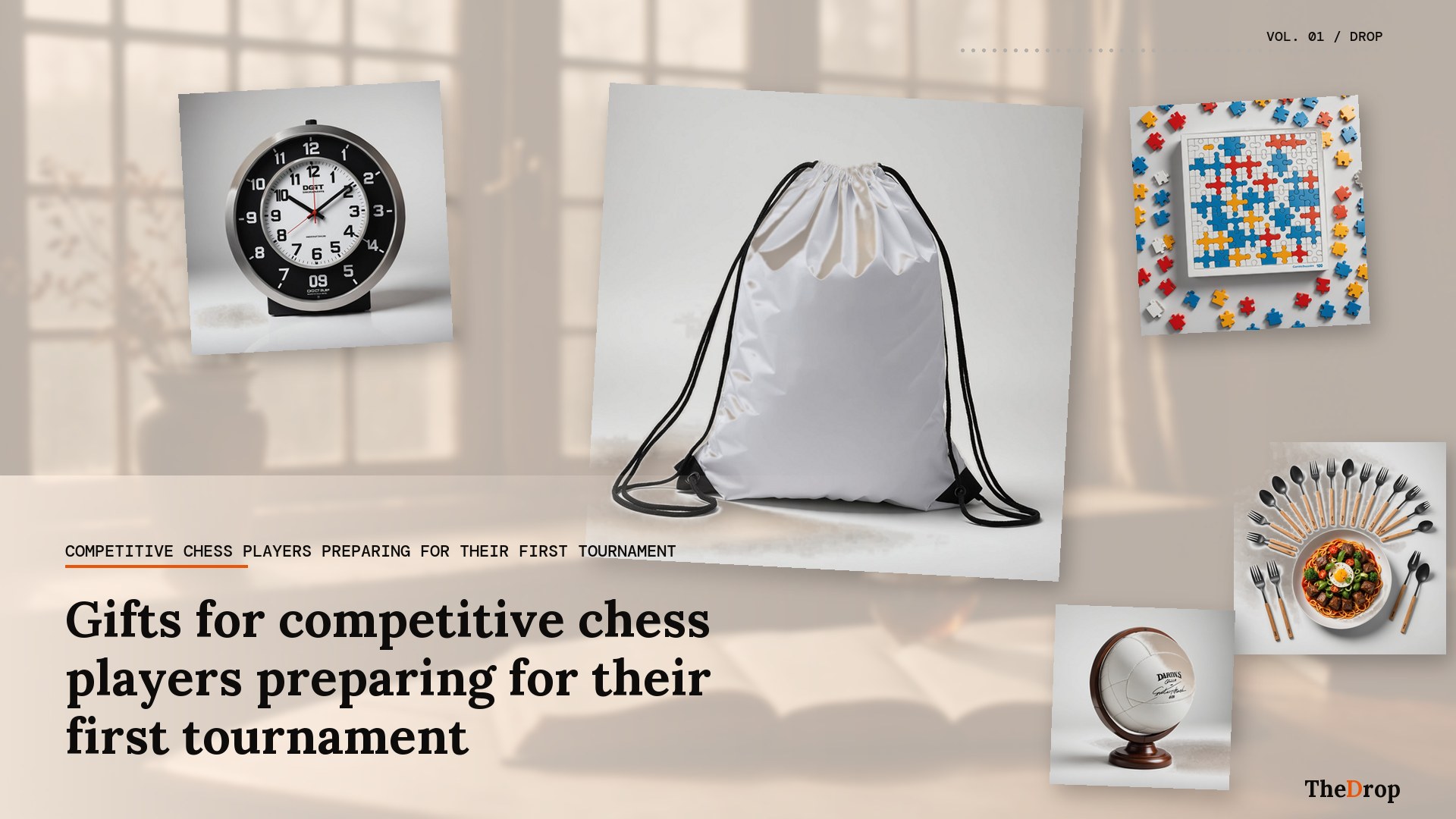
Gifts for competitive chess players preparing for their first tournament
The first rated tournament is mostly logistics: wrong clock, no score sheets, pieces that feel nothing like the ones on the board next to you. These gifts solve the practical problems before they become round-one surprises — and a few of them will improve the chess too.
Item 1
The DGT North American is the clock they will see at every USCF-rated event they enter for the next decade. Digital, supports both delay and increment time controls, and the interface is simple enough to set up in under a minute. Buy this one, not the analog — tournaments moved on.
“The one reliable rule of gift-giving: anything that makes them look more serious at what they love will be received with disproportionate gratitude.”
Item 2
Silman's endgame book is organized by rating level, which means a 900-rated player studies king-and-pawn endings and stops — not the Lucena position, not yet. Most endgame books ask beginners to learn everything at once. This one knows better. The chapter you're at right now is the only one that matters.
Item 3
1001 puzzles, organized from one-move shots to three-move combinations. Daily tactical drilling is the fastest way a club-level player gains rating points — not opening prep, not endgame theory. This is the work. Solving fifteen puzzles a night for six weeks before a tournament is a real plan.
Item 4
Seirawan's tactics primer covers forks, pins, skewers, and discovered attacks with diagrams that don't require a board to follow. Clear, progressive, and short enough to read on a commute. A good complement to the puzzle book if they want explanation alongside drilling — the two do different things.
Item 5
At a rated tournament, notation is required. Showing up without score sheets — or writing so slowly that the clock becomes a crisis — is a fixable problem. Two pads of 100 games each, formatted exactly like tournament sheets, so the mechanics are automatic before round one. Ten dollars well spent.
Item 6
A vinyl roll-up board in official tournament dimensions with algebraic notation printed directly on the squares. Not beautiful — that's not the point. The point is practicing at home on the same size board they'll play on, so the spatial feel of long diagonals and open files is already calibrated.
Item 7
Triple-weighted Staunton pieces with felted bases that sit and move like the sets at most club and scholastic tournaments. The weight difference between a cheap set and a proper one is noticeable in hand — picking up pieces confidently is a small thing that matters under time pressure. King height meets USCF standards.
Item 8
A nylon drawstring bag that fits a full tournament piece set plus a rolled-up vinyl board. Unremarkable, which is exactly what a bag for chess pieces should be. Everything in one place, nothing rattling loose in a backpack, pieces not chipping against each other on the train to the venue.
Item 9
An all-day Swiss tournament — six rounds, long time controls — will drain a phone before round four. Between games, players analyze on Chess.com or Lichess; that drains it faster. A 10,000mAh power bank is the gift that nobody thinks to buy and everyone wishes they had on the walk home.
Item 10
If the DGT is already handled, the analog ZMF clock is a decent second practice clock for home use — one player runs the board, the other runs the analog, and they compare time habits. Meets USCF regulations and costs less than a round-trip bus fare. Not the primary recommendation, but not wrong.
Fork it. Make it yours. Share before their birthday.
Friends claim items. No duplicates. No awkward conversations.