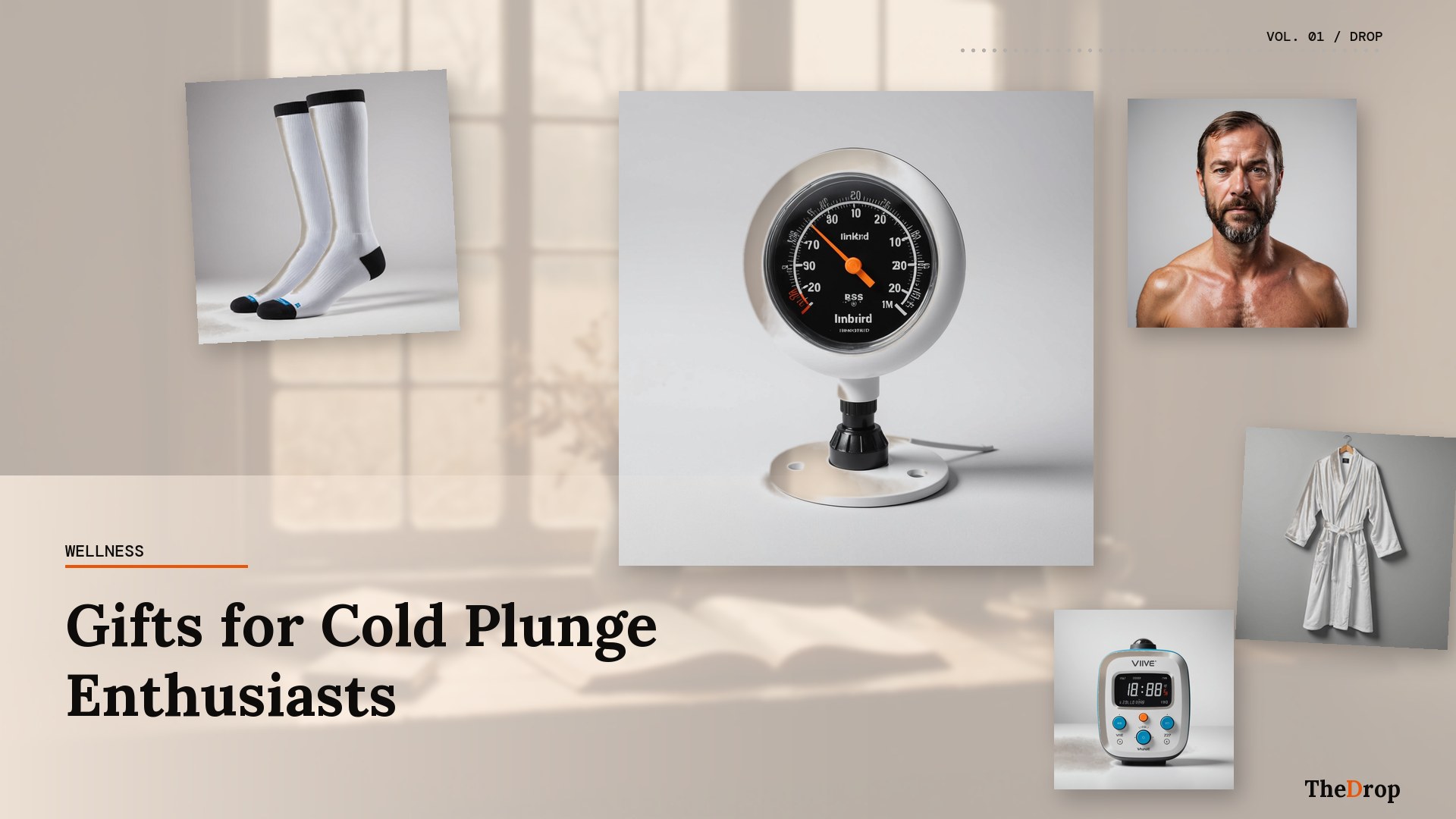
Gifts for Cold Plunge Enthusiasts
Cold water immersion has moved from Wim Hof edge-case to mainstream recovery protocol, and the people practicing it are serious — they track water temperature, time in the water, and how they feel afterward. Gifting into this practice means respecting the data-driven intensity of it. The best options here are tools that improve the experience: accuracy, warmth immediately after, and the one book that makes the whole thing make sense.
Inkbird IBS-P02R Waterproof Pool Thermometer (Bluetooth)
Accurate to 0.5°F with a Bluetooth-connected app for logging. Cold plunge practitioners monitor temperature obsessively — this removes all guesswork.
“The one reliable rule of gift-giving: anything that makes them look more serious at what they love will be received with disproportionate gratitude.”
Henderson Therma 5mm Neoprene Socks
Feet and toes lose heat fastest in a cold plunge. Neoprene socks extend session time considerably for anyone chasing longer cold exposure.
NRS Maverick Wetsuit Gloves (3mm)
The hands are the other early-exit signal in extended cold immersion. These keep fingers functional without the bulk of full gloves.
The Wim Hof Method by Wim Hof
The source text for the modern cold exposure movement. Part memoir, part breathwork manual, part physiology explainer — the one book that connects all the practice.
Robe Inc. The Robe Changing Robe (Waterproof Shell)
The post-plunge transition is its own practice — warming up slowly while staying dry. A changing robe handles it with far more dignity than a bath towel.
Field Notes Cold Plunge Training Journal (Custom Log)
Dedicated log pages for time, temperature, breathing protocol, and recovery notes. Practitioners who journal their sessions see faster progress.
Vive Waterproof Timer (Suction Mount)
A waterproof, large-display timer for tracking session duration when you'd rather not handle a phone with cold, wet hands.
Rumpl Nanoloft Packable Blanket (Merino-Lined)
For the post-plunge warm-up phase done outdoors. Packable enough to leave next to the setup permanently, warm enough to matter.
Fork it. Make it yours. Share before their birthday.
Friends claim items. No duplicates. No awkward conversations.