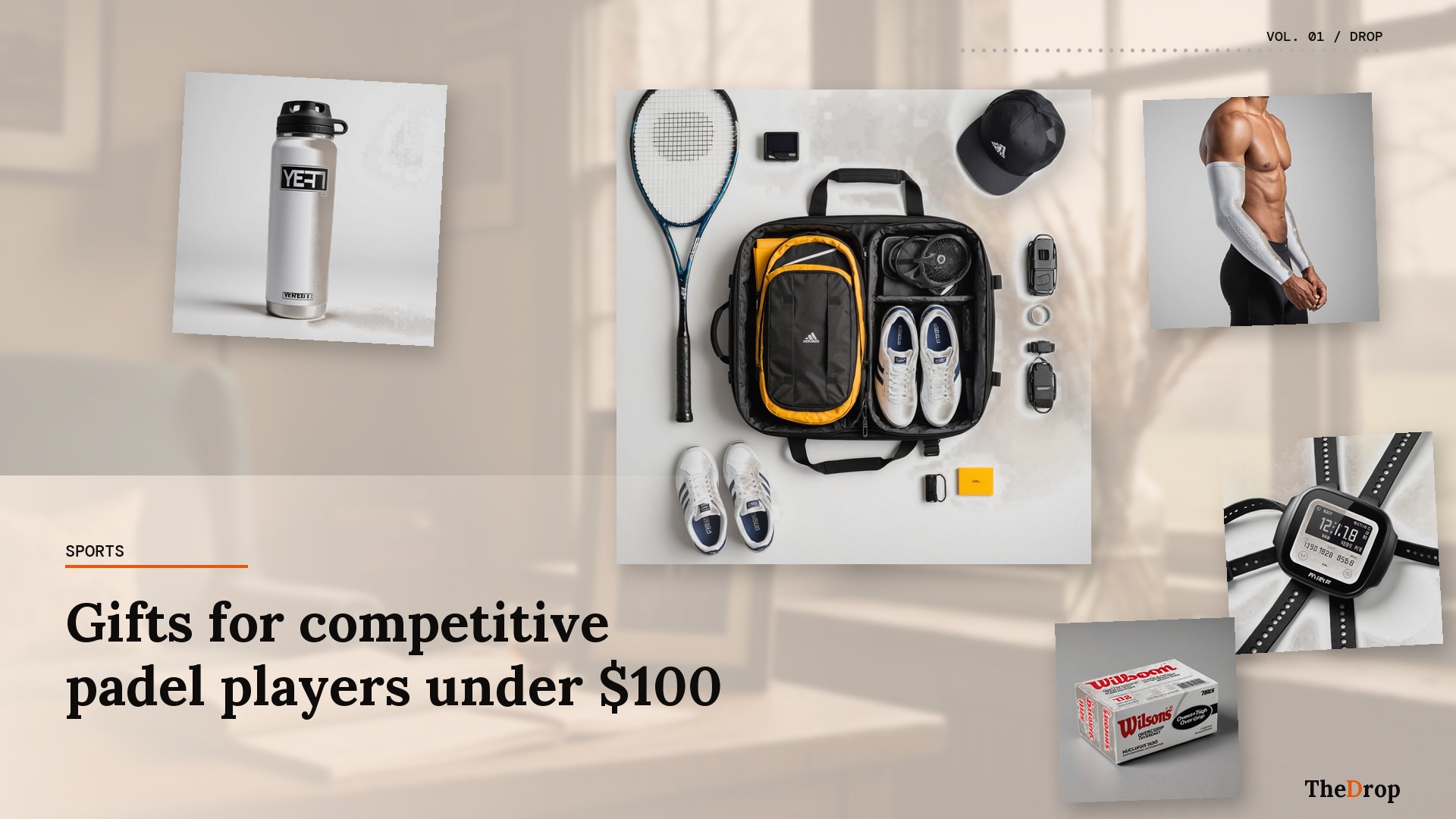
Gifts for competitive padel players under $100
The player who shows up to a local tournament with a taped racket, three grips in their bag, and a match schedule already memorized is not going to be impressed by a novelty gift. These are the things they actually use — the ones that sit in the bag, on the wrist, or in the car cooler from the first warm-up to the final round.
Item 1
Three racket slots, a shoe compartment, a thermal lining that keeps frames from warping in a hot car park — this is what a tournament bag is actually for. HEAD builds it without the logo overkill of some club-circuit alternatives. At $49.99, it costs less than the paddle it protects.
“The one reliable rule of gift-giving: anything that makes them look more serious at what they love will be received with disproportionate gratitude.”
Item 2
A 12-pack of Wilson's high-tack overgrip means never borrowing one from a stranger at the check-in desk again. Competitive players burn through grips fast — a slick handle in a tiebreak is a choice, not bad luck. This is the consumable they will definitely use and almost never buy for themselves.
Item 3
Self-adhesive polyurethane tape that wraps the racket edge and absorbs the wall scrapes that are, in padel, entirely unavoidable. Ten dollars of protection on a racket that cost ten times that. The kind of thing a player nods at when they open it because they've been meaning to buy it for months.
Item 4
Three Babolat terry-cloth wristbands in a pack — the kind that actually absorb sweat instead of redistributing it. Tournament play in warm conditions turns a dry grip into a lottery. These are unglamorous, cheap, and exactly what a competitive player reaches for before a long match.
Item 5
A herringbone outsole built for artificial grass and hard court, a reinforced toe cap for wall shots, and Asics GEL cushioning for the lateral lunges that distinguish padel from every other racket sport. At $89.99, these are the upgrade that changes how the game feels in the third round of a long day.
Item 6
ITF-approved Nox tournament balls — the same ones used in club competitions across Europe and increasingly in the US. Three tubes means enough for serious practice sessions between tournament dates without rationing. The player who knows the difference between a live ball and a dead one will notice immediately.
Item 7
A Yeti Rambler keeps water cold through back-to-back matches in a way that a plastic club-issue bottle does not. Twenty-six ounces, wide mouth, durable enough to take a sideline knock. Not a padel-specific product — just the right bottle for a long tournament day, and the one they'll still be using in five years.
Item 8
An anatomically shaped compression sleeve sized for the lateral cuts and sudden stops of racket sport. At $22.99, it's the kind of addition a competitive player keeps in the bag as insurance — worn for late-round matches when fatigue starts showing up in movement. Decathlon builds it without the premium-brand markup.
Item 9
A chest-strap heart rate monitor that pairs with most fitness apps over Bluetooth and ANT+. For the competitive player who trains between tournaments and wants more than a wrist sensor's approximation, this is the honest number. Garmin's dual-transmission design means it works whether they're on a watch or a phone.
Item 10
The entry-level Theragun — three speeds, four attachments, and enough power to work through the forearms, shoulders, and calves that a full tournament day loads hard. Not the pro model, but that's not what this is for. It lives in the bag, comes out after the last match, and makes Monday noticeably less grim.
Fork it. Make it yours. Share before their birthday.
Friends claim items. No duplicates. No awkward conversations.