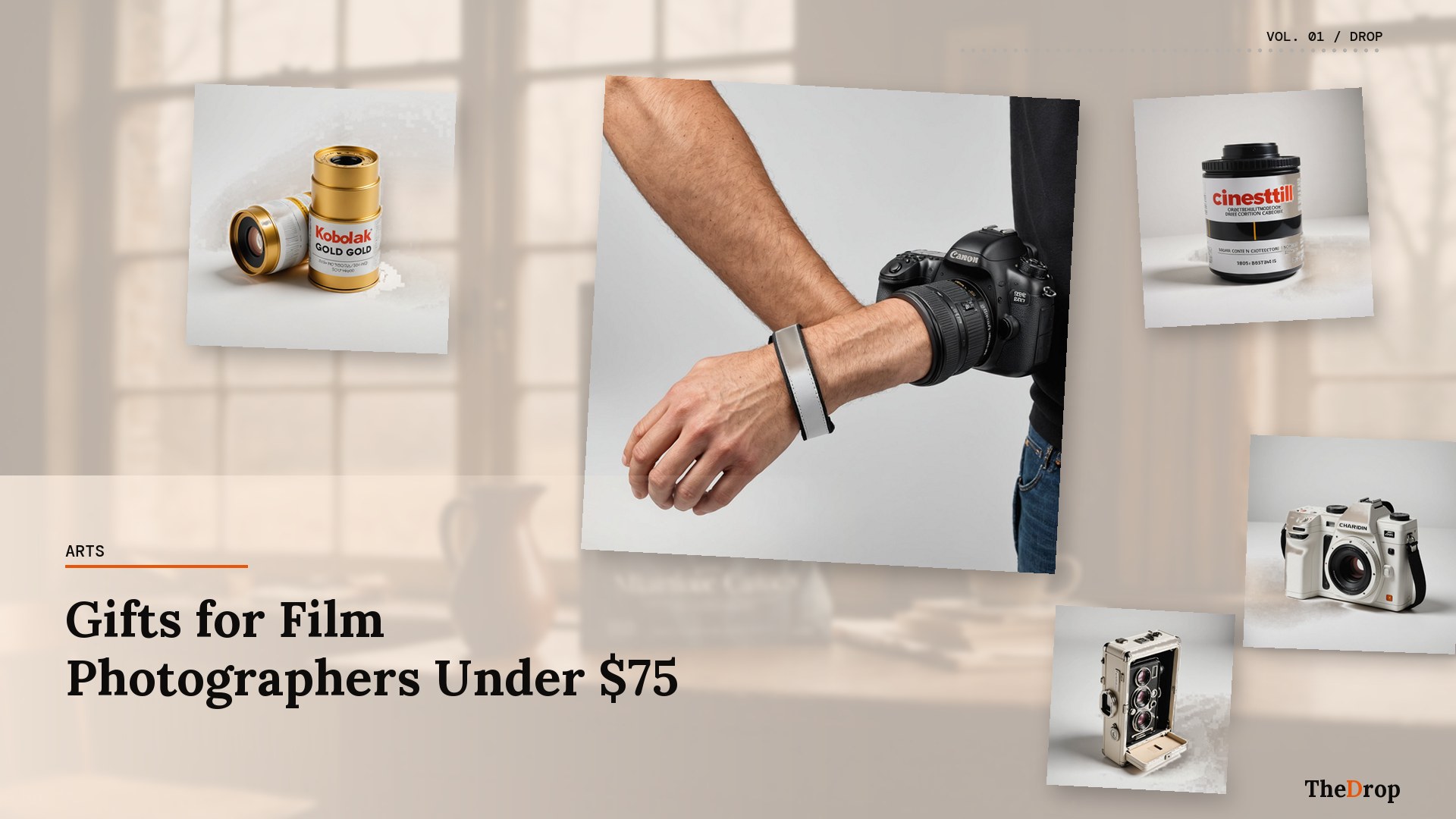
Gifts for Film Photographers Under $75
Film photographers aren't buying cameras on a budget — they're building the ecosystem: the film, the chemistry, the tools that make the whole slow process more intentional and less accidental.

Kodak Gold 200 Film (35mm, 24 Exp — 3-Pack)
Kodak Gold 200 is the warm, slightly nostalgic daylight film that the analog community keeps returning to — forgiving of slightly overexposed scenes, with the kind of color rendering that doesn't need a filter in post. A three-pack covers a month of shooting for a casual film photographer.
“The one reliable rule of gift-giving: anything that makes them look more serious at what they love will be received with disproportionate gratitude.”
Cinestill 800T 35mm Film (3-Pack)
A tungsten-balanced cinematic film with visible halation — that orange glow around light sources — that has become the defining aesthetic of the current analog photography revival. Shot in artificial light at ISO 800, it produces images that look like still frames from a late-1970s thriller. A film for shooters who want something that looks different.
Negative Supply Basic Film Carrier 35mm (for Scanning)
A precision film carrier that holds 35mm negatives flat for camera scanning — the approach that turns a DSLR or mirrorless camera into a scanning station that beats most flatbed scanners in resolution and convenience. Film photographers who scan their own negatives with this carrier stop complaining about scan quality.
Lomography Film Case (35mm, Holds 10 Rolls)
A hard-shell case that holds ten 35mm canisters with each slot padded and light-tight — the storage system that ends the loose rolls bouncing around a bag where they pick up heat and get confused with shot rolls. Labeled slots separate exposed from unexposed, which matters when you shoot multiple rolls per day.
Ilford HP5 Plus 400 ISO Black and White Film (5-Pack, 35mm, 36 Exp)
Ilford's HP5 is the black-and-white film that serious analog photographers learn their craft on — ISO 400 base speed pushes well to 800 or 1600 without falling apart, giving it the flexibility for indoor, street, and low-light situations. Five rolls is enough to run a meaningful experiment with different development techniques.
Henry Carroll — Read This If You Want to Take Great Photographs (Book)
A visual introduction to photography principles organized around the master photographers who defined each concept — composition explained through Henri Cartier-Bresson, light through Diane Arbus, color through Martin Parr. The book that makes you think differently before you raise the camera.
Gordy's Wrist Camera Strap (Leather, Hand-Made)
Hand-stitched leather wrist straps made to order by a single craftsman who has been making camera straps since 2002 — the strap the Leica and compact film camera community recommends whenever strap questions come up. Built to outlast the camera.
Fork it. Make it yours. Share before their birthday.
Friends claim items. No duplicates. No awkward conversations.