The Person Who Spends Saturday Afternoon in the Dark
The darkroom person does not need a vintage camera poster. They need the archival print sleeves their last batch of 8x10s is sitting loose without, or the fiber-base paper they keep postponing because RC is cheaper and the difference is enormous. This drop treats the darkroom as the precision environment it is — not a nostalgia aesthetic, but a working chemical process with specific material requirements.

Ilford Multigrade RC Deluxe Satin Paper — 8x10, 25 Sheets
The workhorse paper for every darkroom session that isn't making an exhibition print — variable contrast from grade 0 to 5, consistent development times, satin surface that holds shadow detail without the exhibition-light glare of glossy. Runs out faster than anyone plans for. Always needed; never purchased in sufficient quantity.
“The one reliable rule of gift-giving: anything that makes them look more serious at what they love will be received with disproportionate gratitude.”
Ilford Multigrade Fiber Base Warmtone Paper — 8x10, 25 Sheets
Every darkroom printer knows fiber base is the paper for work that matters, and every darkroom printer defers the purchase because RC is cheaper and faster. Fiber takes longer to wash and dry flat and is worth every minute of that. Deeper blacks, warmer tone, archival permanence that RC cannot touch. The paper for prints intended to survive the person who made them.
Kodak Dektol Print Developer — 1-Quart Liquid
Seventy years in darkrooms and still the benchmark: neutral-to-warm tone with Ilford papers, 1:2 dilution in the tray, development times that stay consistent across a long session. Dektol is the replenishment chemical that every working printer depletes and always has on the shelf. Nothing exotic — just reliable.
Photographers' Formulary TF-4 Archival Fixer — 1 Liter
The distinction is what TF-4 doesn't contain: the hardener in Kodak Rapid Fixer that causes incomplete washing and compromised archival permanence on fiber prints. Photographers' Formulary built a reputation in the serious printing community specifically because of this omission. The correct fixer for anyone who washes prints for an hour and wants that to matter.
Archival Methods Polypropylene Print Sleeves — 8x10, 25-Pack
Every darkroom printer has a folder with loose prints in it — face-down, accumulating handling marks and oil transfer from fingers. Acid-free polypropylene sleeves are the final step the printing process is missing, and the one most people keep skipping. This gift houses the work properly.
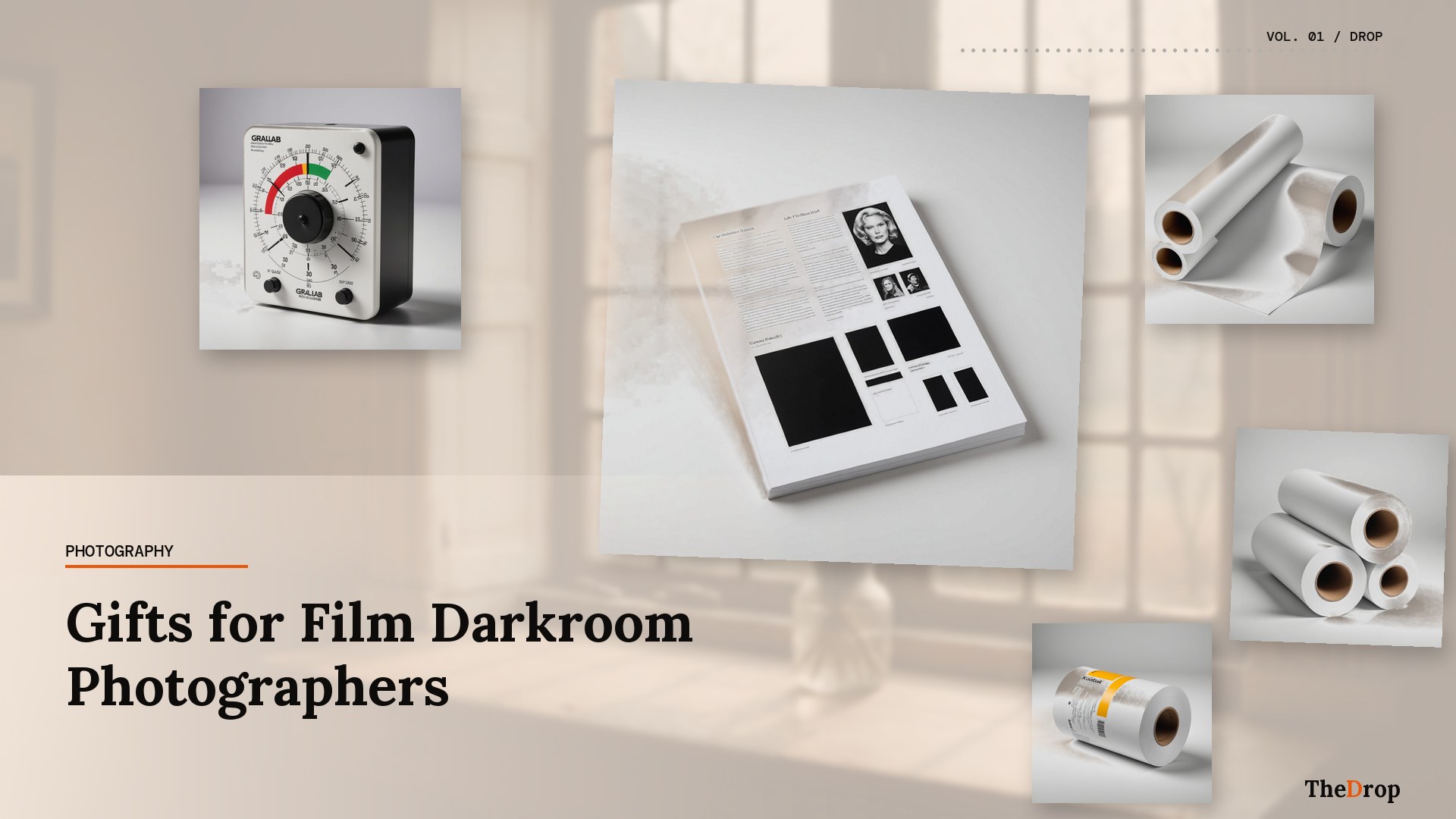
Darkroom Automation Dark Timer — Programmable Digital Enlarger Timer
Counting seconds aloud introduces the kind of variation that makes comparing test strips meaningless — a 0.5-second drift on a 10-second exposure is a full grade of contrast difference in practice. A programmable timer controlling the enlarger circuit directly removes that variable. The Gralab line has been in darkrooms since the film era because this problem hasn't changed.
Contact Printing Frame — Glass-Faced Hinged (8x10)
For contact sheets from 35mm strips or full-size prints from large-format negatives — the tool the process requires and almost no one buys themselves because it reads as a specialty purchase. The hinged back lets you check development progress mid-print without shifting negative register. One of those objects with no substitute.
"Way Beyond Monochrome" by Ralph Lambrecht (2nd Edition)
The book the darkroom community cites when someone has mastered the basics and wants to understand why their process works — exposure theory, developer chemistry, paper surface selection, split-grade printing, toning, and archival finishing in one densely technical volume. Treats printing as science and art simultaneously, without condescending to either.
Fork it. Make it yours. Share before their birthday.
Friends claim items. No duplicates. No awkward conversations.