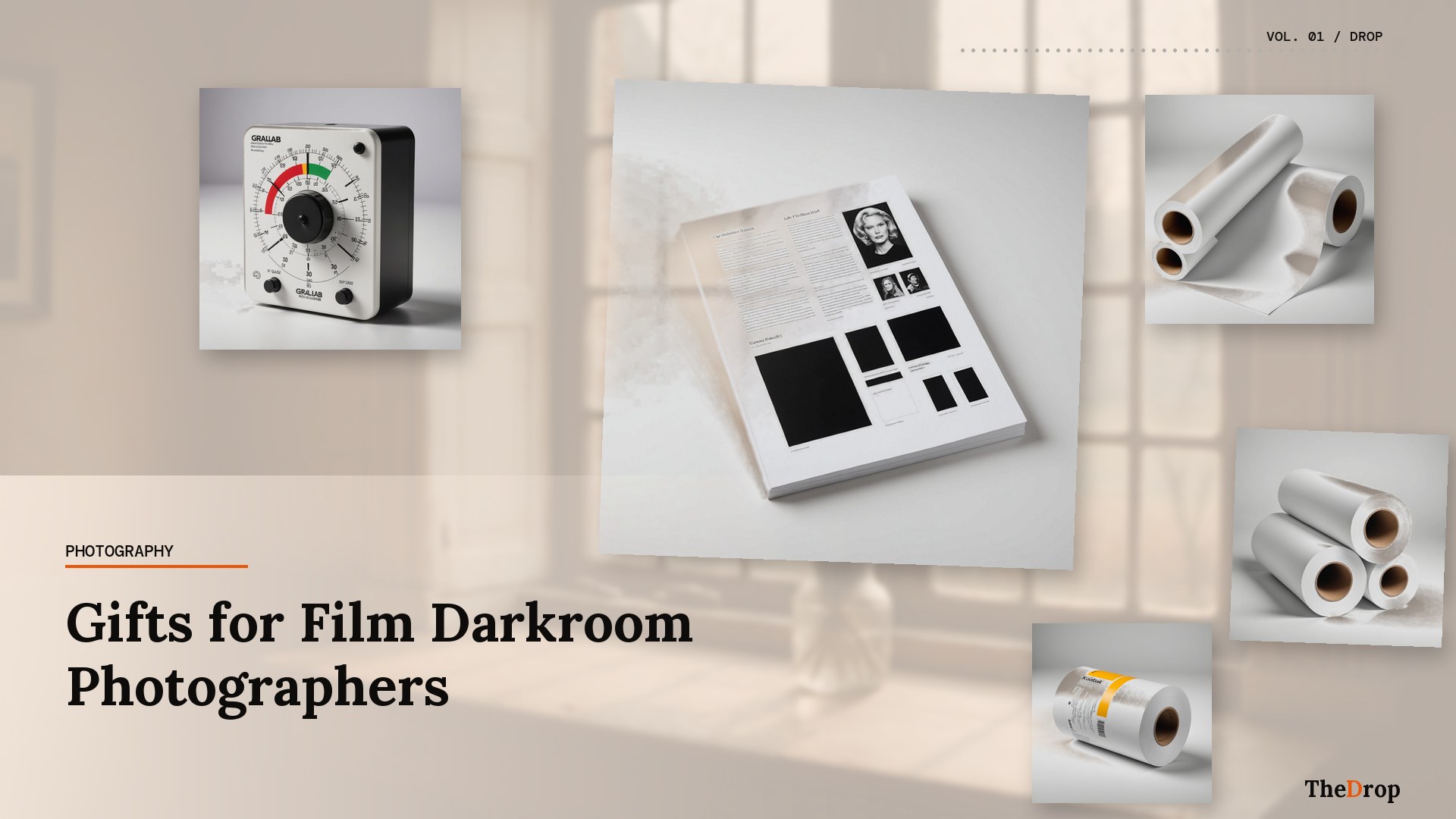
Gifts for Film Darkroom Photographers
The darkroom photographer does not need a vintage camera poster. They need the archival print sleeves their last batch of 8x10s is sitting loose without, the fiber-base paper they have been putting off because RC is cheaper, or the developer replenishment that is running low in the chemical bottles they mark with a Sharpie.

Ilford Multigrade RC Deluxe Pearl Paper (25 Sheets, 8x10)
Ilford Multigrade is the standard variable-contrast paper that darkroom workers learn on and many never stop using. The RC Deluxe in Pearl surface dries flat without mounting, washes quickly, and gives a tonal range that suits most enlarger setups. A box of 25 sheets is a consumable that disappears with every printing session — buying it for someone says you understand what they actually spend time doing.
“The one reliable rule of gift-giving: anything that makes them look more serious at what they love will be received with disproportionate gratitude.”
Ilford Multigrade Fiber Base Classic Matt Paper (25 Sheets, 8x10)
Fiber-base paper is the upgrade that darkroom workers make when they stop practicing and start making prints they intend to keep. The archival longevity is measured in decades rather than years, the tonal depth is richer, and the surface has a quality that RC paper cannot replicate. It requires a longer wash and a dry-mounting step, which is part of the point — the slower process suits the intention.
Archival Methods 8x10 Print Storage Pages (25-Pack, Acid-Free)
Acid-free polyethylene print sleeves in 8x10 size — the archival storage that keeps fiber-base prints from yellowing in a decade. Most darkroom workers have prints sitting in a cardboard box or loose in a drawer. Moving them into proper archival sleeves in a binder is the low-cost, high-impact maintenance step everyone knows they should do and few actually schedule.
Kodak Professional Dektol Paper Developer (1 Quart Concentrate)
Dektol is the paper developer that darkroom workers have been mixing since the 1940s — a neutral-tone developer that produces consistent results across paper brands and doesn't surprise anyone mid-session. Replenishing the chemical supply before a printing session is the kind of logistics that dedicated darkroom workers appreciate being ahead of. A consumable that actually gets used.
Gralab 300 Darkroom Timer (Digital, 0-99 min)
A dedicated darkroom timer controls enlarger exposure with a footswitch or button and counts in seconds — the tool that makes print exposures repeatable rather than approximate. The Gralab 300 is the long-running standard recommended in every darkroom manual still in print. Darkroom workers who use a stopwatch or the "thousand-one, thousand-two" method know they should have bought one already.
Developing Tray Set (8x10, 3-Pack: Developer / Stop / Fix)
Paterson trays in three colors — one per chemistry bath — are the sensible darkroom setup that prevents chemistry contamination from careless relabeling. Ribs on the bottom allow prints to move in the developer without sticking flat. A set of three covers a complete darkroom workflow and is one of those purchases the darkroom worker makes when setting up the room and never upgrades because it just works.
Fork it. Make it yours. Share before their birthday.
Friends claim items. No duplicates. No awkward conversations.