Three Batches Resting in the Garage
Home distilling is adjacent to home brewing but requires a completely different mindset — cuts matter, proofing accuracy matters, and the oak aging that turns new-make spirit into something worth sipping is its own craft. The gift space ignores this person completely by folding them into generic fermentation content.
Corkcicle Whiskey Wedge — Double Old Fashioned Glass with Ice Mold
A single large ice wedge chills without diluting — the glass a home distiller reaches for when presenting a finished batch to someone tasting it for the first time.
“The one reliable rule of gift-giving: anything that makes them look more serious at what they love will be received with disproportionate gratitude.”
2-Liter American White Oak Aging Barrel — New Charred
A 2-liter barrel's high surface-to-volume ratio accelerates extraction — 60 days takes a raw corn whiskey to something that genuinely tastes like bourbon.
Proof and Tralle Hydrometer Kit — Copper Parrot Tube and Test Jar
A copper parrot tube catches a continuous sample as the still runs — monitors proof in real time without pulling the column and guessing at cuts.
Activated Carbon — 1 lb Food Grade for Spirit Filtering
A charcoal filter pass removes harsh congeners before oak aging — the Lincoln County Process applied at home to soften a batch that still has raw grain notes.
The Compleat Distiller — Book by Mike Nixon and Michael McCaw
Still design, fermentation chemistry, cuts methodology, and aging science written for a practitioner — not a curious reader.
Oak Spiral — Medium Toast American Oak, 8 inch — 3 Pack
Oak spirals in a spirit jar add vanilla, caramel, and toast notes in 2–4 weeks — the fast-path alternative when someone doesn't want to commit to a barrel.
Auto Siphon — Mini 5/16 inch with Tubing for 1 Gallon Batches
Racks a finished ferment cleanly without disturbing the yeast cake — the transfer technique that makes blending decisions accurate.
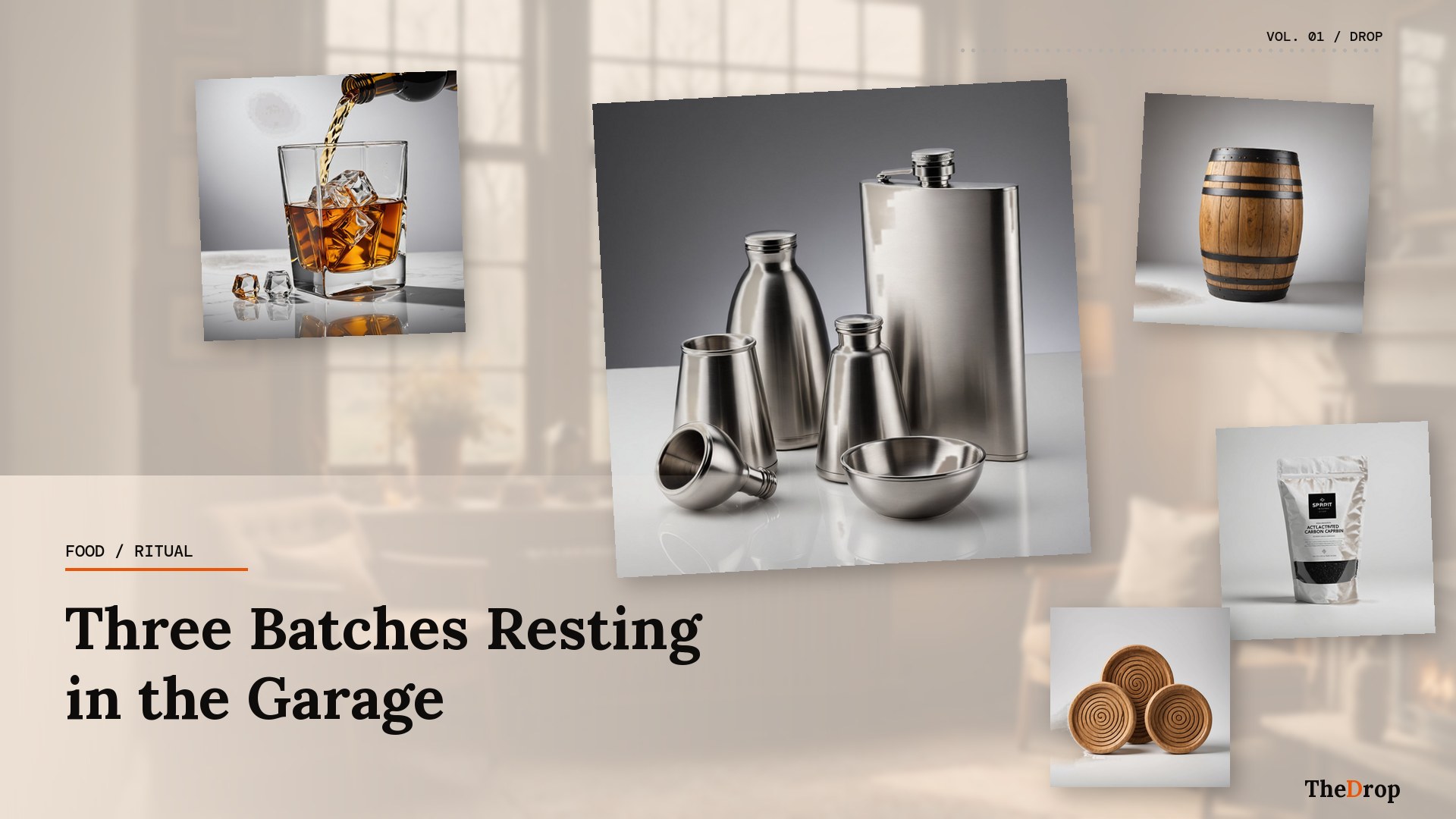
Stainless Steel Flask Set — 8 oz Hip Flask with Funnel
How a home distiller shares a small batch at its best — the presentation layer that makes a finished spirit feel like a gift rather than a science experiment.
Fork it. Make it yours. Share before their birthday.
Friends claim items. No duplicates. No awkward conversations.