Gifts for Knife Sharpening Enthusiasts
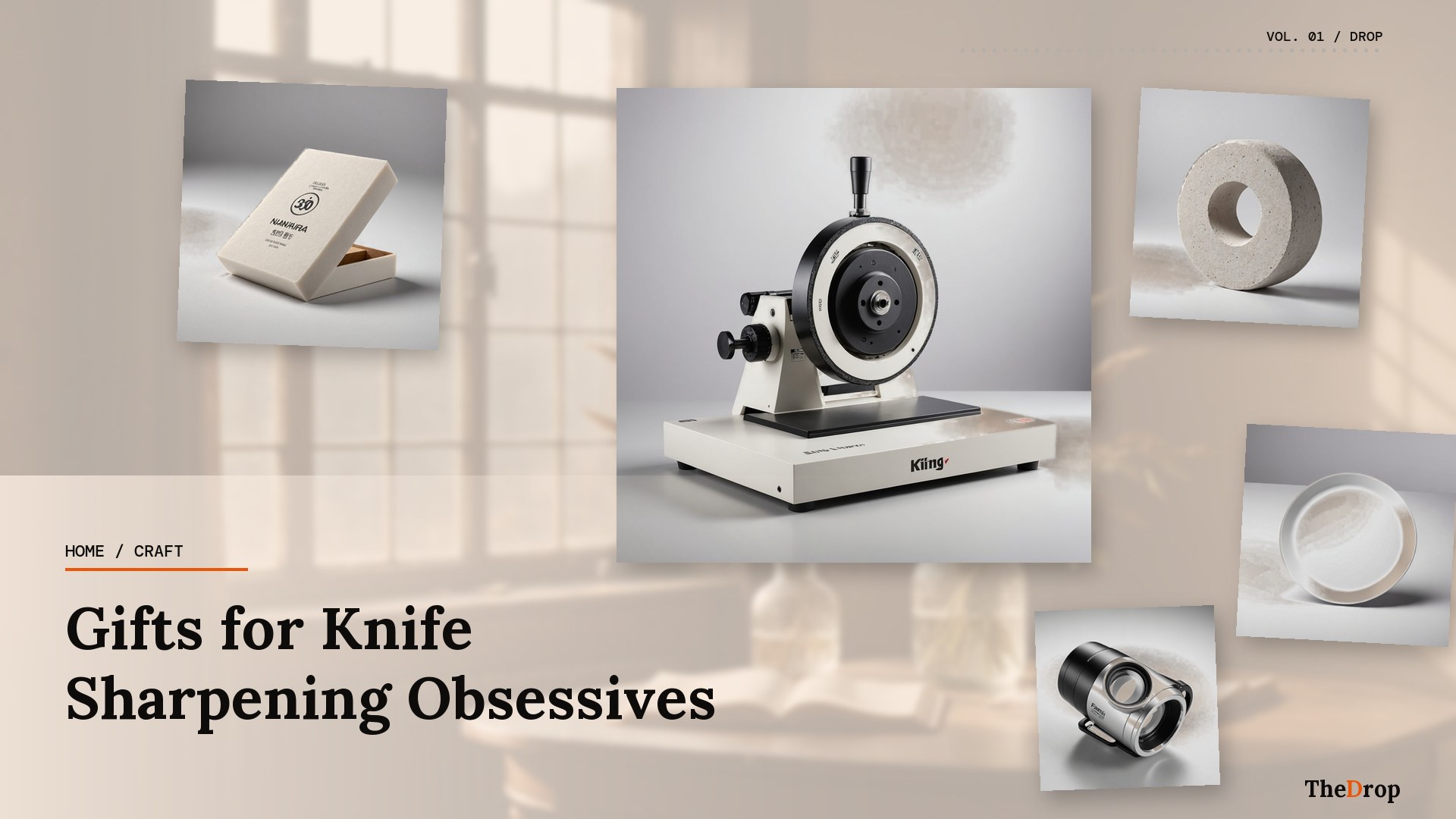
The knife sharpening obsessive already has a whetstone — probably a 1000-grit King they started with and use for everything. What they want is the part of the progression they keep postponing: the finishing stone that takes a working edge to something that shaves hair, or the leather strop with compound that keeps it there between sharpenings.

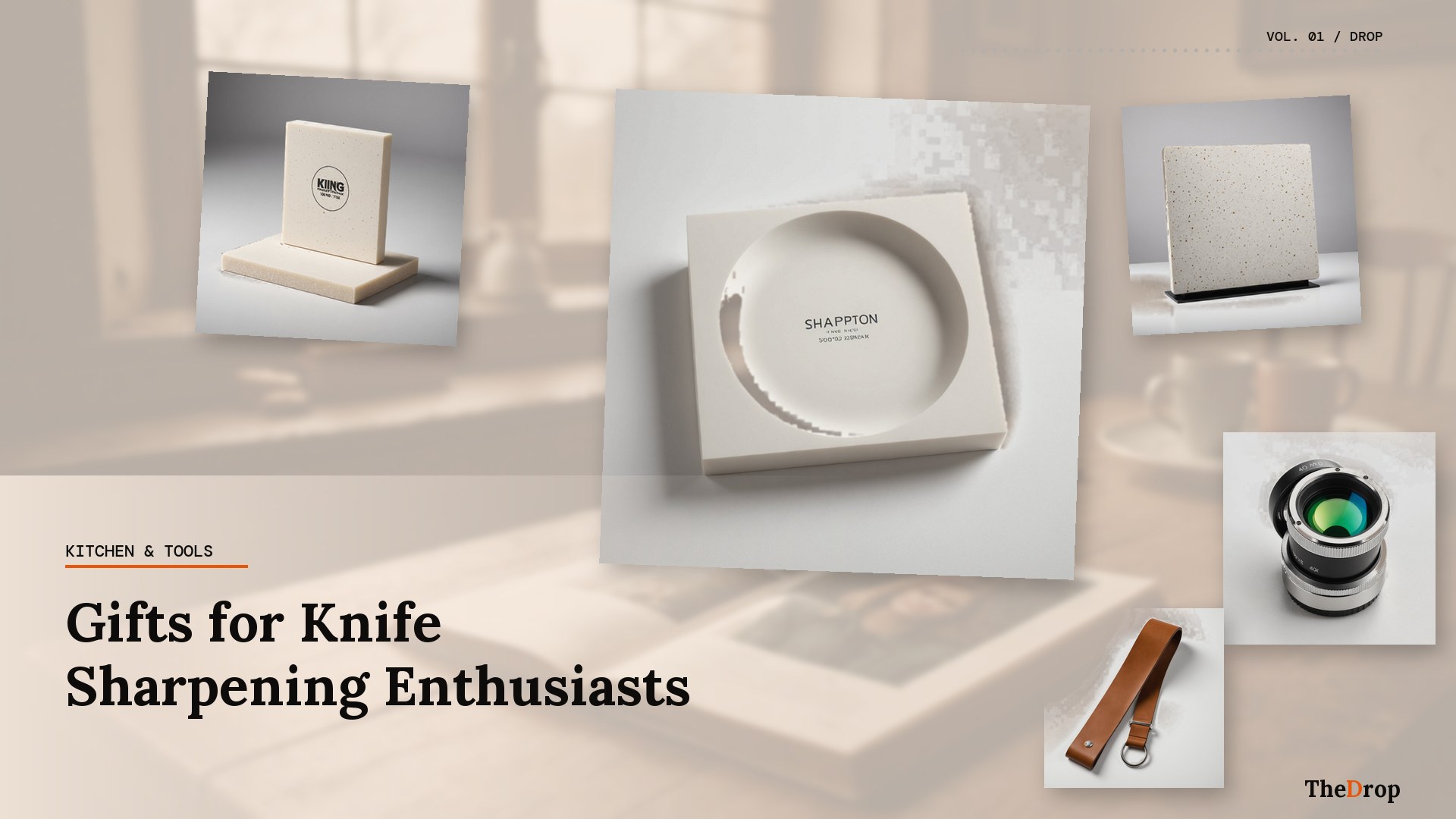
Shapton Ha No Kuromaku #5000 Finishing Whetstone
The Shapton Ha no Kuromaku series is what serious Japanese knife users recommend as the first real upgrade from entry-level stones. The #5000 is a medium-finishing stone that cuts faster than its grit number suggests — it's made from a unique ceramic abrasive that stays flat and requires no soaking, just a splash of water. The stone that changes the sharpening experience from sanding to refining.
“The one reliable rule of gift-giving: anything that makes them look more serious at what they love will be received with disproportionate gratitude.”
Leather Strop with Chromium Oxide Compound (8-inch, Double-Sided)
A leather strop loaded with chromium oxide compound — the green paste — maintains a finished edge between sharpenings by realigning and polishing the burr that regular use creates. The strop is the maintenance tool that makes a sharp knife stay sharp all week rather than dulling after two days. Ten strokes before each use, and the sharpening interval triples.
Edge Pro Style Angle Guide Set (15°, 17°, 20°, 25°)
Angle guides clip to the spine and ride along the stone, keeping the bevel consistent on every stroke — the variable most responsible for freehand sharpening failure. Japanese knives typically run 15–17°, Western knives 20–25°. A set of four covers every blade in a household collection and makes freehand sharpening accessible without years of muscle memory.
DMT D6EFC Dia-Sharp Bench Stone Lapping Plate (Extra Fine)
A diamond lapping plate flattens whetstones that have developed a hollow from repeated use — the hollow that secretly ruins every freehand sharpening session even when the sharpener can't see it. The DMT plate is used dry or with water, stays flat permanently, and also works as a coarse-to-medium sharpening surface. The gift for the sharpener who already has multiple stones.
40x Jeweler's Loupe with LED Light (Foldable)
A 40x loupe with an LED light lets the sharpener see the burr they're forming and whether the apex is actually meeting. Most sharpening is done by feel and guesswork; seeing the edge under magnification changes the feedback loop entirely. The sharpener who looks through a loupe for the first time re-evaluates everything they thought they knew about their technique.
King KW-65 1000 / 6000 Grit Combination Whetstone
The King 1000/6000 is where most sharpening obsessives started, and it is still the right recommendation for someone entering the craft. One side repairs damaged edges and re-establishes the bevel; the other refines it to a working-sharp finish. Soaks in water, cuts cleanly, and costs less than any single-grit stone of comparable quality. A reliable starter that doesn't embarrass itself next to expensive alternatives.
Fork it. Make it yours. Share before their birthday.
Friends claim items. No duplicates. No awkward conversations.