Gifts for Sewing Enthusiasts Under $50
Sewing gifts fail on two ends: they either buy fabric without knowing what the person is making, or they go for the novelty pincushion with the cat face. This drop goes for the quality consumables and tools that every sewing room depletes — the thread that doesn't break at seam intersections, the scissors that still cut cleanly on the hundredth layer.

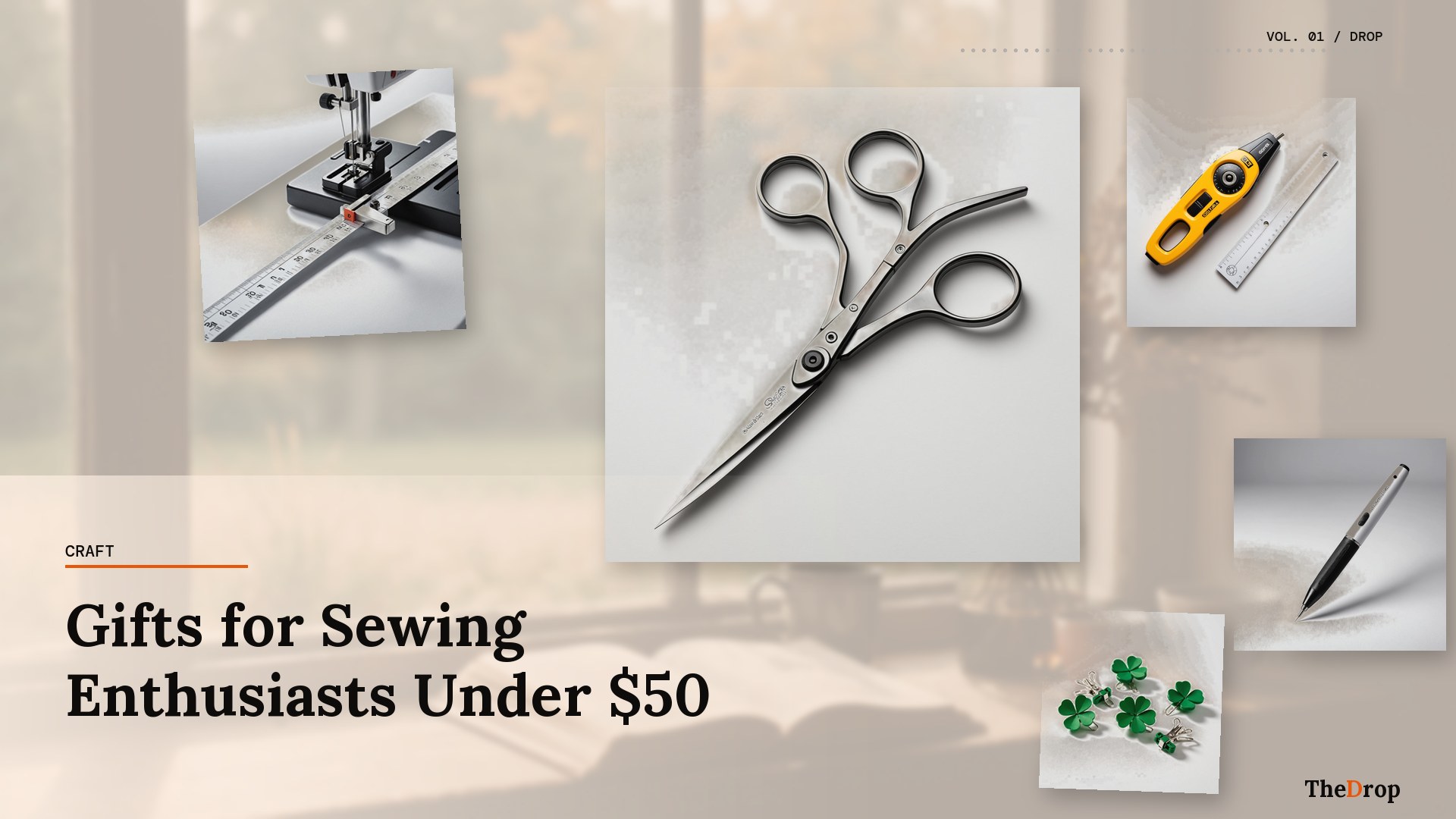
Gingher 8-Inch Knife Edge Dressmaker Shears
The scissors that sewing communities name repeatedly — German-quality high-carbon steel, bent handle that keeps fabric flat on the cutting surface, and a blade that holds its edge through multiple garments before needing sharpening. If they are still using a craft-store pair, this is the single upgrade that changes what cutting feels like.
“The one reliable rule of gift-giving: anything that makes them look more serious at what they love will be received with disproportionate gratitude.”
Aurifil 50-Weight Cotton Thread 10-Small Spool Set
Italian-made long-staple cotton thread that runs smooth in the machine, doesn't shred in the tension discs, and produces almost no lint — the quality jump over hardware-store thread is immediate and never goes back. The 50-weight is the sewing room workhorse: right for garments, quilts, and any topstitching that should disappear into the seam.
Olfa 45mm Rotary Cutter with Ergonomic Handle
The 45mm blade cuts through multiple layers of quilting cotton in one clean pass without the hand fatigue that scissors create across a long project session — Olfa's auto-lock blade mechanism closes when you release your grip, which matters when you're changing fabric positions at speed. A fresh replacement blade runs under $8 and makes it feel new.
Dritz Ergonomic Seam Ripper with Comfort Handle
The seam ripper is the most-used tool in any sewing room and the one everyone has a bad version of — the flimsy one from the machine accessory kit that digs into fabric instead of sliding under the stitch. The Dritz ergonomic version has a wide rubberized grip that makes ripping a full seam on denim feel like precision work instead of hand abuse.
Prym Sewing Gauge with Slider
A six-inch ruler with a locking slider for marking consistent seam allowances, hem depths, and button spacing without measuring tape and pencil every time — the small tool that eliminates the creeping inconsistency that makes a finished garment look handmade in the bad sense. One of those purchases that costs nothing and changes everything.
Clover Wonder Clips (50-Pack)
Sewing clips that grip fabrics that pins distort or damage — vinyl, leather, oilcloth, thick denim seam intersections, and any layer stack where a pin creates a dimple. The quilting and garment communities converted from pins to wonder clips and now use both, which means you can never have too many. The flat bottom holds the seam allowance visible while you sew.
Fons & Porter Half and Quarter Ruler Set
Specialty quilting rulers for cutting half-square and quarter-square triangles without the math — the kind of jig that turns a frustrating repeated calculation into a rote, accurate cut. The Fons & Porter set is the quilting community standard recommendation for anyone who has wrestled triangles and lost.
"Reader's Digest Complete Guide to Sewing" (Revised Edition)
The reference that serious garment sewers recommend as the one book a sewing room should own — 528 pages covering every technique from seam finishes to tailored buttonholes, with clear construction diagrams that pattern instructions routinely fail to include. The kind of book you already own or have always meant to buy.
Fork it. Make it yours. Share before their birthday.
Friends claim items. No duplicates. No awkward conversations.