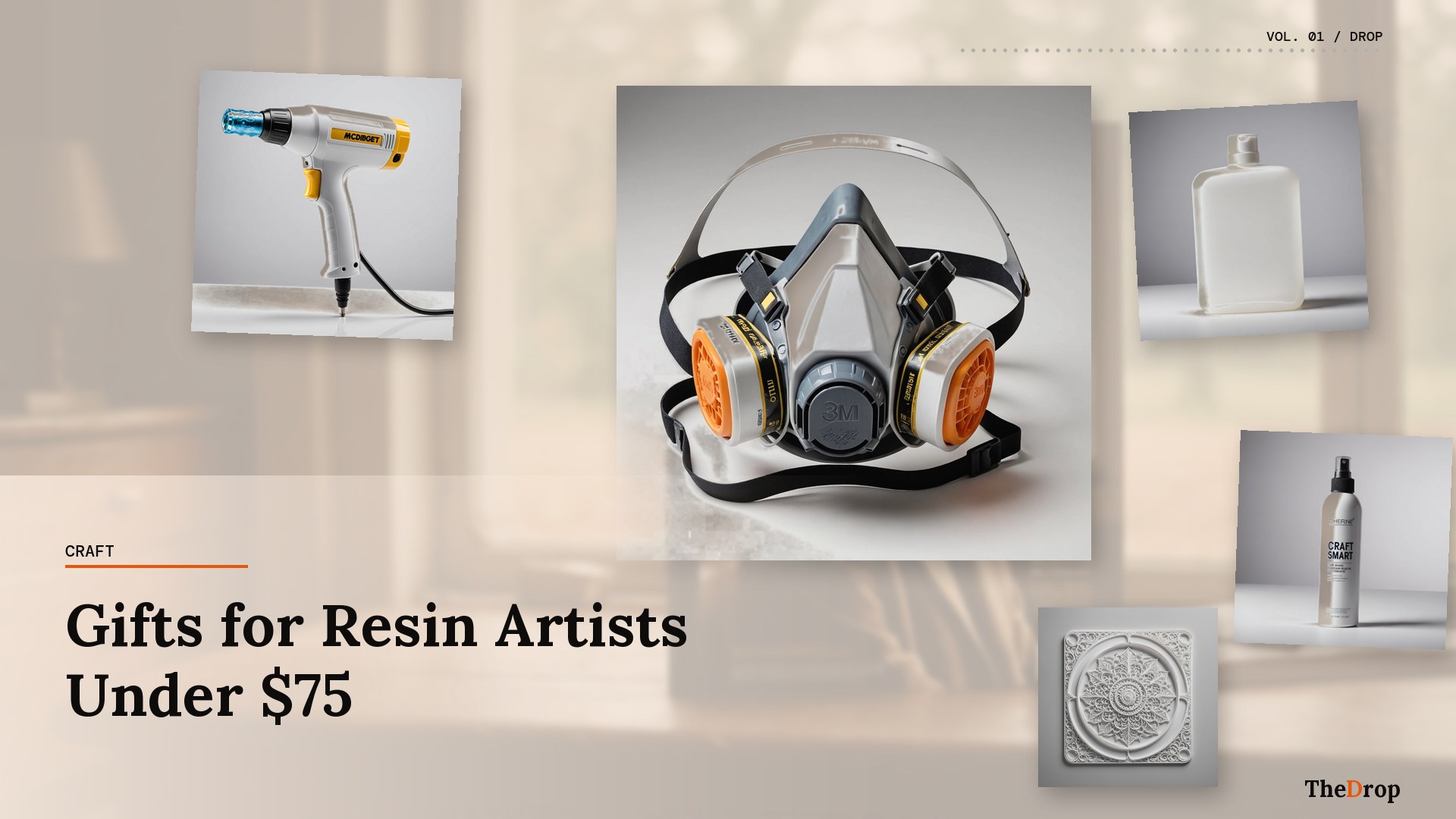
Gifts for Resin Artists Under $75
Resin arts gifting is dominated by cheap starter kits that produce yellow, brittle results by week three. The community knows the difference between a properly formulated low-VOC epoxy and the AliExpress 1:1 kit that fails at the cure line. This drop respects the craft by naming the materials that work — pigments that stay vivid after cure, a resin that does not yellow in UV, the respirator that makes a studio session actually safe.

ArtResin Epoxy Resin — 16 oz Kit (Crystal Clear, Non-Toxic Formula)
The community-recommended resin for artwork that will be displayed long-term — non-yellowing UV-stabilized formula, ASTM certified non-toxic when cured, food-safe surface classification, and a 1:1 ratio that measures without a precision scale. ArtResin is the brand that resin art communities name specifically when someone asks why their coasters are yellowing six months after pour.
“The one reliable rule of gift-giving: anything that makes them look more serious at what they love will be received with disproportionate gratitude.”
Jacquard Pearl Ex Mica Powder Set (32 Colors, 3g Jars)
Mineral-based mica powder pigments that suspend in resin without clumping or settling — 32 colors from metallics to neons, in individual jars small enough that a sampler is genuinely different from buying a single color. Pearl Ex is the professional pigment that resin artists use for geode effects and metallic pours; the brand name you see in every serious resin tutorial.
Silicone Coaster Mold Set — 6 Shapes (Round, Geode, Hex)
Food-grade silicone molds that release cured resin without adhesion or surface defects — the format that drives the resin art economy because coasters are the gateway project that every beginner makes and everyone can use. The geode shape is the community's current standard; a mold set creates the infrastructure for a full gifting session.
3M Half Facepiece Respirator with Organic Vapor Cartridges
The respirator that resin communities recommend when someone asks about ventilation — an N95 dust mask is not a substitute for organic vapor cartridges when working with uncured epoxy. The 3M half-facepiece provides the sealed fit and chemical filtration that makes a resin session in a home studio genuinely safe rather than theoretically acceptable.
Heat Gun for Resin Bubbles (1500W, 2-Speed)
The tool for collapsing surface bubbles in fresh resin within the working window — a quick pass at low heat pops micro-bubbles that would otherwise cure into permanent opaque spots. A dedicated heat gun works better than a torch at this scale because it covers surface area evenly without the localized heat that scorches uncured resin edges.
Alumilite Amazing Clear Cast Plus Resin — 32 oz (Deep Pour Formula)
A deep-pour epoxy formulated for casts up to 2 inches thick in a single pour — the specialty formula that standard surface coating resins overheat and yellow on when poured at depth. Alumilite's deep pour is what river table and jewelry casting projects require, and the product distinction that separates someone who knows resin from someone who just bought a starter kit.
Craft Smart UV-Resistant Resin Topcoat Spray
A UV-resistant spray topcoat applied over cured resin to provide additional protection against yellowing and surface scratching — the extra step that extends the life of a resin piece that will see regular sun exposure. Window-adjacent art and serving pieces benefit from a topcoat layer that the resin community adds but does not always communicate as a gift need.
Resin Art Silicone Work Mat (18x24 Inch, Non-Stick)
An oversized silicone work mat that cured resin peels from cleanly — the surface that every resin artist needs under their molds and mixing cups to eliminate the drip-and-cure damage that happens to every other surface including the kitchen table. A large mat enables the mixing, pouring, and clean-up sequence without moving things around.
Fork it. Make it yours. Share before their birthday.
Friends claim items. No duplicates. No awkward conversations.