Gifts for Macramé Artists
Macramé has moved well past Pinterest trend into a committed maker community — and the gift needs of an established macramé artist are specific in a way that kit buyers and casual browsers don't capture. The best gifts are premium cord in diameters they always run out of, hardware that matches the quality of the work, and the one reference book that the community cites constantly. These eight picks are the serious maker's restocking list.
Bobbiny Single Strand Macramé Cord Sampler — 3mm, 5mm, 7mm, Natural, 3-Pack
Bobbiny is the macramé community's preferred premium cord — twisted single-strand cotton in consistent diameter, good fringe separation, and natural white that takes dye predictably. A three-diameter sampler gives a maker cord for delicate plant hangers, mid-size wall pieces, and thick statement pieces without committing to a single-diameter bulk order.
“The one reliable rule of gift-giving: anything that makes them look more serious at what they love will be received with disproportionate gratitude.”
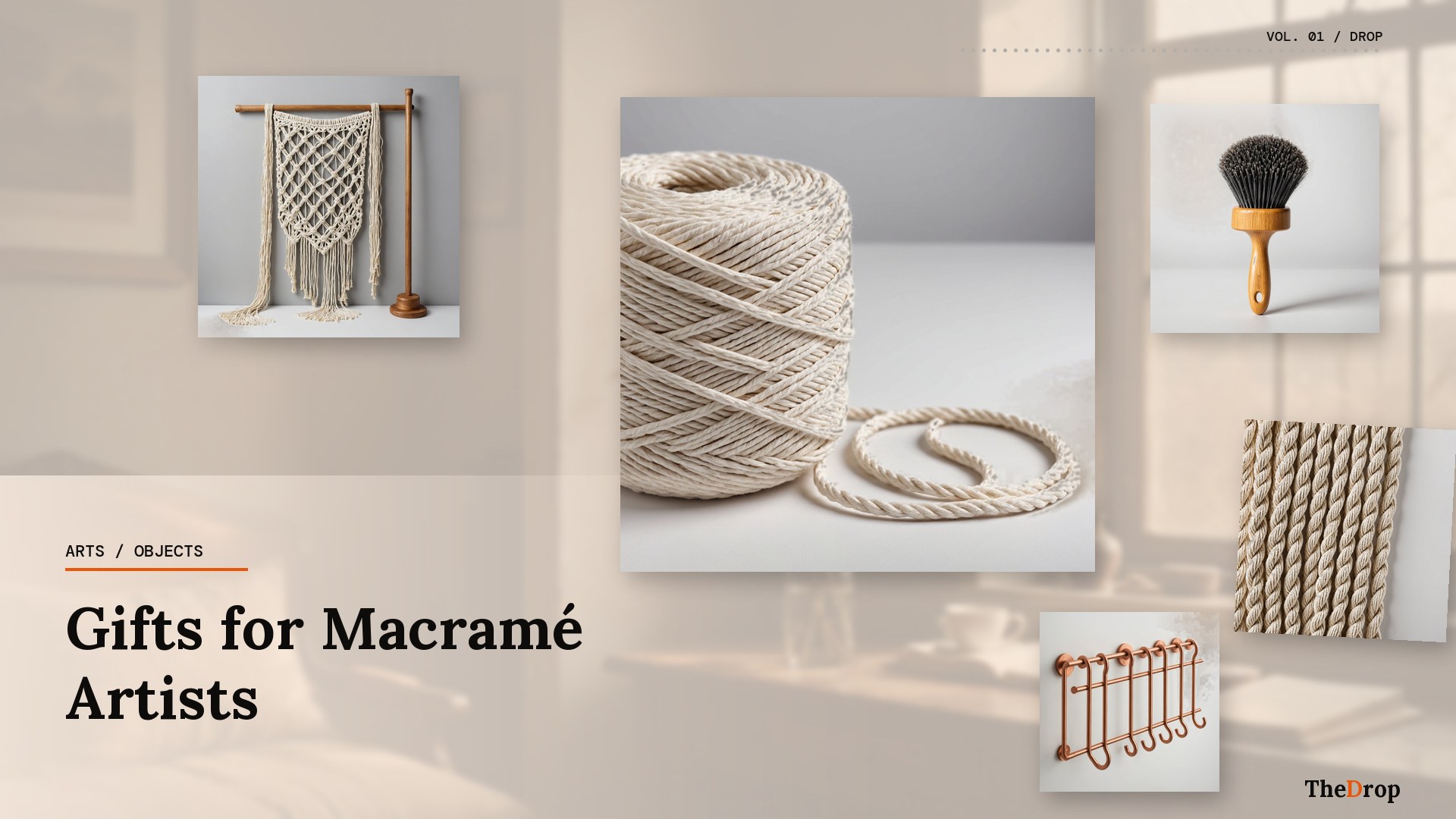
Natural Cotton Macramé Cord — 3mm, 3-Ply Twisted, 300 Feet
A 300-foot roll of 3mm three-ply cotton cord is the working supply that macramé artists use fastest — large plant hangers consume 60–80 feet each, and mid-size wall pieces can run 200 feet. Natural undyed cord is the most versatile base because it can stay natural or be overdyed to any color the maker needs.
Wooden Dowel Rod Set — 12-Inch to 24-Inch, Assorted Diameters, Birch
Wooden dowels are the foundational hardware for macramé wall hangings — the top structure that all the knotted work hangs from. An assorted set covering 12-inch, 18-inch, and 24-inch lengths at multiple diameters gives a maker the right starting rod for small, medium, and large pieces without cutting full-length rods down each time.
Metal Rings for Macramé — Mixed Sizes (2", 3", 4", 6"), 20-Piece Set
Metal rings are used for plant hanger tops, dream catcher bases, and decorative accents throughout macramé work — a mixed-size set means a maker has the right ring scale for any project rather than improvising with a ring that's close but not quite right. Steel rings in consistent finish don't rust or corrode in humid studio conditions.
"The Complete Macramé Handbook" by Elise Donpetry
The Complete Macramé Handbook is the reference that the macramé community consistently recommends to anyone asking for a serious technical guide — covering knot mechanics, pattern reading, cord selection, and finishing techniques at enough depth to support original design rather than just pattern following. The book that moved the genre from 'following tutorials' to 'making things up.'
Pet Grooming Slicker Brush — Fine Wire, for Macramé Fringe
The macramé community's universal fringe-brushing tool is a fine-wire pet slicker brush — it separates cord fibers into the clean, fluffy fringe that distinguishes professional-looking wall hangings from the unfinished kind. At $9, it is the supply that gets recommended in every 'how do I make my fringe look like that?' post.
Macramé Cotton Rope — 5mm Single Strand, Natural, 200 Feet
Five-millimeter single-strand cotton is the diameter that most mid-size wall hangings use for the main body work — thick enough to show knot definition clearly, light enough to drape correctly. Natural single-strand untwists into clean fringe. A 200-foot roll covers one large project or two medium ones.
S-Hooks and Dowel Holders — Copper Finish, 10-Pack
Copper-finish S-hooks for hanging finished wall pieces give a macramé artist the proper display hardware to finish work cleanly — and the warm copper tone complements natural cotton cord better than silver hardware. A 10-pack covers every finished piece currently waiting for a wall location.
Fork it. Make it yours. Share before their birthday.
Friends claim items. No duplicates. No awkward conversations.