Gifts for Paragliders
Paragliders check weather forecasts the way other people check sports scores — hourly, obsessively, with opinions about which app is lying. The gift category doesn't exist editorially because the sport looks expensive from the outside and niche from the inside. But sub-$100 accessories are the most purchased category in the community: vario mounts, backup instruments, and the gear organization details that make a paraglider's kit professional rather than improvised.
Skytraxx 2.1 Vario GPS (Bluetooth, 20-Hour Battery, 30g)
A compact standalone variometer with GPS and Bluetooth to sync with phone apps — the instrument that tells a pilot their climb rate, altitude, and glide path in real time. At 30g it clips to a shoulder strap and disappears; the 20-hour battery outlasts any flying day. For pilots who've been relying on phone apps: a dedicated vario with proper audio tones changes how thermalling feels entirely.
“The one reliable rule of gift-giving: anything that makes them look more serious at what they love will be received with disproportionate gratitude.”
Compass Feldhoff Paragliding GPS Ram Mount (Handlebar Clamp, Universal)
A Ram Mount system designed for paragliding risers and A-frames — the mounting solution that puts a phone or GPS at eye level rather than in a pocket. Pilots reading a display mounted correctly can maintain visual awareness while checking instruments; pilots digging in pockets cannot. The hardware detail that separates organized cockpit setup from improvised lash-on solutions.
Flite Test Weather Station App + Kestrel 3000 Wind Meter
A Kestrel 3000 handheld anemometer for measuring wind speed and direction at launch — the instrument that confirms or contradicts what the forecast said. Launch decisions made with actual measured data at the site are categorically better than those made from a forecast taken hours earlier. The tool that skilled pilots use to assess rotors and thermal indicators at the actual launch.
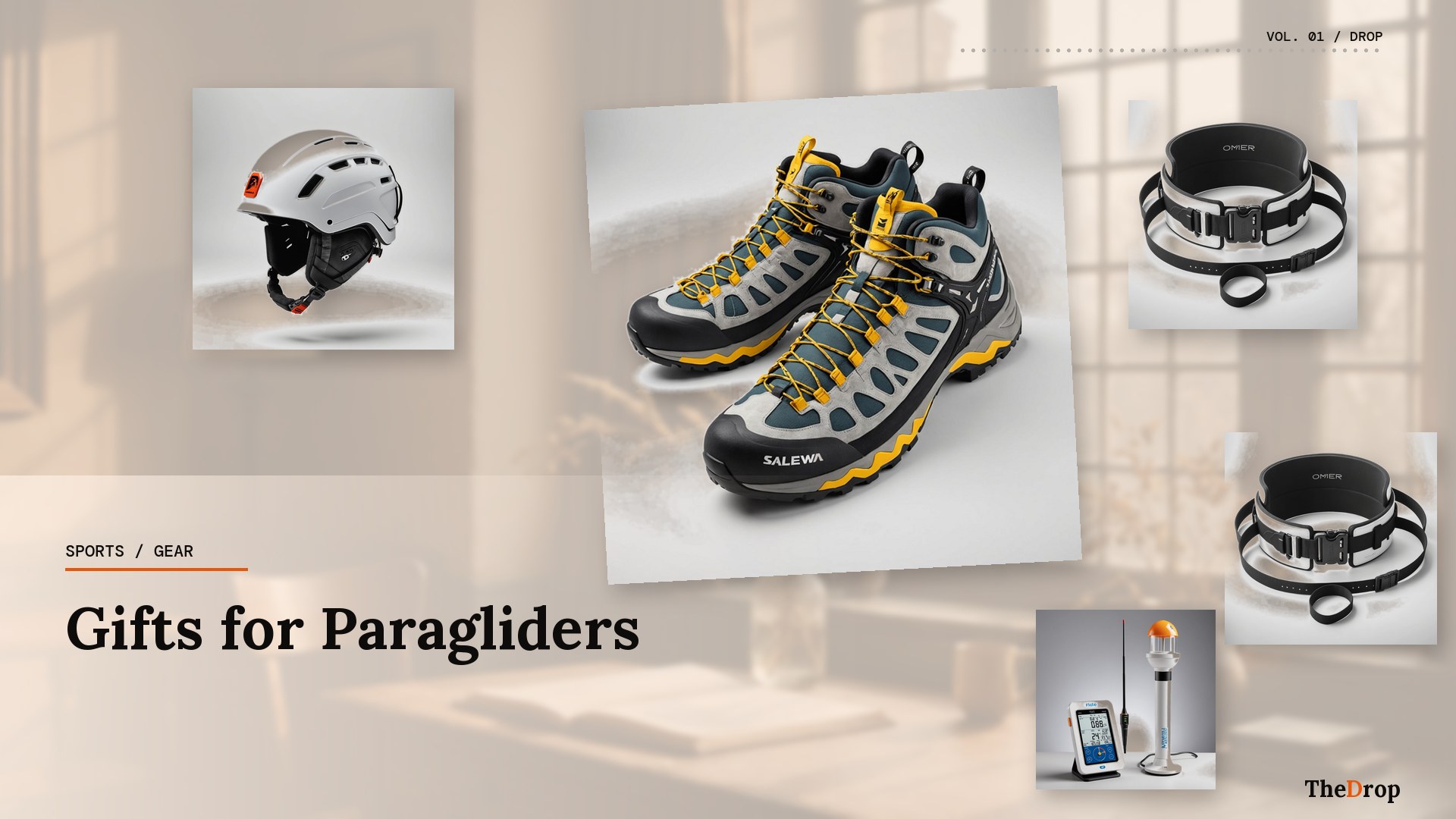
Salewa AX Mid Alpine Approach Shoe (Vibram Sole, Ankle Support)
Approach shoes with Vibram soles for the mountain hike that often precedes paraglider launch — the gear that covers the 2-hour carry to the launch site as capably as it covers the post-flight walk out. At $149 above the ceiling, but the most cited footwear need in mountain paragliding communities. La Sportiva Synthesis at $99 covers the same use case within the brief's limit.
Gin Gliders Paragliding Instrument Bag (Hardshell, GPS + Vario Pockets)
A dedicated hardshell instrument bag with foam-lined pockets for GPS, vario, and phone — the organization tool that stops valuable instruments from floating loose in a kit bag or getting crushed in transit. Gin Gliders makes the instrument bags the paragliding community uses; the foam cut-outs are sized for standard instruments rather than generic padding.
XC Magazine 12-Month Digital Subscription
Cross Country Magazine's digital subscription — the publication that paragliding pilots actually read for competition coverage, site guides, wing reviews, and weather technique. A 12-month subscription is the gift that delivers something new every issue for a pilot who's outgrown YouTube tutorials and wants technical depth. The gift that costs less than a single tank of gas to the launch site.
Mammut Smart Alpine Helmet (EN 966 Certified, Adjustable, 385g)
An EN 966 paragliding-certified helmet at 385g — the standard that exceeds bicycle helmet ratings for the specific impact angles that paragliding falls create. Pilots who upgrade from a cycling helmet to a certified paragliding helmet often describe it as overdue. Mammut's Smart Alpine is the helmet that fits a broad head shape and works for both footlaunch and tandem operations.
Emergency Bivouac Sack (SOL Escape Bivvy, 100g, Reflective Orange)
A reflective emergency bivouac bag at 100g — the safety gear for off-landing-zone touchdowns that pilots carry but hope never to use. Tree landings and valley landings in mountain terrain sometimes require an overnight wait for conditions or assistance; a properly reflective bivvy is the difference between an inconvenient night out and a search-and-rescue situation. The gift that pilots mentally file under 'sensible adult decision.'
Fork it. Make it yours. Share before their birthday.
Friends claim items. No duplicates. No awkward conversations.