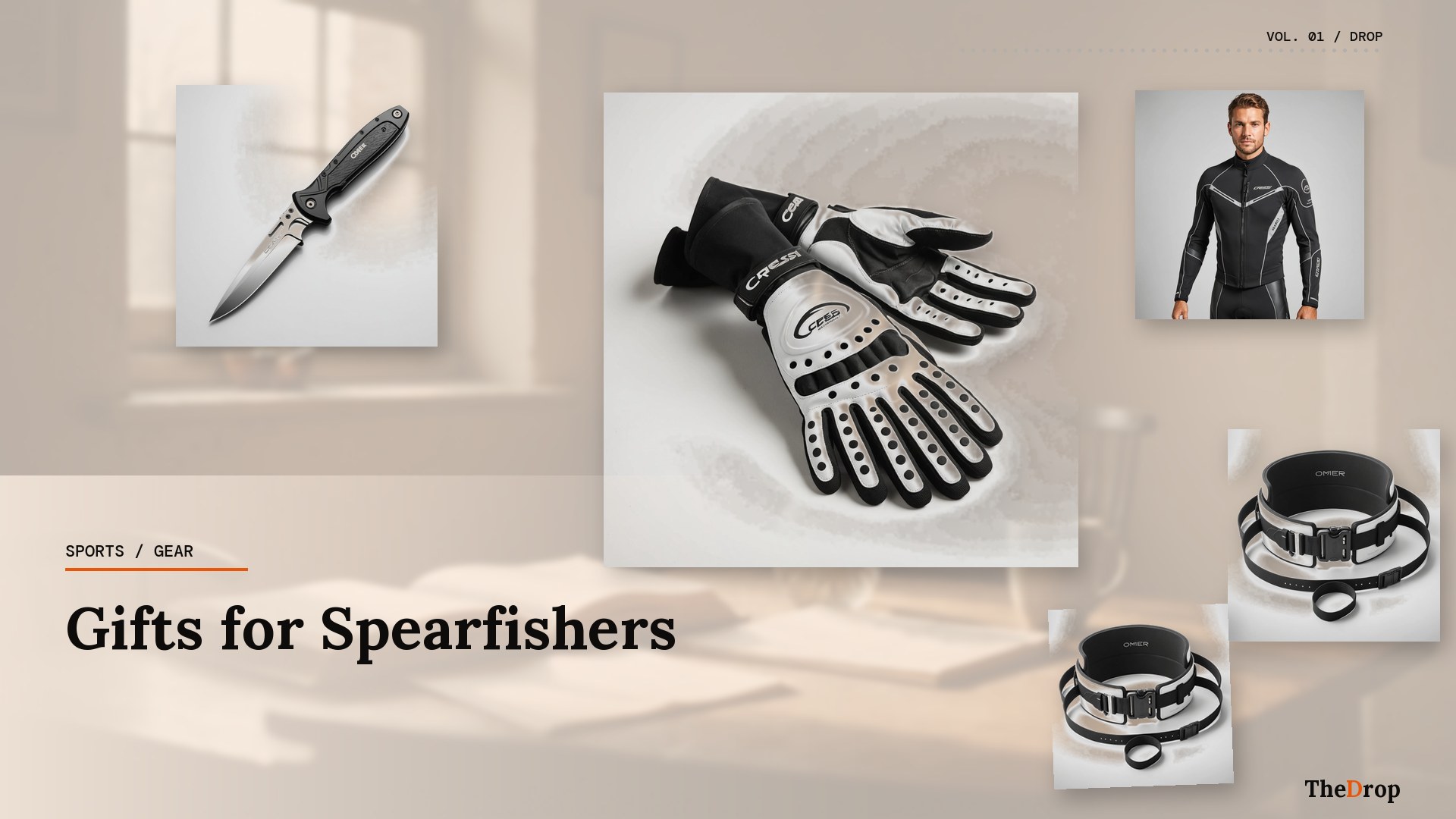
Gifts for Spearfishers
Spearfishers don't want another fishing hat or a generic gift card to Bass Pro. They want a proper dive knife for the kelp entanglement they try not to think about, the stringer that actually holds a big grouper, and the rash guard that stops the wetsuit chafe that comes with three dives a day. This is the gift category that editorial has completely ignored — which means anyone who gets this right lands in a league of their own.
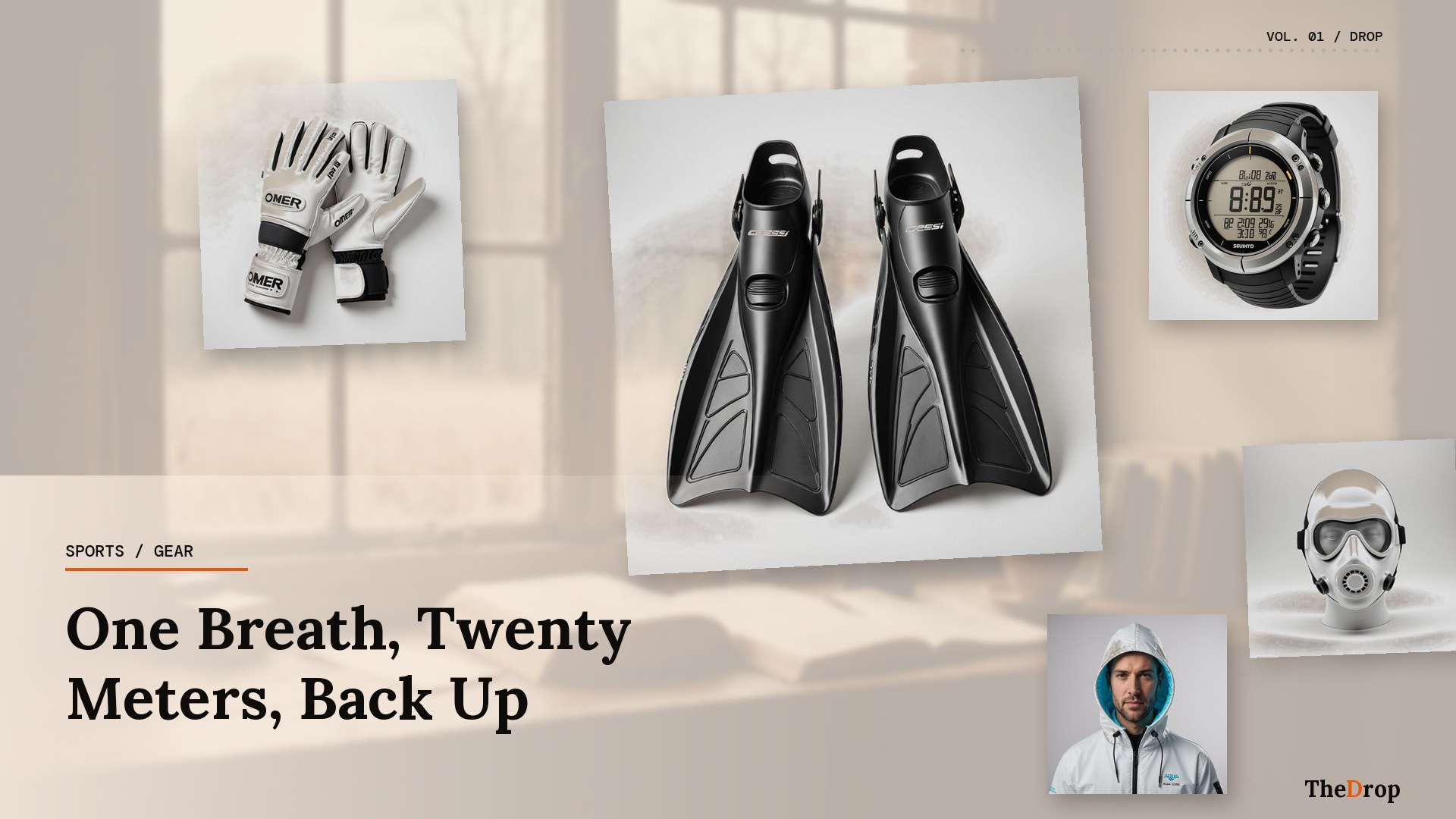
Cressi Borg Spearfishing Gloves (3mm Neoprene, Cut-Resistant Palm)
3mm neoprene gloves with a cut-resistant palm for handling speared fish, rocks, and coral without losing grip or suffering lacerations. Spearfishing without gloves is the fastest way to get cut by a rockfish spine or a serrated gill plate. Cressi makes the standard gear the community reaches for — quality without the boutique markup.
“The one reliable rule of gift-giving: anything that makes them look more serious at what they love will be received with disproportionate gratitude.”
Riffe Standard Float System (High-Visibility Orange, 60-inch line)
A high-visibility surface float with 60-inch dive flag line — the safety gear that tells boats where the diver is and doubles as an equipment clip for stringer, fish bag, and extra gear. Riffe is the standard reference in US spearfishing and the float system is the starting point for any diver moving from casual to serious.
Omer Liquidtight Dive Knife (7-inch Blade, Stainless, Leg Sheath)
A proper dive knife with a stainless serrated blade and secure leg sheath — not a decorative accessory but a functional tool for cutting monofilament entanglement, kelp, and line in emergencies. The Omer Liquidtight is the knife serious spearfishers actually carry rather than the knives sold to tourists. Blade length and sheath quality are built for underwater use.
Spearfishing World Mesh Catch Bag (30L, Stainless Steel Clips)
A 30-liter mesh catch bag with stainless steel clips for attaching to a float line — the gear that replaces improvised stringers and lets a diver carry multiple fish without losing one. Mesh drains on ascent, stainless clips don't corrode after one season. The practical upgrade every serious spearfisher gets eventually.
Cressi Apache Spearfishing Wetsuit Jacket (3mm, Camouflage Pattern)
A 3mm open-cell neoprene jacket in underwater camouflage — the suit pattern that reads as noise to fish at close range rather than a bright shape on the hunt. Open-cell neoprene clings to skin and insulates better than closed-cell at the same thickness. For a diver who's been using a closed-cell recreational suit and wondering why fish bolt before they can close the distance.
Penetrator Tip 7mm Stainless Steel Spear Tips (5-Pack)
Replacement slip-tip spear points in 7mm stainless — the consumable that every speargun owner needs and never remembers to order before a trip. Slip tips are the mechanism that holds fish on the shaft during retrieval; worn tips lose fish. A 5-pack lasts a full season of regular diving and costs less than a single lost fish.
Fourth Element Surface Marker Buoy (SMB, Oral Inflation, Bright Orange)
A compact surface marker buoy that deploys from the diver's hand on ascent — signaling surface support and boats of position even in choppy water. Fourth Element makes the SMB that dive instructors recommend; it inflates fully with a single exhale and rolls small enough to fit in a wetsuit pocket.
Freedivers Logbook (150 pages, Depth/Time/Location/Species Tracking)
A dedicated dive log with species, depth, time, conditions, and notes fields — the tool that turns experience into data and makes every future dive more productive. Serious spearfishers track spots, tides, seasons, and behavioral patterns. A paper logbook is the record that survives dropped phones and platform changes.
Fork it. Make it yours. Share before their birthday.
Friends claim items. No duplicates. No awkward conversations.