Gifts for Pottery Beginners Under $60
Pottery beginners need permission to take up space — not more technique advice, but the apron that stops the clay stains, the book that explains why their bowl collapsed, and the tools that make the process less about surviving the wheel and more about using it.

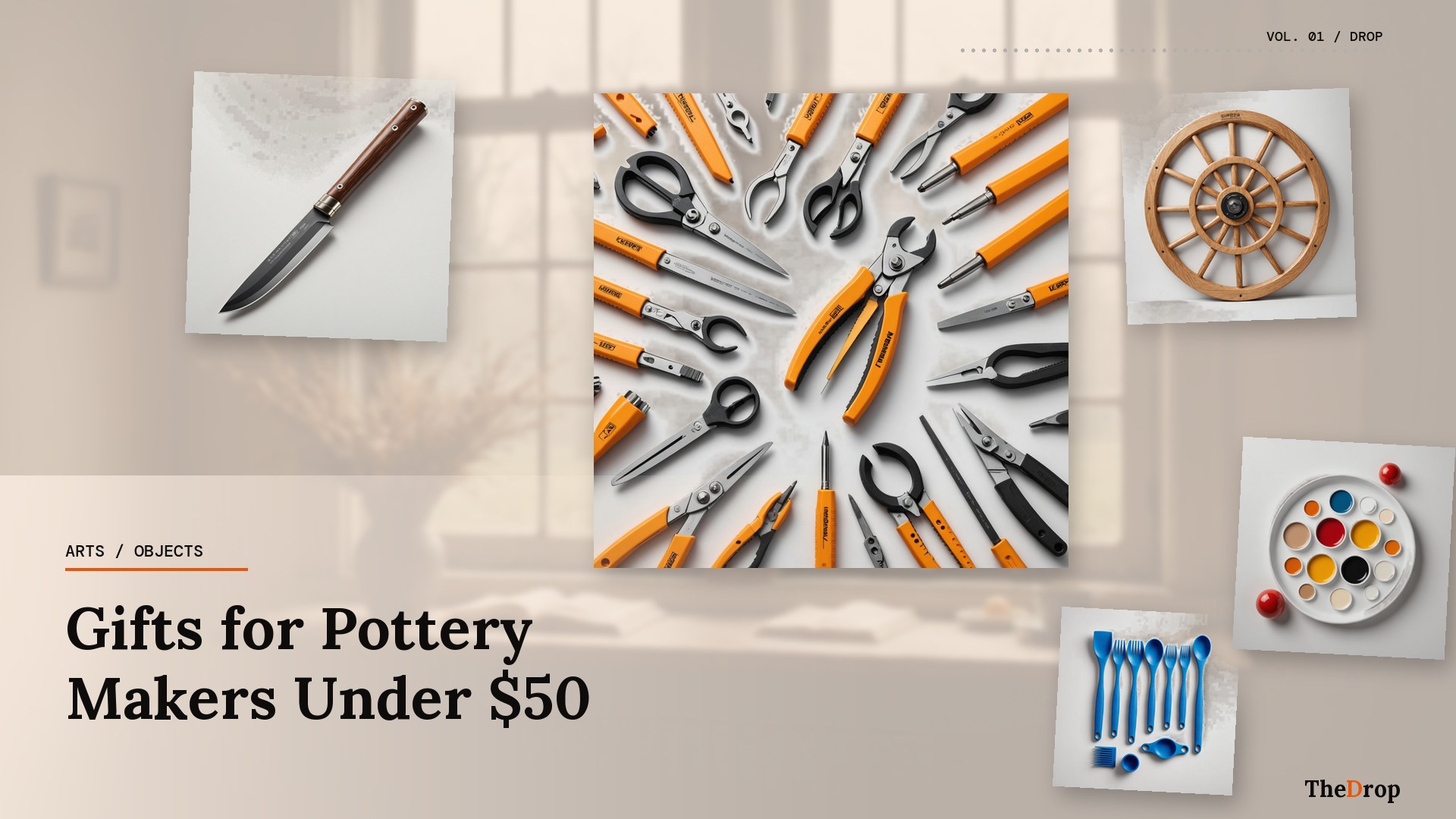
Mudtools Silicone Rib Set (4 Colors, 4 Shapes)
Mudtools silicone ribs are the tool choice in pottery studios that know what they're doing — flexible enough to conform to curved surfaces, firm enough to compress and smooth, with the feel of a professional hand tool rather than a rubber scraper. The set of four covers every throwing and smoothing situation a beginner encounters.
“The one reliable rule of gift-giving: anything that makes them look more serious at what they love will be received with disproportionate gratitude.”
Kemper Pro Set Ribbon Tool Kit (5-Piece Wire Loop Tools)
Kemper ribbon tools for trimming and hollowing greenware — five loop shapes that cover foot-ring trimming, wall thinning, and detail carving. The Kemper name is the equivalent of Swingline in staplers: not flashy, reliably correct. Pottery beginners using these instead of dollar-bin tools feel the difference in their third trimming session.
Wax-Coated Canvas Studio Apron with Pockets (Unisex)
A wax-coated canvas apron with a cross-back design that stays in place during wheel work and side pockets for tools and a sponge — the apron upgrade that makes someone who has been ruining their regular clothes actually look like a studio potter. The cross-back buckle prevents the neck-strain of heavy front-hanging aprons.
The Ceramics Book by Louisa Taylor
The book that pottery teachers actually recommend — covers wheel-throwing, hand-building, surface decoration, and glaze chemistry in a visual format that respects the reader's intelligence without assuming they have studio access. The reference that answers why a cylinder collapsed before the lesson explains it.
Pottery Glaze Journal — Recipe Log and Test Tile Record
A structured notebook for recording glaze recipes, firing notes, test tile outcomes, and kiln temperatures — the record that turns a series of random firing experiments into a repeatable practice. Pottery beginners who start tracking their glazes in a log skip the year of re-learning why a particular blue came out green.
Speedball Pottery Hand Cream with Lanolin (Clay Worker's Formula)
A dense, lanolin-based hand cream formulated for the specific moisture loss that clay work causes — not a general hand lotion, but something designed for skin that has been repeatedly wet, dried, and alkaline-stripped across a three-hour wheel session. Clay destroys cuticles; this is the practical gift that every studio potter needs.
Fork it. Make it yours. Share before their birthday.
Friends claim items. No duplicates. No awkward conversations.