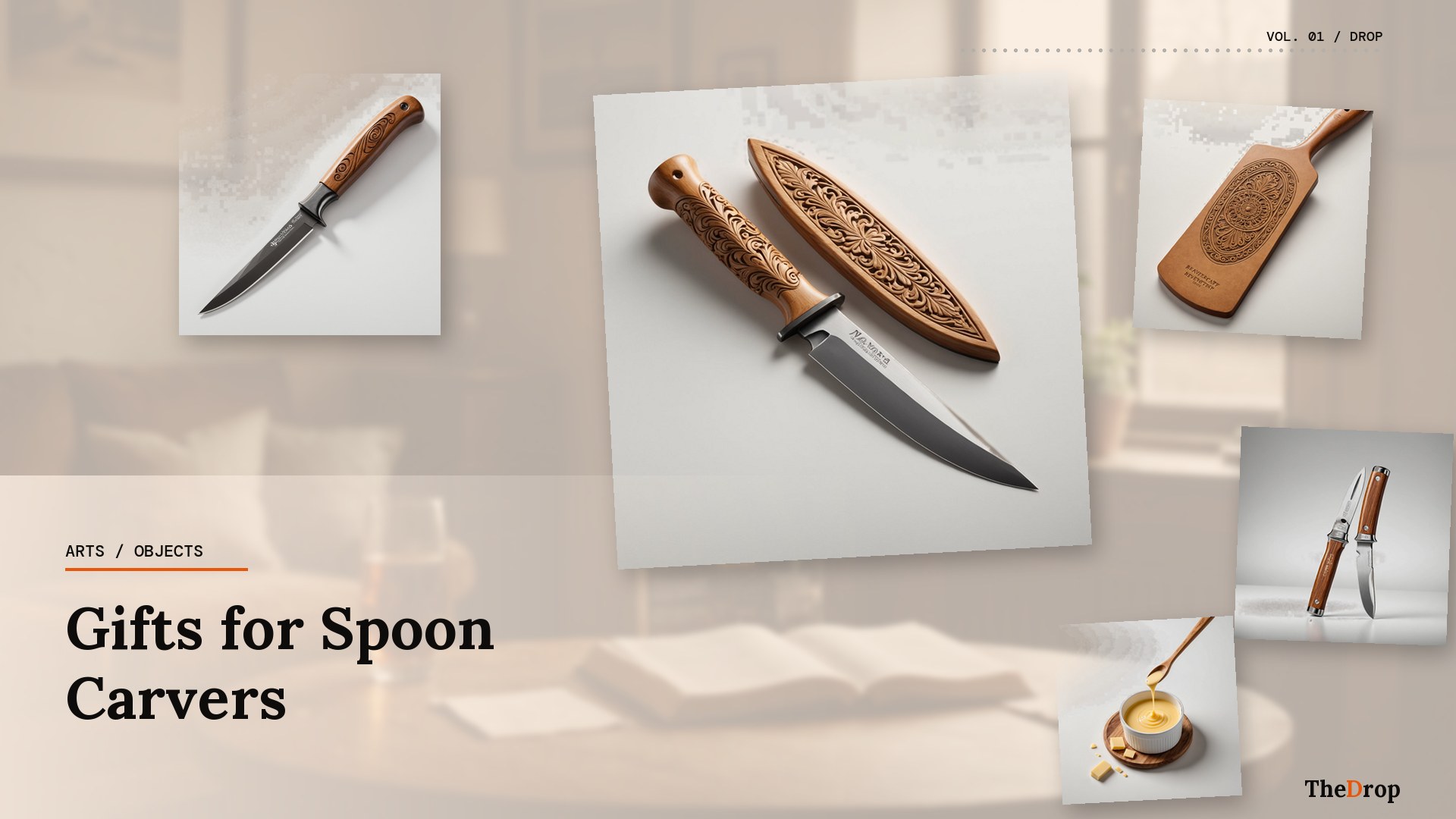
Gifts for Spoon Carvers
Spoon carving is as much about the knife as the wood — a sharp edge makes the whole project meditative rather than frustrating, and a sharp edge requires a strop and a routine. These gifts assume the carver already has their first knife and is building the kit around it: better steel, a hook knife for the bowl, a proper strop to maintain both. Skip the beginner kits; they already graduated.
Mora Woodcarving 120 — Straight Knife
The Swedish laminated steel standard that serious spoon carvers recommend as their first quality upgrade. The 60mm blade holds an edge longer than most knives in this price range.
“The one reliable rule of gift-giving: anything that makes them look more serious at what they love will be received with disproportionate gratitude.”
Mora Wood Carving Hook Knife 164
The bowl of the spoon demands a hook knife — no straight blade reaches the concavity cleanly. The 164 is Mora's single-bevel version, preferred for pull-carve technique.
Flexcut Slipstrop — Leather with Polishing Compound
A slipstrop with a shaped edge handles the curved inside bevel of hook knives where a flat strop can't reach. The Flexcut compound loads in and keeps steel mirror-sharp.
BeaverCraft Carving Strop — Double-Sided Leather Paddle
Flat strop for straight knives, with green polishing compound pre-applied to both sides. The paddle handle keeps the leather from folding while stropping at angle.
Flat-Sawn Basswood Carving Blanks — 2x2x12 Pack of 6
Basswood is the beginner-friendly carving wood that experienced spoon carvers still reach for on cold-practice days. Dries fast, splits predictably, finishes cleanly.
Opinel No. 7 Folding Carbon Steel Knife
The field carry-along — carbon steel takes an edge fast and the folding format is camp-safe. Spoon carvers who travel to retreats often cite Opinel as their pocket knife.
Food-Safe Spoon Butter — Howard Butcher Block Conditioner
The finish that goes on a finished spoon — food-safe mineral oil and beeswax blend that seals the grain and survives dish cycles better than raw oil alone.
Gallagher Green Woodworking — Peter Follansbee Book
Follansbee's spoon-carving manual is the reference text the community passes around. Covers grain selection, tool angles, and the specific cuts that make a spoon beautiful rather than just functional.
Fork it. Make it yours. Share before their birthday.
Friends claim items. No duplicates. No awkward conversations.