Gifts for Stop-Motion Animators
Stop-motion animation is one of the most demanding hobbyist filmmaking forms — a three-second walk cycle can take an entire afternoon, and a single fluorescent flicker ruins a shot that took an hour to stage. The gifts that matter here are the ones that solve the three core frustrations: lighting consistency, character rigging, and the frame-capture software that makes the workflow actually work. These are the tools that serious practitioners use, not the ones that look impressive on a shelf.
Dragonframe 5 Stop Motion Software — License Card
The exact software used by Laika Studios, Aardman Animations, and every professional stop-motion house working today — live view camera control, onion skinning, frame timing, and audio sync in one application. The gift that turns a camera-and-table setup into an actual production environment. Nothing else on the market competes for serious work.
“The one reliable rule of gift-giving: anything that makes them look more serious at what they love will be received with disproportionate gratitude.”
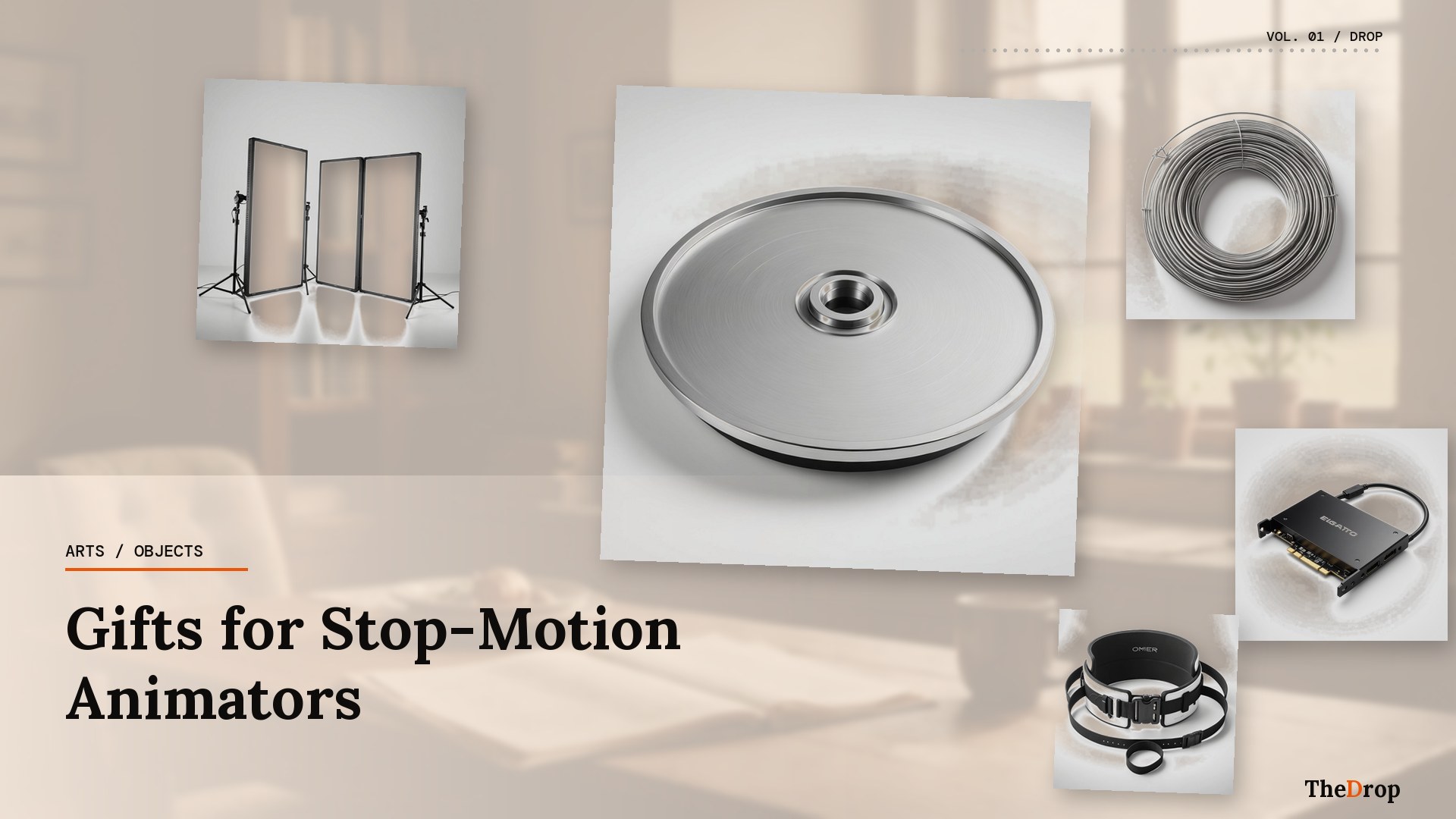
Neewer 2-Pack LED Video Light Panel — 160 LED, Dimmable
Consistent, flicker-free LED panels that maintain the same color temperature and intensity across an entire shoot — the problem that kills stop-motion footage when natural light or incandescent bulbs shift between frames. Two panels give the animator a key and fill setup, and the dimmer allows fine-tuning without changing the color.
Armature Wire — Aluminum, 1/8" Diameter, 25ft
The flexible aluminum wire used for constructing puppet skeletons — the internal structure that lets a foam or clay character hold a pose without collapsing between frames. The gauge that gives enough stiffness for a small humanoid figure while remaining easy to bend by hand. Stop-motion makers go through this quickly on any puppet project.
Monster Clay Premium Modeling Compound — 1lb, Medium
Sulfur-free professional-grade modeling clay that warms with hand heat and holds sharp edges when cool — the material that puppet makers use for heads and hands where plasticine would deform under studio lighting. Reusable, remouldable, and the choice that distinguishes a serious puppet from a school-project prop.
Lazy Susan Turntable — 10-Inch Aluminum Ball Bearing
A smooth-bearing turntable for 360-degree object animation — the platform that lets an animator rotate a character or object precisely between frames for turnaround shots. Also useful for rotating a scene incrementally for a camera pan effect. The tool that enables an entire category of shots that would otherwise require a camera track.
The Complete Guide to Stop-Frame Animation by John Hardwick
A reference covering armature construction, set design, lighting, and camera technique for stop-motion — written for the practitioner, not the film student. The guide that answers the questions that YouTube tutorials address individually but never in a coherent sequence.
Elmer's Poster Tack Adhesive Putty — White
The material that every stop-motion animator uses for temporary set fixing — holds props, scale furniture, and decorative elements in place between frames without leaving residue. Unglamorous, consumable, and the gift that tells the animator their giver knows what actually happens on set.
Elgato Cam Link 4K — HDMI Capture Card
Connects a DSLR or mirrorless camera to a computer via HDMI for live view and tethered shooting — the capture hardware that works cleanly with Dragonframe and other stop-motion software. Eliminates the lag and compression of wireless tethering, giving the animator an accurate live view for positioning between frames.
Fork it. Make it yours. Share before their birthday.
Friends claim items. No duplicates. No awkward conversations.