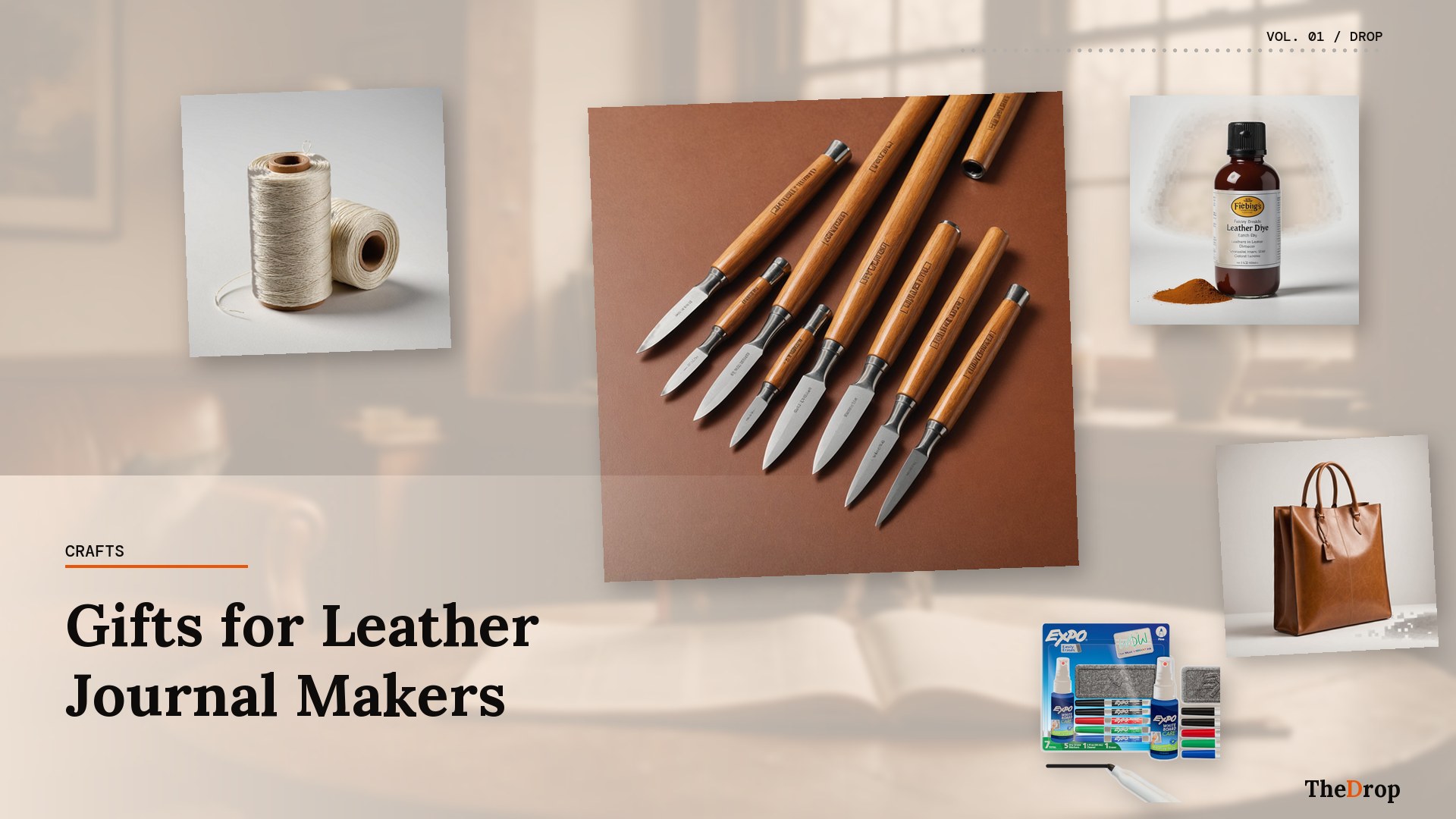
Gifts for Leather Journal Makers
Leather journal makers exist at the exact crossover of two obsessive crafts — bookbinding's structural precision and leatherwork's tactile satisfaction — and they will spend an entire Saturday cutting a single piece of cover stock until it is exactly right.

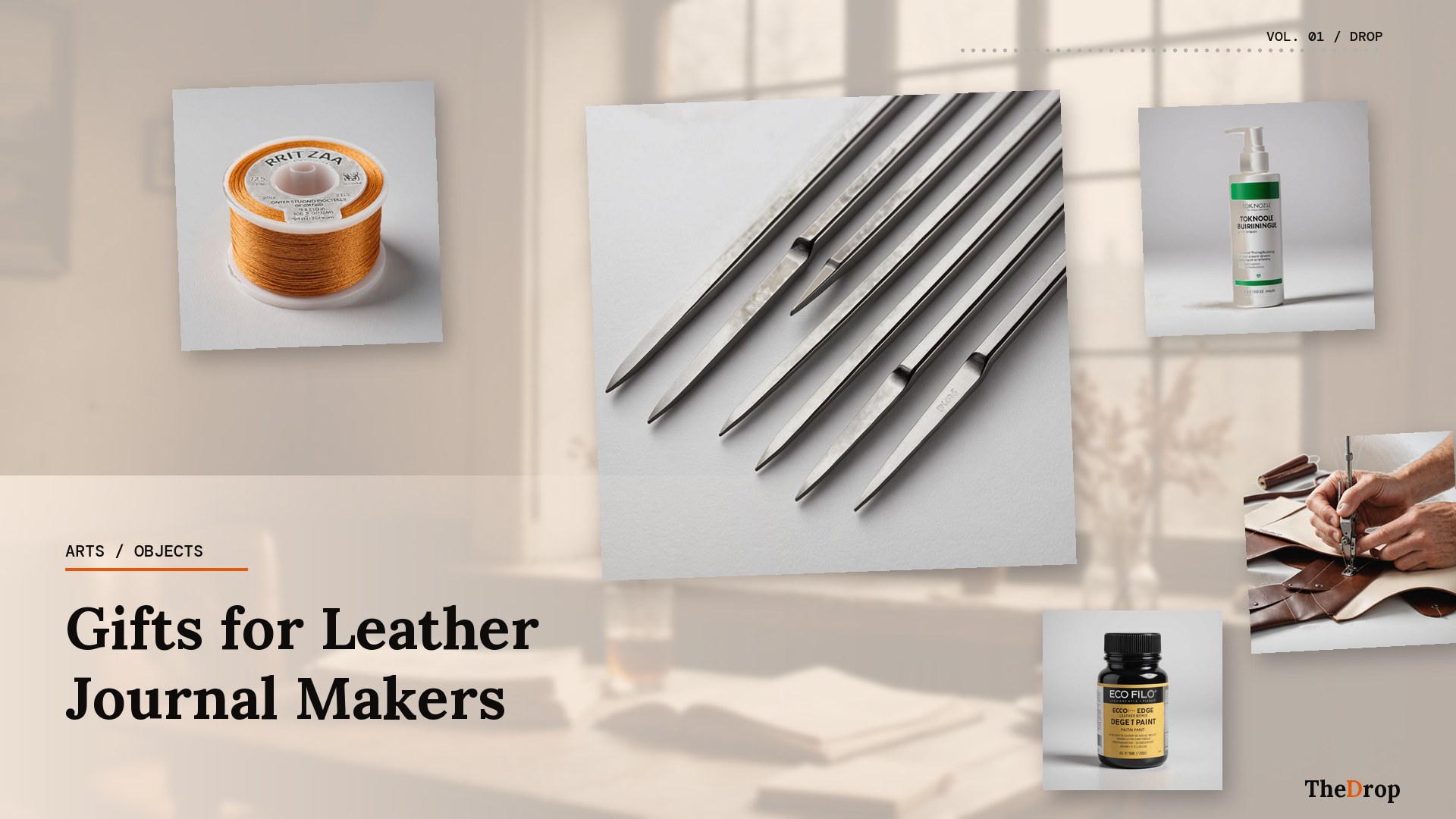
Tandy Leather Pro Stitching Chisel Set (1mm spacing)
Diamond-shaped stitching chisels that punch through leather leaving clean, evenly-spaced holes for saddle stitching — the technique that holds a leather cover together far longer than machine stitching. The 1mm spacing produces the tight, hand-finished look that sets handmade leather journals apart from manufactured ones. Tandy's hardened steel holds an edge through hundreds of hides without dulling.
“The one reliable rule of gift-giving: anything that makes them look more serious at what they love will be received with disproportionate gratitude.”
Waxed Linen Bookbinding Thread (4-Ply, Black, 100m)
Pre-waxed linen thread that handles the dual demands of bookbinding and leatherwork — strong enough for saddle stitch tension, fine enough to sit cleanly in the stitching groove. Linen is the traditional choice because it does not stretch over time the way nylon does, which matters for journals that get opened thousands of times. Black is the most requested finish for leather cover work.
Fiebing's Leather Dye (4 oz, Dark Brown)
Fiebing's oil dye has been the professional leather finisher's choice for decades — alcohol-based, penetrating, and colorfast in a way that cheap dyes are not. Dark Brown is the most versatile starting point for journal covers: it can be applied straight for rich coverage or cut with denatured alcohol for lighter washes. The 4-oz bottle is enough to finish several journal projects with material left over.
Swingline Heavy Duty Hole Punch (Model 74400)
A heavy-duty single-hole punch with enough leverage to punch through heavy bookbinding board and thin leather simultaneously — useful for punching the sewn stations in Coptic-bound journal covers. Consistent punch placement is one of the things that separates a polished handmade journal from one that looks homemade in the wrong sense. This punch handles the load that typical desktop punches fail on.
Mohawk Superfine Smooth Paper (8.5x11, 32 lb, 500 sheets)
The fine writing paper that turns a handmade journal from a project into an heirloom. Mohawk Superfine is the paper that fountain pen users and serious journalers request by name — it handles ink without feathering, folds cleanly into signatures, and feels noticeably different from commodity copy paper. A ream of premium text-weight stock gives a leather journal maker enough paper for dozens of finished books.
Genuine Veg-Tan Leather Side (2-3 oz, Half Side)
A half-side of 2-3 oz vegetable-tanned leather — the weight used for journal and notebook covers — is the gift that actually advances a leather journal maker's practice rather than filling a shelf. Veg-tan takes dye, stamping, and burnishing beautifully, develops a rich patina over years of handling, and is the material serious journal makers prefer over chrome-tanned hides. A half-side yields enough for twelve to fifteen A5 journal covers.
Fork it. Make it yours. Share before their birthday.
Friends claim items. No duplicates. No awkward conversations.