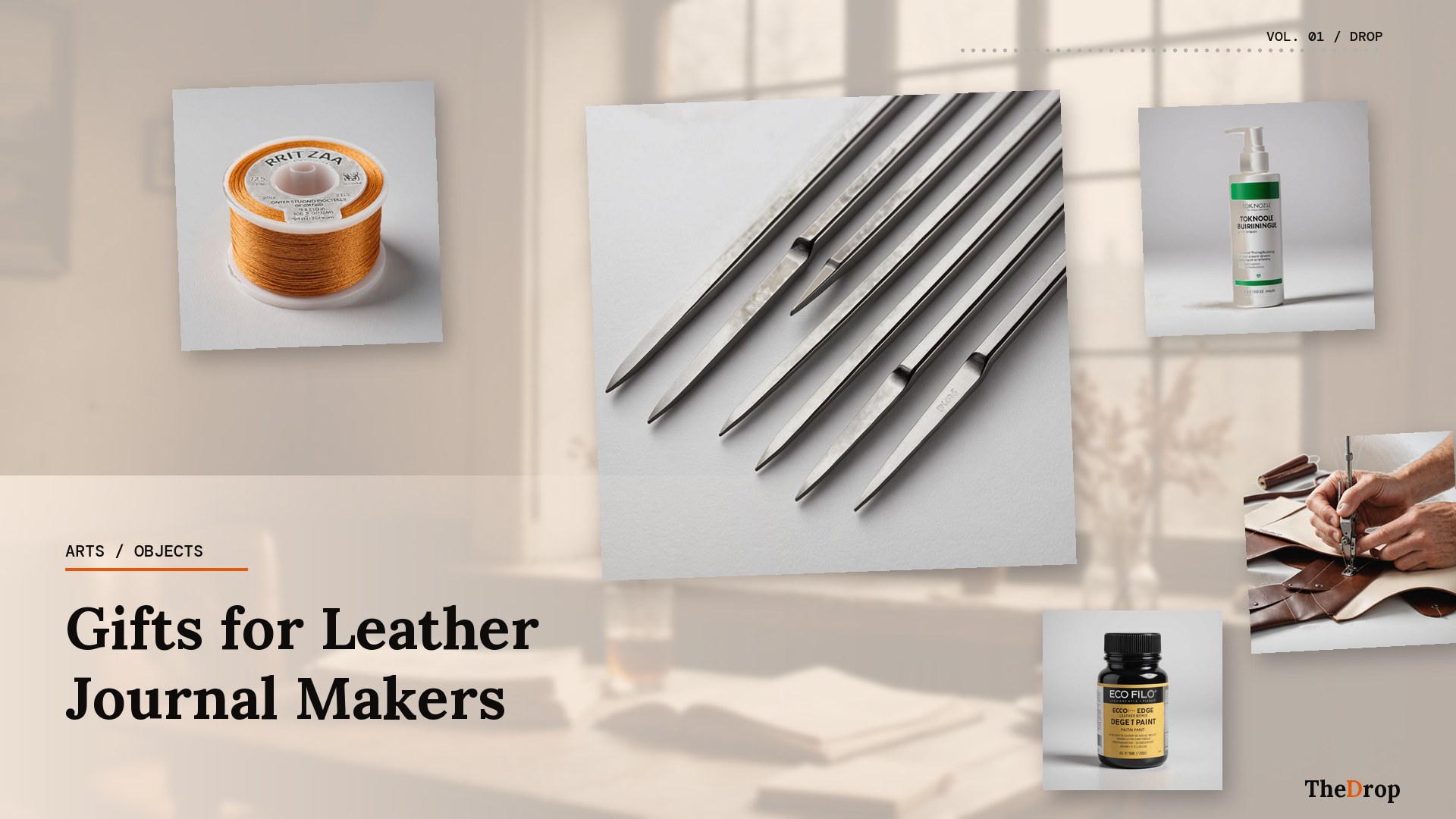
Gifts for Leather Journal Makers
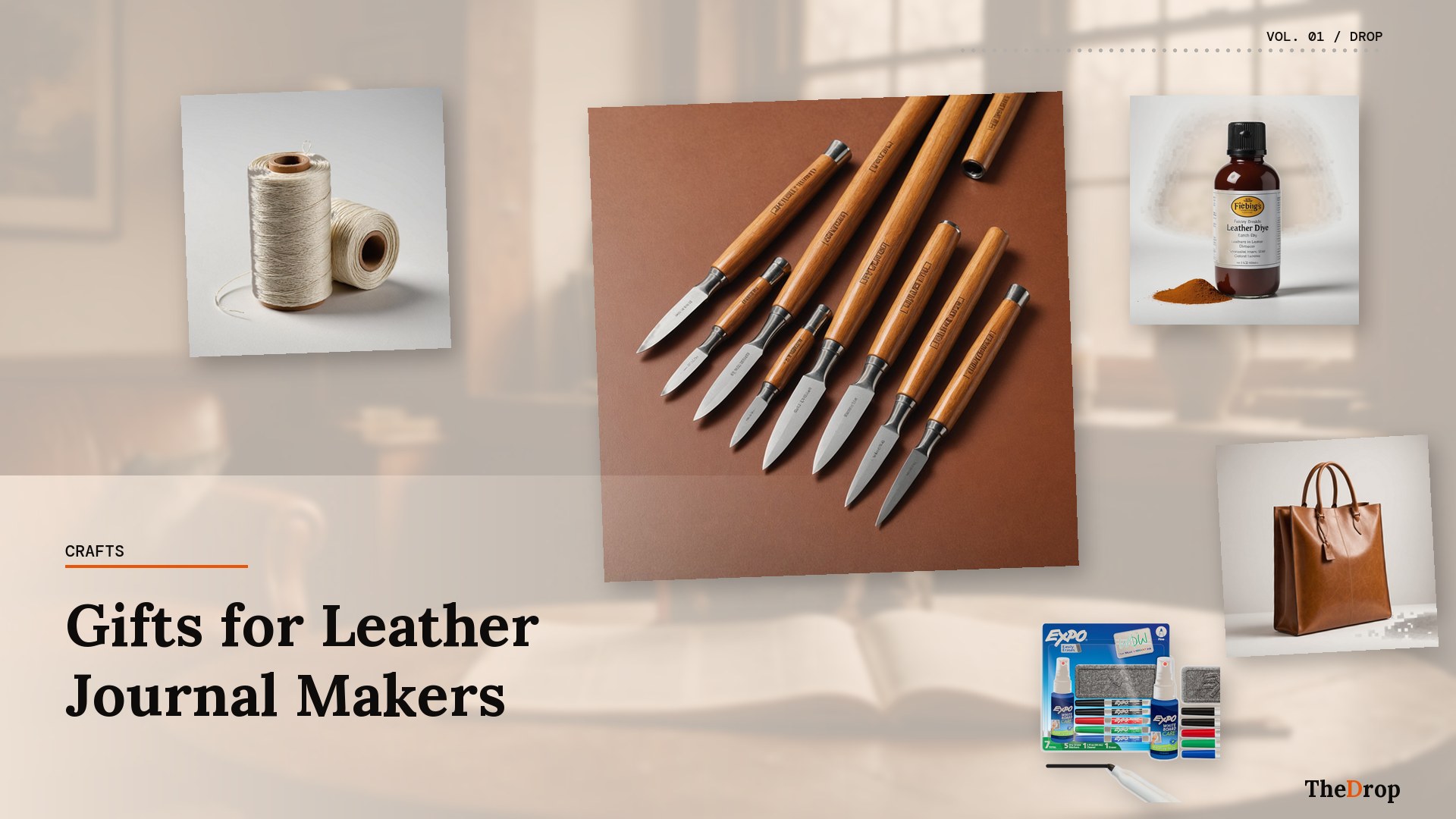
Leather journal making sits at the intersection of bookbinding and leather craft — close to both but distinct from either. The practitioner needs veg-tan leather in the right weight for journal covers, the saddle stitch supplies that produce hand-stitching with the correct tension, and the edge finishing materials that separate clean work from work that looks unfinished. These eight picks are the materials and references that bridge the two crafts correctly.
Springfield Leather Vegetable-Tanned Leather Panel — A5, 3–4 oz, Natural
Vegetable-tanned leather in 3–4 oz weight is the correct specification for a journal cover — heavy enough to hold structure and develop a patina with use, light enough to flex at the spine without cracking over hundreds of openings. Natural finish accepts dye and burnishing; Springfield Leather is the community's trusted US supplier for consistent tannage.
“The one reliable rule of gift-giving: anything that makes them look more serious at what they love will be received with disproportionate gratitude.”
Tandy Leather Saddle Stitch Needle Set — Blunt, Harness, 10-Pack
Saddle stitch needles have blunt tips that pass through pre-punched holes without splitting the leather — the opposite of standard sewing needles that are designed to pierce fabric. Tandy's harness needles are the right size for typical journal cover stitching: large enough to thread with linen or waxed thread, small enough to fit standard pricking irons.
Ritza 25 Tiger Thread — 0.8mm, Waxed Polyester, 25m Spool
Ritza 25 tiger thread is the leather crafting community's most-cited saddle stitch thread — waxed polyester that passes through leather smoothly, locks with a saddle stitch without tangling, and comes in a consistent color range for both natural and contrasting thread work. The 0.8mm weight is correct for journal cover stitching at typical 4–5 stitches per inch.
Copper Rivets and Burrs — #9 Size, 100-Count Kit with Setter
Copper rivets set mechanically without adhesive and develop a natural patina that matches veg-tan leather's aging process — the hardware choice that distinguishes a leather journal that improves over time from one that stays static. A 100-count kit with a setter covers multiple journal builds and any repair work needed along the way.
Tokonole Burnishing Gum — 120ml, Clear, for Edges and Back
Tokonole is the community's preferred leather edge burnishing agent — applied to the cut edge and burnished with a wood slicker or bone folder, it seals and rounds the leather edge into a smooth, professional finish that distinguishes handmade from rough. The clear version works on natural and dyed leather without color contamination.
"The Art of Hand Sewing Leather" by Al Stohlman
Al Stohlman's hand-sewing guide is the reference that the leather crafting community has used since the 1970s — covering saddle stitch mechanics, thread tension, hole spacing, and finishing in the systematic way that technical crafts require. The saddle stitch technique described in this book is why hand-stitched leather lasts longer than machine-sewn work.
Ron's Choice Pricking Iron Set — 4mm Spacing, 2-Prong and 6-Prong
Pricking irons mark the evenly-spaced holes that make saddle stitch lines look deliberate rather than improvised — the tool that separates stitching that looks like professional leatherwork from stitching that looks like it was done by hand guessing. A 2-prong and 6-prong set covers straight runs and corner work at 4mm spacing, which is correct for journal cover weight leather.
Eco-Flo Leather Edge Paint — Black, 2 oz, Water-Based
Edge paint is the alternative finish to burnishing for dyed or finished leathers where Tokonole alone won't seal cleanly — applied with a narrow applicator along the cut edge, it produces a clean contrasting line that defines the journal's silhouette. Black on natural veg-tan is the classic colorway for hand-crafted journals in the current aesthetic.
Fork it. Make it yours. Share before their birthday.
Friends claim items. No duplicates. No awkward conversations.